










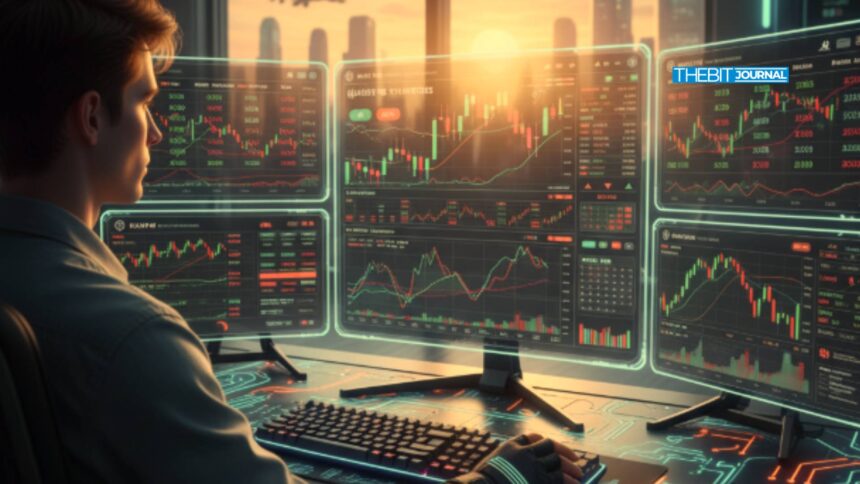

Markets move fast, but crypto moves faster. One look at Bitcoin or Ethereum on a busy day, and the screen feels like a roller coaster. This speed is exactly why cryptocurrency day trading has grown so popular. Traders around the world, students, analysts, even software developers, are drawn to it for the same reason: opportunity. In the span of a single afternoon, fortunes can be made or lost.
Day trading crypto is not about luck. It is about strategy, timing, and discipline. Those who succeed understand that volatility is both the attraction and the danger. They do not just react to price moves; they prepare for them.
Why Cryptocurrency Day Trading Has Everyone Talking

The excitement comes down to volatility. Traditional markets, stocks, bonds, and commodities move in slow cycles. Crypto can swing ten percent in an hour. This level of movement is rare elsewhere, and it creates windows where quick profits are possible.
Of course, the same volatility that excites traders also breaks them. A report published in the Journal of Financial Markets in 2024 found that most short-term traders underperform, often because they chase momentum without managing risk. In crypto, where leverage magnifies every move, this becomes even more dangerous.
For seasoned traders, that volatility is not chaos; it is opportunity. They see patterns, use tools, and build systems to survive the swings. The difference between success and failure in cryptocurrency day trading usually comes down to preparation.
The Tools Traders Rely On
No serious trader flies blind. Charts and indicators are the backbone of decisions. The Relative Strength Index (RSI) shows when a coin looks overheated or oversold. Moving Averages cut through noise to reveal the bigger trend. Bollinger Bands highlight when volatility might be about to spike.
Then there’s blockchain data itself. Explorers let traders track whale wallets, exchange reserves, and fee activity. A sudden outflow of Bitcoin from an exchange, for instance, often hints at accumulation and can push the price up. In day trading, reading these signals early is the difference between riding the wave and getting wiped out.
Strategies Shaping Day Trading in 2025
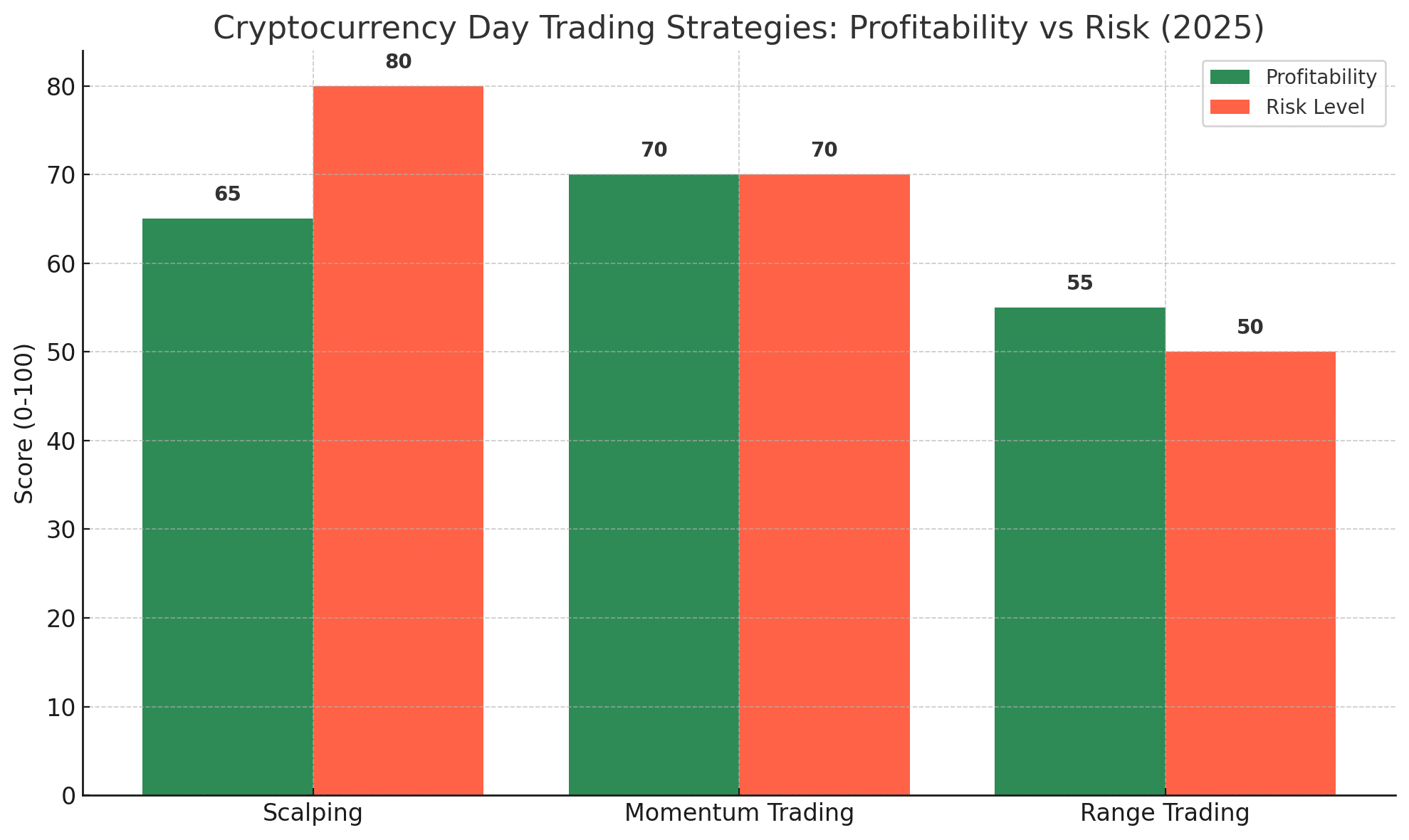
Day traders in 2025 continue to employ traditional methods, but technology is changing how they execute them. Scalping, momentum trading, and range trading remain the primary strategies.
Scalpers thrive on speed, completing hundreds of transactions every day for tiny but consistent profits. Momentum traders look for huge swings, which are sometimes sparked by news or whale action. When markets move sideways, range traders remain patient, buying at support and selling at resistance.
Artificial intelligence has entered the scene. MIT research in 2025 demonstrated that algorithmic bots can reduce human mistakes and act in milliseconds. But they are not impenetrable. A coding error or market problem might magnify losses. Traders who blend human judgment with these technologies, instead of giving over
Risk Management: Where Traders Win or Lose
Ask any veteran, and they will tell you: risk management is everything. Without it, even the smartest strategy fails. Stop-loss orders are non-negotiable, protecting capital when the market turns against a trade. Position sizing matters just as much, risking only a fraction of one’s capital keeps bad trades survivable.
There is also the human side. Emotional trading destroys more portfolios than bad math ever could. Fear of missing out (FOMO) or panic selling leads to reckless decisions. Studies by the CFA Institute show that disciplined traders who follow pre-set rules consistently outperform emotional ones.
Regulation is another factor. Crypto lives under a global spotlight. In 2024, when U.S. regulators revealed stricter ETF rules, Bitcoin dropped nearly 8% in just half a day. Traders who hedged or set stops weathered the storm, while those caught off guard learned a costly lesson.
The Future of Day Trading Crypto
The future of cryptocurrency day trading is being shaped right now. Institutions are entering the market, bringing deeper liquidity. Regulators are writing clearer rules, which may reduce extreme volatility but also lower risk. Technology, from AI-driven bots to real-time blockchain analytics, is making trading faster and more precise.
Some worry that reduced volatility will mean fewer opportunities. In reality, opportunities will shift. Instead of pure speculation, traders may focus on inefficiencies in tokenized assets, cross-border payments, or stablecoin markets.
The game is not ending; it is evolving.
Conclusion
At its heart, cryptocurrency day trading is about balance. The market provides speed and excitement, but also penalizes negligence. Those who survive and prosper are those who prepare, studying charts, monitoring statistics, and establishing rules that they really follow.
By 2025, the most successful day traders will not be gamblers. They will be disciplined strategists who combine human judgment with modern technologies. Cryptocurrency may never slow down, but that does not mean traders need to be foolish. The idea is to trade intelligently rather than quickly.
FAQs about cryptocurrency day trading
Q1: What is cryptocurrency day trading?
It is buying and selling digital assets within the same day to profit from short-term price swings.
Q2: Can it be profitable in 2025?
Yes, but only for disciplined traders who use strong strategies and risk controls. Many still lose money.
Q3: What strategies are most common?
Scalping, momentum trading, and range trading remain dominant methods.
Q4: How important is risk management?
It is crucial. Stop-losses, position sizing, and emotional discipline protect traders from major losses.
Q5: What impact does regulation have?
New policies can move prices instantly. Traders must stay informed and adapt quickly.
Glossary
Volatility: Sharp price swings over short periods.
Liquidity: The ease of buying or selling without moving the price.
Stop-Loss: An order that automatically exits a trade at a set loss level.
Scalping: Fast-paced strategy of small, repeated trades.
Momentum Trading: Following strong price moves driven by volume or news.
Range Trading: Buying near support and selling near resistance in sideways markets.
On-Chain Data: Blockchain activity used to forecast market moves.