




Last updated: November 7, 2026
Bitcoin quantum resistance isn’t built into every part of the network today. Current signatures rely on elliptic-curve cryptography, which a sufficiently powerful quantum computer could attack. Proposed changes aim to reduce exposure and add post-quantum options.
Quick answer
Bitcoin doesn’t yet have complete protection against quantum attacks. A powerful enough quantum computer could use Shor’s algorithm against exposed public keys. Hiding keys until they are spent helps in some cases, while draft proposals such as BIP 360 and BIP 361 explore changes. Neither was an activated Bitcoin upgrade as of November 7, 2026.
How Bitcoin quantum resistance could work
Bitcoin ownership is controlled by private keys, which authorize transactions through digital signatures. BIP 360 explains that Bitcoin’s ECDSA and Schnorr signatures depend on elliptic-curve cryptography. A quantum computer capable of running Shor’s algorithm at the required scale could derive a private key from its exposed public key. This is a conditional risk, not evidence that current computers can do it.
Some Bitcoin output types use a hash of the public key, keeping it off-chain until a spend reveals it. That can reduce exposure time, but it isn’t permanent protection once a transaction discloses the key. BIP 360 also identifies older pay-to-public-key outputs, reused outputs and Taproot key-path spending as vulnerable to longer exposure.
Step by step: where the risk and defenses sit
- A private key signs a spend. Bitcoin’s current signature system proves control of a key without publishing the private key. The public key is used to check the signature.
- Exposure changes the risk. Hashed-key outputs generally reveal the public key when spent. An attacker with a sufficiently capable quantum computer could then try to derive the private key. Address reuse or outputs that reveal keys earlier can extend exposure, according to BIP 360.
- Hashing is part of the proposed answer. BIP 360 proposes Pay-to-Merkle-Root, or P2MR, which removes Taproot’s quantum-vulnerable key-path spend. It aims to reduce long-exposure risk, but doesn’t cover every case: an attacker could target a public key revealed while a transaction waits in the mempool.
- Post-quantum signatures are another route. A SHRINCS draft posted to the Bitcoin Development mailing list on August 27, 2026 describes a SHA-256-based scheme. It specifies stateful signatures starting at 548 bytes and a 5,777-byte stateless fallback. The draft says its security proof is unfinished.
- Network-wide change takes coordination. New output types, wallet support and rules for older outputs would need broad agreement and implementation. BIP 361 proposes allowing sends only to post-quantum address types 160,000 blocks after activation, then tightening ECDSA and Schnorr verification two years later. It’s a draft, not a current Bitcoin rule.
Bitcoin quantum resistance proposals compared
| Approach | What it aims to do | Status and limits |
|---|---|---|
| Hashed public keys | Keep a public key hidden until a spend reveals it. | Existing designs provide partial protection; spending or reuse can expose keys. |
| BIP 360 P2MR | Remove Taproot’s key-path spend to reduce long-exposure risk. | Draft proposal; doesn’t address short exposure during a mempool wait. |
| Post-quantum signatures | Use signature methods designed to resist quantum attacks. | Research and draft work continues. The SHRINCS draft’s security proof is unfinished. |
| BIP 361 migration | Set proposed stages for moving to post-quantum address types. | Draft only, not activated. Its authors estimated that over 34% of bitcoin had revealed a public key on-chain as of March 1, 2026. |
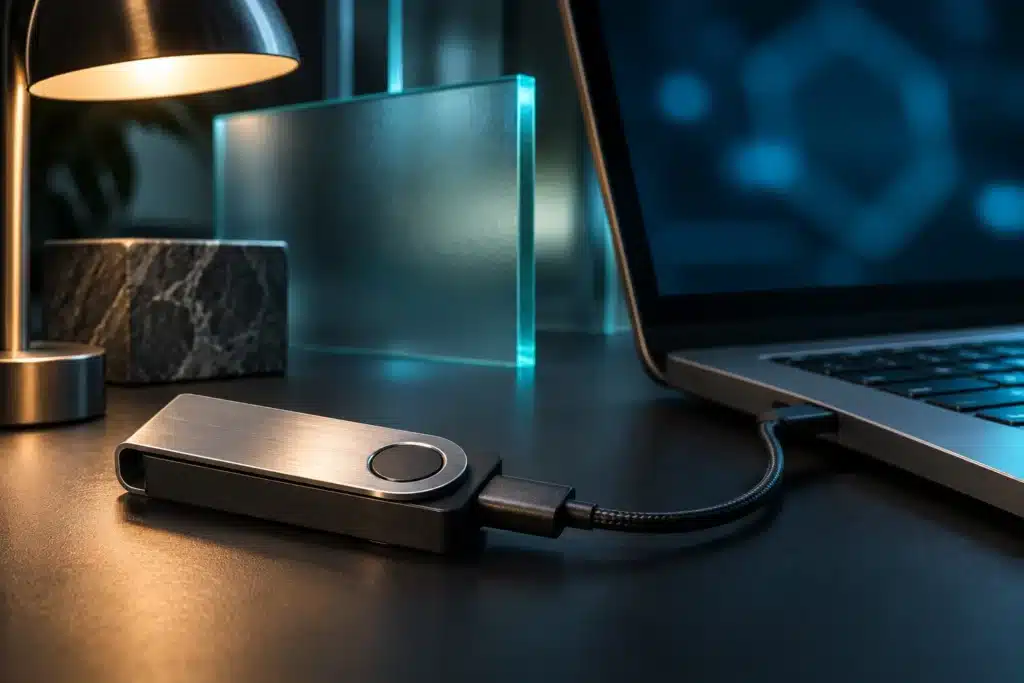
Engineering work has moved beyond paper proposals, but demonstrations aren’t a mainnet upgrade. In its November 5, 2026 quarterly update, Blockstream Research said tests on Jade Plus, Trezor, Ledger and BitBox hardware wallets found each tested device could produce hash-based post-quantum signatures. An earlier 324-byte SHRINCS signature took about 22 to 42 seconds to sign.
Blockstream also reported that Liquid, a separate network, confirmed a post-quantum-signed transaction on March 3, 2026. The signature was 324 bytes and the full transaction, including its Simplicity verification program, was about 38 KB. This wasn’t a Bitcoin mainnet transaction. The Block reported that StarkWare’s August 26, 2026 experimental Bitcoin transaction using signature grinding took hours of computing and required direct submission to a willing miner because ordinary nodes wouldn’t relay it.

Common mistakes and risks to understand
- Assuming Bitcoin is already quantum-proof. Current elliptic-curve signatures retain the theoretical risk described by BIP 360. Protection depends on future technical and network changes.
- Treating a draft as a live rule. BIP 360 and BIP 361 are proposals, not activated upgrades.
- Confusing a demonstration with deployment. A Liquid transaction or an experimental transaction submitted directly to a miner doesn’t establish that ordinary Bitcoin wallets and nodes support the same method.
- Assuming a quantum defense removes every risk. Cryptographic changes would not prevent risks such as lost keys, scams, exchange failures or software vulnerabilities, or ensure asset recovery.
Public-key hiding is a layer of protection for certain outputs, not a substitute for network-wide migration if quantum computers reach the capability described in these proposals.
Frequently asked questions
Is Bitcoin quantum resistant today?
No, not fully. Bitcoin uses ECDSA and Schnorr signatures based on elliptic-curve cryptography. BIP 360 says a sufficiently capable quantum computer could use Shor’s algorithm against exposed public keys. This is a conditional risk, not a demonstrated ability of current computers to break Bitcoin keys.
How does Bitcoin quantum resistance protect coins with hidden public keys?
Some output types reveal a public key only when spent, limiting exposure beforehand. The key becomes visible in the transaction, however, and other output types can expose keys for longer. Hiding a key is a partial mitigation, not a complete post-quantum solution.
When will Bitcoin adopt quantum-resistant signatures?
The available proposals give no confirmed activation date. BIP 360 and BIP 361 remain drafts, and the SHRINCS draft’s security proof is unfinished. Adoption would depend on further review, implementation and agreement across the Bitcoin network.
Sources
- Bitcoin price and market data (CoinGecko)
- Strive Reports $509M Quarterly Profit as Bitcoin Buying Accelerates (NewsBTC)
- Bitcoin holders have received eCash, What can you do with it? (Cointelegraph)
This article is for informational purposes only and does not constitute financial or investment advice. Cryptocurrencies are highly volatile; always do your own research before investing.