




Canada crypto ATM ban has moved to the center of policy discussions after the federal government proposed removing crypto ATMs nationwide as part of a broader effort to tackle fraud and money laundering. The Liberal government said these machines have become a primary method for scammers to target victims and for criminals to move illegal cash into digital assets outside traditional banking systems.
The proposal was included in the Spring Economic Update released on Tuesday. Officials stated that crypto ATMs are now viewed as a “primary method” used in fraud operations, especially in cases where victims are pressured into depositing cash that is quickly converted into Bitcoin and transferred to wallets beyond normal banking oversight.
The move marks a major shift for Canada, a country that introduced the world’s first Bitcoin ATM in a downtown Vancouver coffee shop in 2013. At the same time, lawmakers are also reviewing whether crypto should be banned as a form of electoral donation due to concerns around anonymous fund transfers.
How does Canada crypto ATM ban change the current system?
Canada crypto ATM ban would remove all crypto ATMs across the country and stop users from converting physical cash directly into cryptocurrencies like Bitcoin through these machines. Unlike regular ATMs that dispense money from bank accounts, crypto ATMs allow users to insert cash and purchase digital assets that are sent directly to a crypto wallet through blockchain transactions. In some cases, they also allow crypto-to-cash conversions.
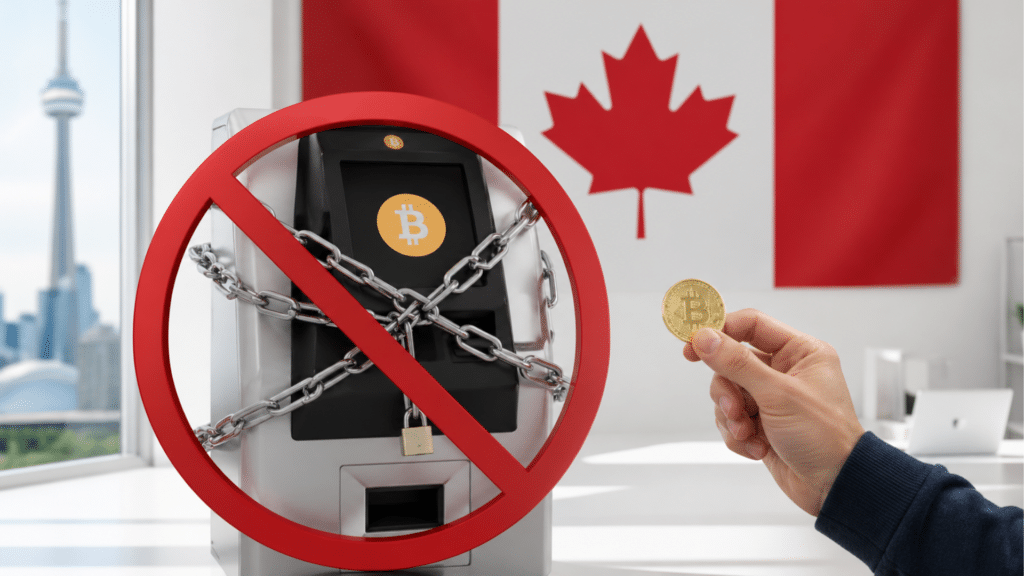
The government said these machines bypass parts of the traditional banking system, which increases money laundering risks. Officials added that the proposal is aimed at protecting Canadians by shutting down what they described as a major fraud pathway. Even if the Canada crypto ATM ban moves forward, the government stated that people would still be able to buy crypto through regulated brick-and-mortar financial services.
Why are regulators linking these machines to fraud cases?
Regulators say fraud investigations have repeatedly shown crypto ATMs being used in scams involving direct cash deposits from victims. A 2023 internal analysis by Canada’s financial intelligence agency FINTRAC found that Bitcoin ATMs are likely to remain “the primary method” fraudsters use to collect and launder funds from victims. FINTRAC also noted that fraud is the predominant suspected predicate offence linked to virtual currency ATMs, making scam-related transactions the main concern behind the Canada crypto ATM ban proposal.
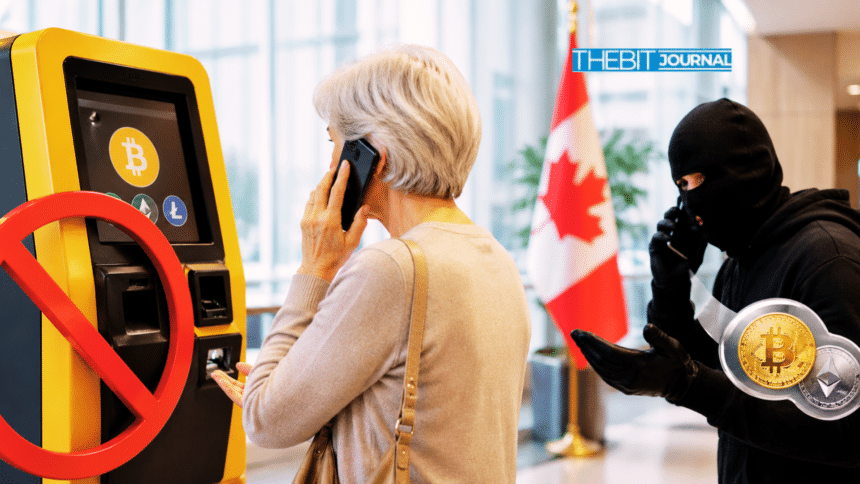
Law enforcement reports describe cases where elderly Canadians were instructed by scammers to withdraw retirement savings and deposit the cash into crypto ATMs located at gas stations and convenience stores. In several cases, victims were coached over the phone during the transaction and guided step by step until the cash was converted and transferred. Officials say the speed of transfers and limited verification and tracing concerns increase the risks.
Once funds move directly to digital wallets, recovering them becomes far more difficult than in traditional banking fraud cases. Public education has also become part of the response. Fraud investigators and law enforcement agencies have continued warning Canadians to verify urgent payment requests and remain cautious when asked to use crypto ATMs for unexpected financial transfers.
Could stricter rules work instead of a full ban?
Not everyone supports a full prohibition. Some policy observers and users argue the answer should be tighter regulation rather than a complete Canada crypto ATM ban. Canada currently has nearly 4,000 crypto ATMs and despite that scale the country still has no industry-specific crypto ATM rules.
These machines are currently grouped under the broader money services businesses category, alongside money transfer and currency exchange providers. Some operators support stronger safeguards such as transaction limits for first-time users, delayed processing for larger transfers, and clearer refund protections for scam victims. Others have suggested stronger identity checks and mandatory scam warnings at machines.
Supporters of crypto ATMs say they remain an important access point for customers who rely on cash-to-crypto services, especially when some banks already restrict or block transfers to crypto exchanges. While the government says Canadians would still be able to buy crypto through regulated brick-and-mortar businesses, critics argue that a blanket ban could also reduce legitimate access for users who depend on these kiosks.
Why is this significant for Canada’s crypto market?
The Canada crypto ATM ban is especially significant because the country has one of the largest crypto ATM networks in the world. Canada hosts the second-highest concentration of crypto ATMs per capita globally. For major operators such as Bitcoin Well and Localcoin, the proposal could directly threaten existing business models since both companies run hundreds of machines.
The policy shift is also symbolic because Canada was home to the world’s first Bitcoin ATM, installed in a downtown Vancouver coffee shop in 2013. Moving from early adoption to considering a nationwide ban shows how sharply regulatory priorities have changed. Industry analysts note that the decision could shape how Canada approaches future crypto oversight, especially where consumer protection and access remain in conflict.
Why are electoral donations also part of the discussion?
The debate is not limited to fraud prevention alone. Canadian lawmakers are also reviewing whether crypto should be prohibited as a payment method for electoral donations. The concern is centered on transfer anonymity. Officials believe crypto donations may create transparency issues in political financing because blockchain transfers can be harder to identify compared with traditional payment systems.

Compliance experts say stronger scrutiny around political donations reflects a broader effort to close financial loopholes and improve financial transparency in public institutions. This adds another layer to the Canada crypto ATM ban discussion, showing that the issue extends beyond retail scams and into wider governance concerns.
Conclusion
Canada crypto ATM ban could become one of the country’s strongest crypto enforcement measures since digital assets entered mainstream financial discussions. The proposal signals that regulators are moving from monitoring to direct intervention where consumer protection risks are highest.
At the same time, the debate over stricter regulation instead of a full prohibition shows that policymakers must balance fraud prevention with legitimate financial access. Canada’s role as the birthplace of the first Bitcoin ATM makes the shift even more notable.
From launching the first machine in 2013 to now considering a full nationwide prohibition, the country is redefining how it balances innovation with financial safety. Whether lawmakers proceed with a complete ban or adopt stricter controls instead, the Canada crypto ATM ban has already changed the conversation around crypto access, regulation, and accountability across the country.
Glossary
Crypto ATM: Cash-to-crypto machine for instant buying or selling.
Crypto Wallet: Digital storage for sending and receiving crypto.
Money Laundering: Making illegal funds appear legitimate.
FINTRAC: Canada’s watchdog tracking financial crime and suspicious transactions.
Electoral Donations: Funds given to support political campaigns.
Frequently Asked Questions About Canada Crypto ATM Ban
Why does Canada want to ban crypto ATMs?
Canada wants to ban crypto ATMs because they are often used for scams and fraud.
How do scammers use crypto ATMs?
Scammers tell people to put cash into crypto ATMs and send the money to them.
What did FINTRAC say about crypto ATMs?
FINTRAC said crypto ATMs are commonly used in fraud cases.
Why is it hard to recover money from crypto scams?
It is hard to recover the money because it is quickly sent to digital wallets.
Why are crypto donations also being reviewed?
Crypto donations are being reviewed because they can hide the identity of the sender.
Sources –