





This article was first published on The Bit Journal.
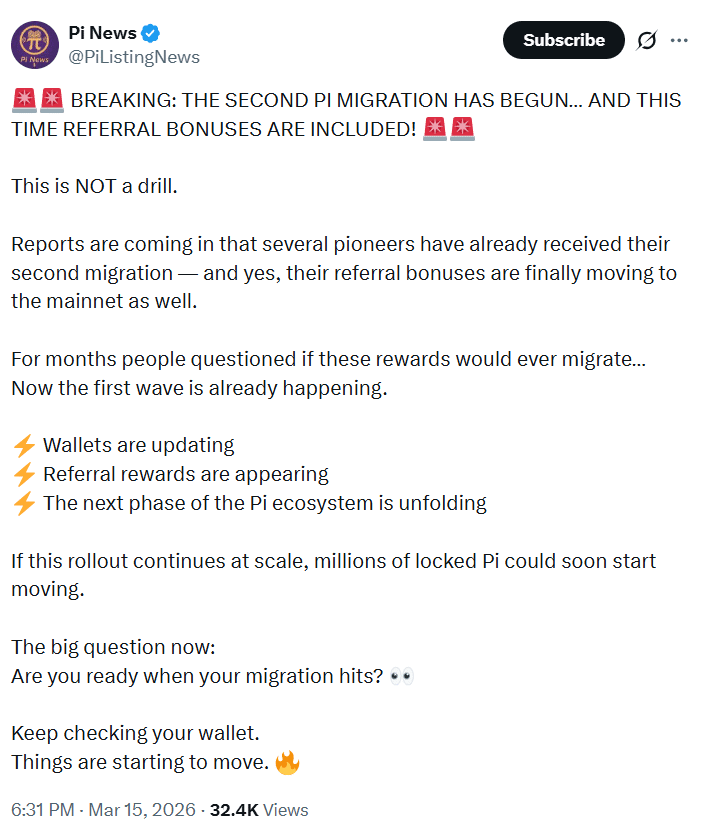
Pi Network has begun its second major migration for its mainnet, which includes the transfer of referral rewards to the live blockchain for the first time. This is another milestone, which began as a mobile mining platform and became a functional blockchain ecosystem.
The team announced that some pioneers have started receiving updated balances in their wallets, which include the referral rewards that were earlier stored within the app. The process began in early March 2026.
Pi Network Launches Second Mainnet Migration Phase
Several pioneers have reported receiving their second migration. Their wallets now show updated balances that include referral rewards. The migration moves tokens from the testing system to the live blockchain network.
For years, users mined tokens through the mobile application. However, those tokens remained inside the app and were not part of the blockchain. This migration converts those balances into blockchain assets.
The phased rollout is designed to keep the network stable while millions of accounts are processed.
The latest migration is an important milestone for Pi Network. It helps shift the ecosystem closer to a fully operational blockchain environment.
As more users complete the migration, additional tokens enter circulation. This supports the potential growth of transactions and applications within the ecosystem.
At the same time, the Pi Network price has attracted attention in the market. The token previously surged but later faced a significant correction.
Migration Moves Tokens to the Blockchain
The second migration phase moves mined tokens from the mobile environment to the blockchain. This process allows users to store their balances directly in blockchain wallets.
The change improves transparency and prepares the network for broader adoption.
Referral Rewards Finally Reach Mainnet
Referral rewards are a major focus of this migration phase. Many pioneers earned additional tokens by inviting friends to join the network.
Until now, those rewards remained inside the application. They were not included in blockchain balances. The latest migration moves these rewards to mainnet wallets. This step increases the circulating supply and updates users’ real token holdings.
KYC Verification Required for Migration
Users must complete Know Your Customer verification before their balances migrate to the blockchain. This requirement helps prevent duplicate accounts and protects fairness.
Accounts that have not completed verification will not receive the migration yet. Users must finish the verification process to unlock their balances.
Some Users Receive Partial Balances
Some pioneers reported receiving only a portion of their balances during the migration. This happens when certain referral rewards or accounts are still under verification.
The network processes accounts in stages. This approach reduces the risk of system overload and improves accuracy. More balances are expected to migrate as verification continues.
Pi Network Price Pulls Back After Rally
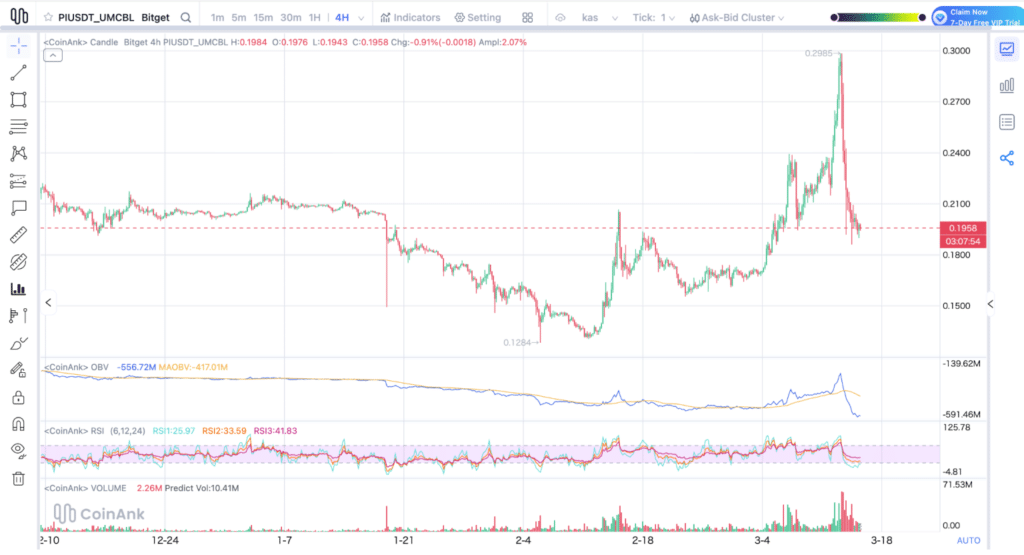
The Pi Network price experienced strong gains earlier this year. The token rose to around $0.2955 after ecosystem announcements and listing-related developments.
However, the rally was followed by a correction. The price later declined toward the $0.18 to $0.20 range.
Recent trading activity shows support near $0.1943, where buyers stepped in.
Technical Indicators Signal Oversold Conditions
Technical indicators suggest that the Pi Network price is currently under pressure. Bollinger Bands show the token trading close to the lower band.
The upper band is near $0.24 while the midline sits around $0.21. These levels may act as resistance if the price attempts a rebound.
Relative Strength Index readings also show weak momentum. The fast RSI sits near 25.97, indicating oversold conditions.
Weak Trading Volume Reflects Market Caution
Trading volume has declined as the price retraced from its earlier peak. On-Balance Volume indicates continued selling pressure.
Current trading volume is significantly below projected levels. This suggests lower participation from buyers during the correction. Still, migration progress could improve market sentiment over time.
| Month | Min. Price | Avg. Price | Max. Price | Change |
|---|---|---|---|---|
| Mar 2026 | $ 0.1417 | $ 0.1610 | $ 0.2029 | 1.02% |
| Apr 2026 | $ 0.1539 | $ 0.1593 | $ 0.1646 | -18.05% |
| May 2026 | $ 0.1515 | $ 0.1566 | $ 0.1634 | -18.67% |
| Jun 2026 | $ 0.1394 | $ 0.1478 | $ 0.1545 | -23.07% |
| Jul 2026 | $ 0.1474 | $ 0.1512 | $ 0.1542 | -23.21% |
| Aug 2026 | $ 0.1531 | $ 0.1597 | $ 0.1663 | -17.23% |
| Sep 2026 | $ 0.1603 | $ 0.1630 | $ 0.1667 | -17.02% |
| Oct 2026 | $ 0.1595 | $ 0.1696 | $ 0.1912 | -4.81% |
| Nov 2026 | $ 0.1836 | $ 0.2257 | $ 0.3172 | 57.93% |
| Dec 2026 | $ 0.3242 | $ 0.4309 | $ 0.5565 | 177.03% |
Migration Expands Future Use Cases
The ongoing migration could support new use cases within the ecosystem. As more tokens move to the blockchain, the supply available for transactions increases.
Developers expect the network to support payments, digital marketplaces, and decentralized applications in the future. The second migration therefore represents a key step toward long-term utility.
Conclusion
The second migration is another phase in the advancement of the Pi Network. With the transfer of the referral rewards and mined balances to the blockchain, the advancement continues.
Although the Pi Network has seen volatility in its value, the second migration has seen improvements in the infrastructure of the network. Its future growth is still to be seen.
Appendix: Glossary of Key Terms
Mainnet: The actual blockchain network, where actual transactions happen, and tokens are moved.
Migration: The process by which tokens are moved from the testing environment to the actual blockchain network.
Referral Rewards: The tokens that one receives for referring new people to join the network.
Bollinger Bands: A tool used to measure the volatility of the market, indicating possible ranges for the price.
On-Balance Volume (OBV): A tool used to determine whether the market is experiencing buying or selling pressure.
Frequently Asked Questions About Pi Network
1- What is the Pi Network’s second migration?
It is the process of transferring mined tokens and referral rewards from the mobile application to the live blockchain.
2- Why are referral rewards important?
Referral rewards represent tokens earned when users invite new participants to join the network.
3- Do users need verification to migrate tokens?
Yes. Users must complete Know Your Customer verification before their balances can move to the blockchain.
4- Why did some users receive only part of their balance?
Partial balances may occur if referral accounts or rewards are still under verification.
References