

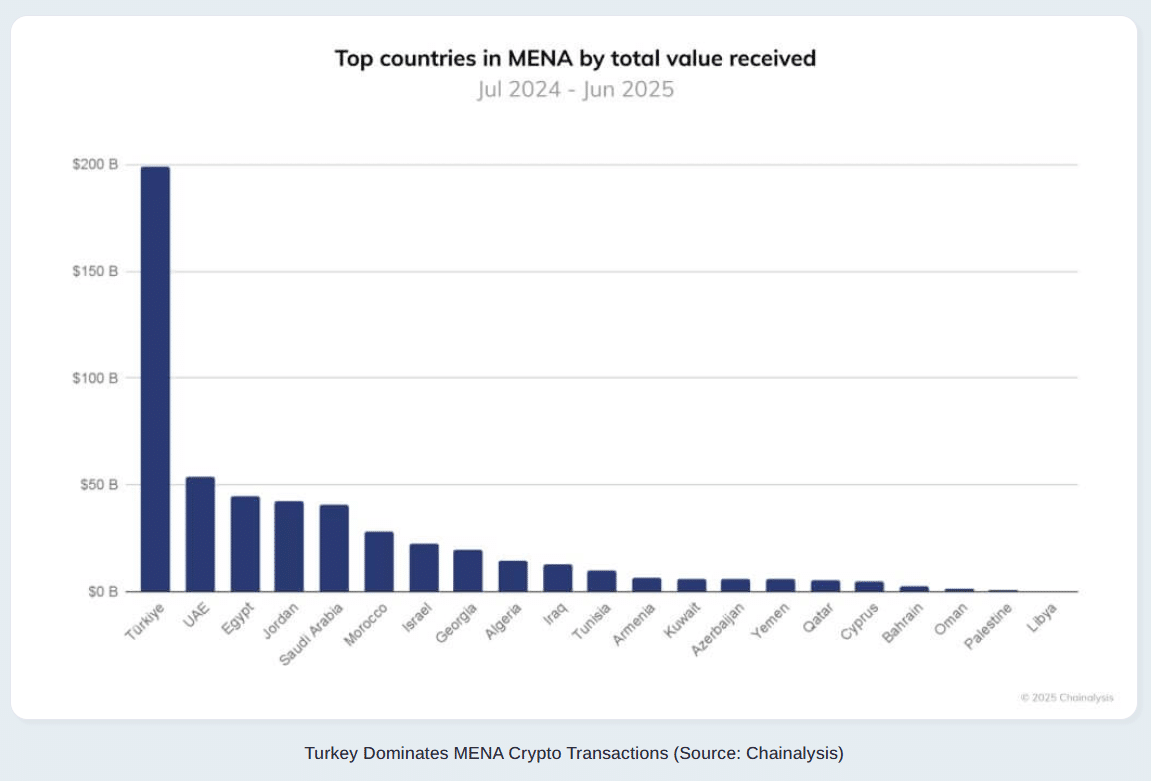
Ripple has expanded its regulated digital dollar into Türkiye, giving local institutions access through BiLira, Bitexen, and Bitlo. The move places the RLUSD stablecoin inside one of the most active crypto markets in the Middle East and North Africa, where annual transaction volume is close to $200 billion. For Ripple, this is not only a distribution push. It is a calculated step into a market where dollar-linked digital assets already play a serious role in hedging, trading, payments, and treasury management.
RLUSD stablecoin Enters Türkiye Through 3 Local Partners
The launch gives Turkish institutions a new route to use Ripple’s USD-backed asset through platforms that already serve local crypto users and businesses. BiLira, Bitexen, and Bitlo bring domestic access, while Ripple brings a product built around compliance, liquidity, and enterprise settlement.
That mix matters. Türkiye is not a small test market. It sits between Europe, Asia, and the Middle East, with a young digital user base and years of demand for alternatives to local currency pressure. In plain English, many users want access to dollar value without leaving the digital asset ecosystem. The RLUSD stablecoin is now entering that exact lane.
Ripple says RLUSD has reached around $1.7 billion in market capitalization since its late-2024 launch. Market capitalization shows the total value of tokens in circulation, so the figure signals rising institutional use rather than just brand interest. For stablecoins, this number is important because deeper supply can support larger transfers, tighter liquidity, and more reliable settlement.
Why Türkiye Matters For Ripple’s Stablecoin Strategy
Türkiye is the largest crypto market in MENA by transaction volume, with nearly $200 billion in annual activity. That scale gives Ripple a practical reason to expand there. A stablecoin can be more useful in a high-volume market because traders, institutions, and payment firms need fast dollar settlement without moving through slow banking rails each time.
The RLUSD stablecoin also arrives as Türkiye continues to tighten crypto oversight. A clearer licensing environment can help regulated firms work with local platforms without the uncertainty that often slows institutional adoption. This is where Ripple’s pitch becomes stronger. It is not selling only speed. It is selling a dollar-backed asset with compliance at the center.
For crypto markets, this is a key indicator. Regulation may reduce some speculative noise, but it can also invite banks, funds, payment firms, and corporate treasuries that need rules before they move serious capital.
What This Means For XRP, Liquidity, And Stablecoin Demand
The expansion is also relevant to XRP watchers, although RLUSD is a separate asset. Ripple’s broader ecosystem includes payments, custody, liquidity, and blockchain infrastructure. If the RLUSD stablecoin gains more institutional use, it could strengthen Ripple’s role as a bridge between traditional finance and crypto markets.
Still, the impact should be viewed carefully. Stablecoin growth does not automatically mean an XRP price rally. Investors should track liquidity, exchange listings, transfer volume, reserve transparency, and real-world use. These indicators show whether adoption is practical or mostly headline-driven.
The most useful signal will be activity from institutions, not social media hype. If Turkish businesses use the RLUSD stablecoin for settlement, collateral, or treasury operations, the launch could become a meaningful expansion. If usage stays thin, it may remain a distribution update with limited market effect.
Conclusion
Ripple’s Türkiye rollout places RLUSD inside a large, active, and increasingly regulated crypto market. The timing is sensible because demand for digital dollars remains strong, while institutions want assets that feel less risky than loosely managed tokens. The RLUSD stablecoin now has a chance to compete where stablecoins are already part of everyday crypto activity. The real test will be usage, liquidity, and whether local institutions treat it as market infrastructure rather than another listed asset.
Frequently Asked Questions
What is RLUSD?
RLUSD is Ripple’s USD-backed stablecoin, designed to hold a 1:1 value with the U.S. dollar and serve payments, liquidity, tokenization, and collateral use cases.
Why did Ripple choose Türkiye?
Ripple chose Türkiye because it is MENA’s largest crypto market by transaction volume and has strong demand for digital dollar products.
Is the RLUSD stablecoin linked to XRP?
RLUSD and XRP are different assets, but both sit within Ripple’s wider digital finance ecosystem.
Glossary Of Key Terms
Stablecoin: A crypto asset designed to track the value of another asset, usually $1.
Market Capitalization: The total value of a token’s circulating supply.
Liquidity: How easily an asset can be bought, sold, or transferred without large price impact.
Collateral: An asset used to back loans, trading positions, or settlement activity.
Sources
Disclaimer: This article is for informational purposes only and does not provide financial advice. Crypto assets carry market, regulatory, and liquidity risks.