



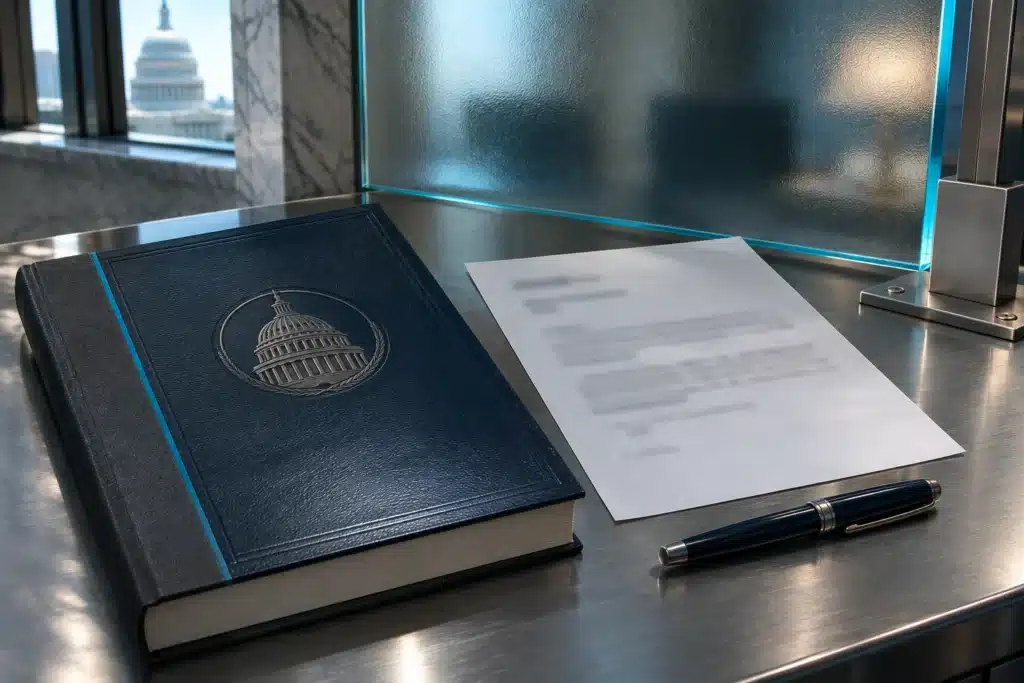
Prediction market bets by a former White House teleprompter operator have prompted Senators Elizabeth Warren and Jeff Merkley to demand answers about staff safeguards. In a November 10 letter to White House Counsel Will Scharf, they sought answers about safeguards against White House employees using nonpublic information to profit from prediction-market bets.
Key Takeaways
- Warren and Merkley want details on controls, ethics training and responses to staff trading with nonpublic information.
- The senators requested answers by November 23, 2026.
- A CFTC order against former aide Gabriel Perez imposed a $65,000 civil penalty, required him to surrender $107,539.02 in profits and barred him from trading for three years.
- Bitcoin and ether were higher over 24 hours but lower over seven days on November 11. This market snapshot does not establish a connection to the ethics story.

What happened in the prediction market bets inquiry
The senators’ letter follows the CFTC’s case against Gabriel Perez, a former White House teleprompter operator. The Commodity Futures Trading Commission said he traded presidential mention-market contracts from December 2025 through February 2026, using advance access to speeches he operated the teleprompter for. The contracts concerned words or phrases President Donald Trump might say.
Under its August 28, 2026 order, the CFTC required Perez to disgorge $107,539.02 in profits, pay a $65,000 civil penalty and accept a three-year trading ban. The agency described the conduct as insider trading of event contracts. The order makes this both a workplace-policy issue and an enforcement matter involving nonpublic government information.
Warren and Merkley asked whether other employees had used insider knowledge to place bets or trades and what ethics training staff receive. They requested a response by November 23. The Block reported on November 11 that the White House had not immediately responded to a request for comment.
The senators said a staff warning alone was not enough to restore public confidence. Their letter also raised possible conflicts involving Donald Trump Jr.’s advisory roles and financial interests connected to prediction-market firms. Fortune reported that he advises Kalshi and Polymarket, and that 1789 Capital, where he is a partner, has invested in Polymarket. These reported ties are separate from the CFTC’s case against Perez; the information provided does not establish wrongdoing by Trump Jr. or the firms.
Background and context for White House prediction markets
The White House Management Office had already warned employees about this risk. CBS News reported that a March 24, 2026 email told staff that trading prediction-market contracts with nonpublic government information could be a criminal offense and violate ethics rules. The senators are seeking answers about safeguards and staff ethics training.
In July, White House press secretary Karoline Leavitt said Perez was on unpaid leave and called the reported conduct “unfortunate” and “a disgrace,” according to the Associated Press. She said the White House had strict ethical guidelines. The AP also reported that Kalshi’s enforcement chief said the platform flagged the trades and referred them to the CFTC. The later CFTC order provides the agency’s official account of the outcome.
The issue goes beyond one employee. Prediction contracts make political events tradable outcomes. A government worker with advance access to a speech or decision may have an information advantage over other participants, making rules and enforcement important to market integrity.
The Block also noted a separate case involving a U.S. Army soldier who allegedly used confidential information to bet on Polymarket before Nicolás Maduro’s capture. The report described the Army soldier case as a separate allegation from Perez’s case.
Market reaction and crypto prices
The available research does not show a direct market reaction to the senators’ letter or the CFTC order. Prediction-market contracts are not cryptocurrency spot prices, so these figures are context, not evidence that the ethics story moved crypto markets.
| Asset | Price | 24-hour change | 7-day change |
|---|---|---|---|
| Bitcoin (BTC) | $74,440 | +0.79% | -7.15% |
| Ethereum (ETH) | $2,071.23 | +0.69% | -14.42% |
CoinGecko data supplied for November 11, 2026 at 22:13 UTC showed both assets higher over 24 hours and lower over the week. Alternative.me classified the Crypto Fear & Greed Index at 29, or Fear, that day. These broad indicators can reflect many forces and don’t identify the cause of a price move. The supplied data show that both assets had declined over the seven days ending November 11, despite their 24-hour gains.
The controversy is more directly about market integrity and public trust than token valuations.

What to watch next
The immediate milestone is the senators’ November 23 response deadline. Their questions may clarify whether the White House has policies beyond the March warning email, how staff are trained and whether officials check for trades tied to confidential duties. A response could also say whether the administration reviewed activity beyond Perez’s case.
Watch for further CFTC statements or platform disclosures about enforcement and referrals. The Perez order establishes a penalty and trading ban in his case, but does not explain how broadly agencies monitor prediction-market activity or what controls platforms use in other cases. The separate Army case remains an allegation in the information provided here.
Warren and Merkley’s letter also puts relationships around prediction-market businesses under scrutiny. What happens next depends on the White House response and any documented action, not on the existence of an allegation alone.
FAQ
What were the prediction market bets in the Perez case?
The CFTC said Perez traded contracts tied to words or phrases President Trump might use in speeches he operated the teleprompter for, using advance access to those speeches.
What did Warren and Merkley ask the White House?
They asked about safeguards against staff using nonpublic information to trade, whether other employees had done so and what ethics training staff receive. They requested a response by November 23, 2026.
What penalty did the CFTC impose on Gabriel Perez?
The CFTC’s August 28 order required him to surrender $107,539.02 in profits, pay a $65,000 civil penalty and accept a three-year trading ban. The order concerns Perez’s case, not a finding against prediction-market users generally.
Sources
- Sen. Warren, Merkley raise ethics concerns over Trump aide’s prediction market bets (The Block)
- Warren, Merkley Press White House for Answers on Insider Trading Scandal Involving Trump Teleprompter Aide (www.merkley.senate.gov)
- CFTC Orders Gabriel Perez to Pay $172,000 for Insider Trading of Mention Market Event Contracts (www.cftc.gov)
This article is for informational purposes only and does not constitute financial or investment advice. Cryptocurrencies are highly volatile; always do your own research before investing.