

Last updated: November 18, 2026
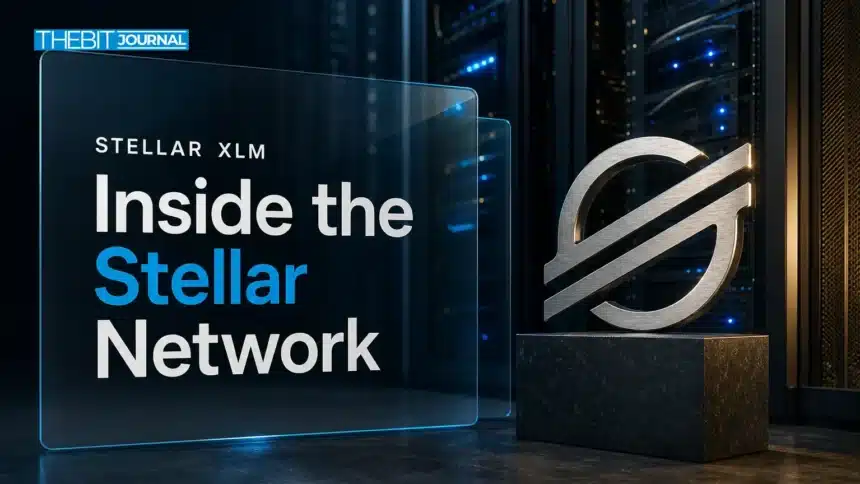
What is Stellar? It’s a public blockchain for sending and exchanging value, including digital representations of currencies and other assets. Its native token, the lumen (XLM), is used for network fees and account requirements. The network and token are related, but they aren’t interchangeable concepts.
TL;DR
- Stellar is a network for transferring and exchanging digital value; XLM is its native token.
- Stellar uses the Stellar Consensus Protocol, not proof of work or proof of stake.
- XLM has practical network uses, but its price can be volatile and network assets carry risks.
What is Stellar and what does XLM do?
Stellar is a public blockchain that maintains a shared record of transactions and lets users move value. Stellar.org describes it as a network for sending and exchanging assets, including digital representations of currencies. Assets can be issued on Stellar, while XLM is the network’s own token.
XLM pays transaction fees and helps meet minimum-balance requirements for accounts. Stellar.org lists a minimum transaction fee of 0.00001 XLM and a 1 XLM minimum account balance. These are network rules, but the dollar cost can change as XLM’s market value changes.
For people asking what is Stellar used for, the short answer is payments and asset exchange. A token’s existence on a blockchain doesn’t guarantee it can be redeemed for an underlying asset. Users need to consider who issued it and what rights or services the issuer offers.
What is Stellar (XLM) in a wallet?
A wallet lets a user interact with the network using account credentials. Holding XLM means controlling the token through that account, not owning a share in Stellar or a claim on its organizations. Lost credentials or a compromised wallet can lead to a permanent loss of funds.

How does the Stellar blockchain work?
Stellar reaches agreement on transactions through the Stellar Consensus Protocol (SCP). Stellar.org’s FAQ describes SCP as a federated Byzantine agreement system: validators choose groups of other validators they trust to help reach agreement. Stellar isn’t proof of work, where miners compete using computing power, or proof of stake, where participation is based on staked tokens.
This design doesn’t remove operational risk. Users depend on the network and the validators involved in consensus. Apps and issued assets can bring separate technical, custody, issuer and regulatory risks. A problem with an application or token doesn’t necessarily mean the network has failed, but it can still affect users.
Stellar.org says the original 1% annual inflation mechanism ended after a community vote in October 2019. About 50 billion XLM exist, and the protocol won’t create more. The circulating amount is lower: CoinGecko reported about 35.41 billion XLM in circulation in its November 18, 2026 market snapshot.
Stellar’s uses and activity
Stellar’s use isn’t limited to XLM transfers. Stellar.org’s institutional-finance report, using data through September 30, 2026, put the network’s tokenized real-world-asset market capitalization at $4.12 billion. It said that figure was 6.1 times higher year over year and represented 12.7% of tokenized real-world assets across chains. These reported figures describe network activity, but they do not establish that growth will continue.
The report also put Stellar’s stablecoin supply at $546 million and monthly adjusted stablecoin transfer volume at $2.42 billion through September 30, 2026. Stellar’s Q3 2026 update separately reported $33.2 billion in total network volume for the quarter and monthly payment volume of $18.5 billion in October.
Stellar.org announced on October 29, 2026, that MetaMask added Stellar as a default network in its mobile app and browser extension, supporting XLM and Stellar-issued assets. Chainlink Data Feeds and Data Streams also went live on Stellar in October 2026, providing oracle infrastructure for smart contracts and decentralized finance applications.

XLM market snapshot and key risks
Market data is a dated snapshot, not a forecast. CoinGecko recorded these XLM figures at 13:19 UTC on November 18, 2026:
| Metric | Value |
|---|---|
| XLM price | $0.140804 |
| Market capitalization | $4.99 billion |
| 24-hour trading volume | $150.10 million |
| Circulating supply | 35.41 billion XLM |
CoinGecko’s historical data lists an all-time high of $0.875563 on January 2, 2018. A past high doesn’t indicate future performance. XLM can rise or fall sharply, and liquidity, broader crypto conditions and regulation can affect its price. People can lose some or all of the value they put into a crypto asset.
Network use and token value aren’t the same thing. More transfers or issued assets show activity, but don’t establish that XLM’s market price will rise.
What is Stellar’s next protocol change?
As of November 18, 2026, Stellar.org said a validator vote on the proposed Bell, or Protocol 30, upgrade was scheduled for November 23 at 17:00 UTC. Proposed features include muxed contract addresses, ML-DSA post-quantum signature verification for smart contracts and millisecond ledger timing. These were proposals awaiting a vote, not confirmed features active on mainnet.

Stellar pros and cons
| Potential advantages | Limitations and risks |
|---|---|
| Designed for sending and exchanging digital value | XLM’s market price is volatile |
| Supports XLM and other issued assets | Issued assets depend on their issuers and may have separate risks |
| Uses SCP rather than mining or stake-based consensus | Network, wallet, application and regulatory risks remain |
Who Stellar may be for, and who it may not be for
Stellar may interest people studying blockchain-based payments, digital asset issuance or alternative consensus designs. Developers and institutions may assess its network features when considering where to build or issue assets. These use cases don’t make XLM low-risk or ensure a project will succeed.
Stellar may not suit someone who needs a stable value, dependable access to funds or expects a transfer to be risk-free. XLM’s price can move, and mistakes involving credentials, applications or asset issuers can have lasting consequences. Separate the network’s functions from speculation about its token price.
Bottom line
What is Stellar? It’s a public blockchain for sending and exchanging digital value, with XLM used for fees and account requirements. Tokenized assets, payment activity and integrations show how the network is being used, but don’t settle questions about future adoption or XLM’s price. Understanding its consensus model, token role and risks provides a clearer basis for evaluating the network.
Sources
- Stellar price and market data (CoinGecko)
- Shiba Inu (SHIB) Bearish Rally is Fading, Solana (SOL) Death Cross Isn't Dangerous, Stellar (XLM) Recovery Signal Potential: Crypto Market Review (U.Today)
- Stellar Lumens (stellar.org)
This article is for informational purposes only and does not constitute financial or investment advice. Cryptocurrencies are highly volatile; always do your own research before investing.