






Last Updated; 16 July 2026
The Babylon Aave support is picking up steam following the Babylon Foundation announcement of a $3 million USDT deposit on the Aave lending protocol, which is among the largest liquidity support projects in DeFi this year. This comes amid the recent rsETH exploit that was tied to KelpDAO and seeks to boost lending protocols while restoring confidence in the ecosystem.
The initiative by Babylon does not seek to make any short-term profits but seeks to reinvest all the interest accrued from the deposit back into the protocol. Babylon Aave support illustrates the ongoing trend of ecosystem collaborations where major DeFi projects provide support to the crucial infrastructure when markets are unstable.
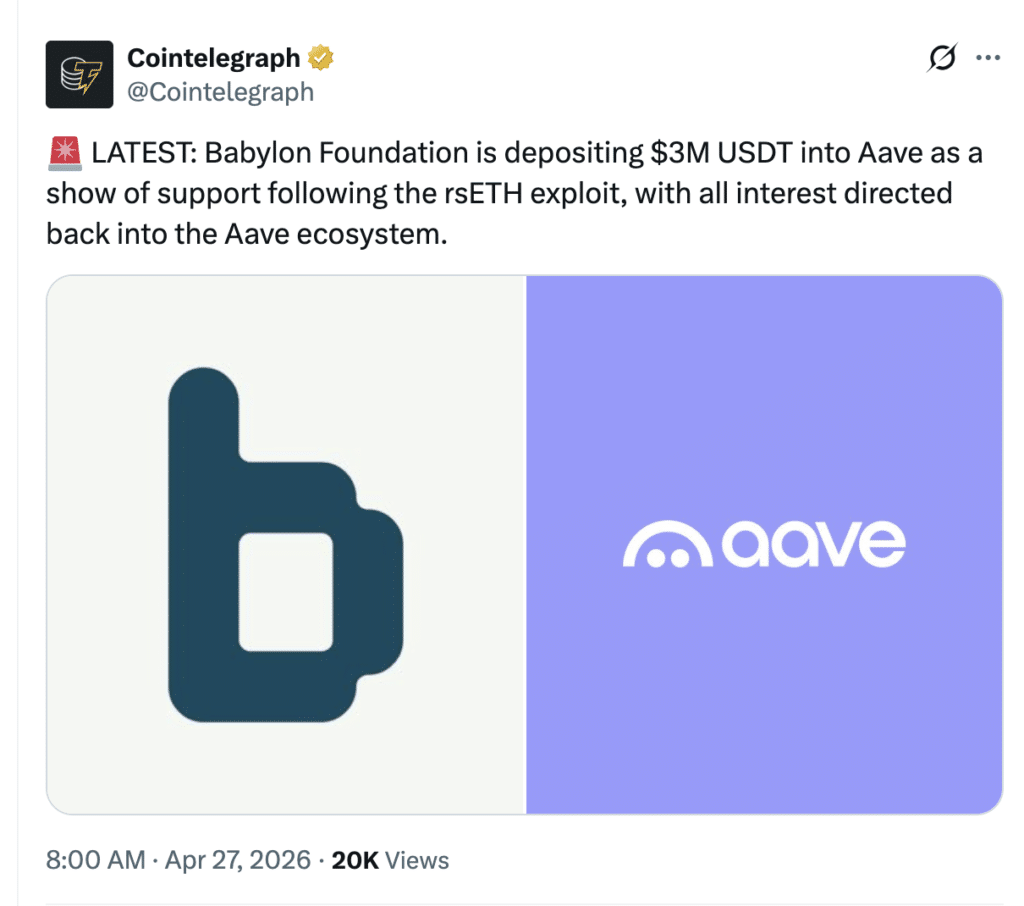
$3M USDT Deposit by Babylon Into Aave
Babylon Foundation has deposited $3 million worth of USDT into Aave in an effort to bolster liquidity after the recent market disruption caused by rsETH. This deposit will serve to enhance trust in the lending protocol as opposed to providing any immediate returns.
| Metric | Value |
|---|---|
| Total Liquidity Deposit | $3,000,000 USDT |
| Allocation to Aave V3 | $2,000,000 USDT |
| Allocation to Aave V4 | $1,000,000 USDT |
| Deposit Asset | USDT |
| Interest Distribution | 100% Reinvested into the Aave Ecosystem |
The additional liquidity bolsters the lending protocols within Aave and demonstrates the ongoing commitment of Babylon to ecosystem stability. It will be interesting to see if the extra funding helps maintain trust in the system going forward.
Liquidity for Aave V3 and V4
The allocation has been done equally for Aave V3 and V4, with $2 million going towards the production version and $1 million toward the upcoming next-generation system of Aave.
Being able to help both versions gives Babylon the opportunity to develop lending markets currently available on Aave as well as prepare Aave for future developments. This ensures that the capital will serve both existing and upcoming projects of Aave.
This is yet another sign of trust towards the roadmaps of Aave and the further expansion of their lending infrastructure.
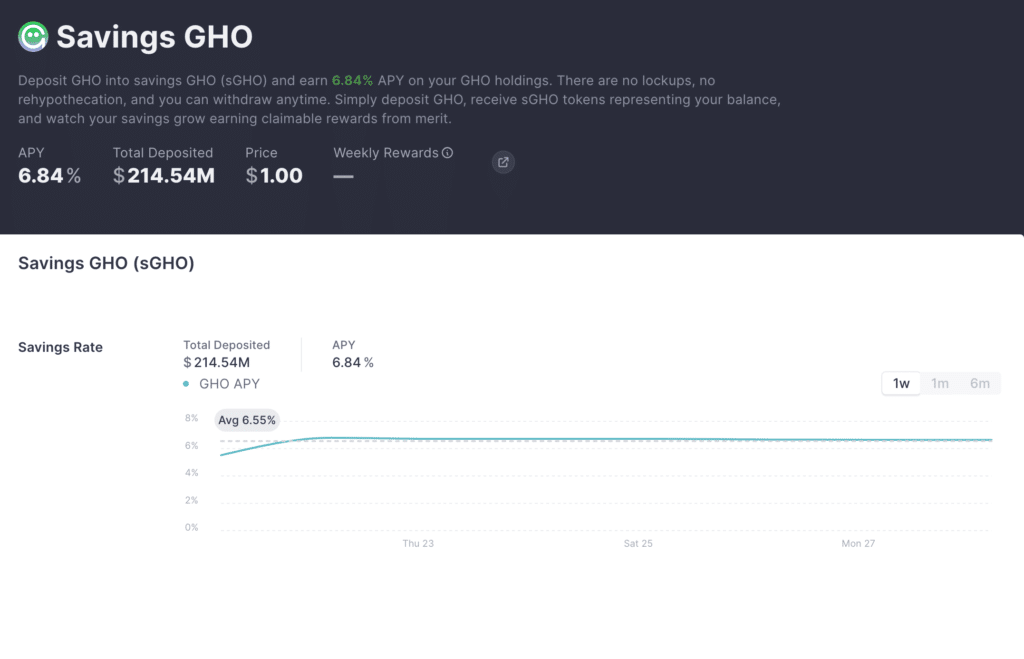
rsETH Exploit Shapes the Recovery Narrative
The rsETH exploit became one of the most closely watched DeFi security incidents of the year, highlighting the interconnected nature of decentralized finance. While Aave itself was not directly exploited, governance responded by freezing affected collateral markets to limit potential risks.
The incident temporarily weakened confidence in liquid staking assets and increased attention on liquidity management across lending platforms. Babylon’s capital injection arrives during this recovery period, providing additional stability when market sentiment remains cautious.
Rather than functioning as an emergency rescue, the deposit serves as a confidence-building measure that reinforces the protocol’s liquidity foundation.
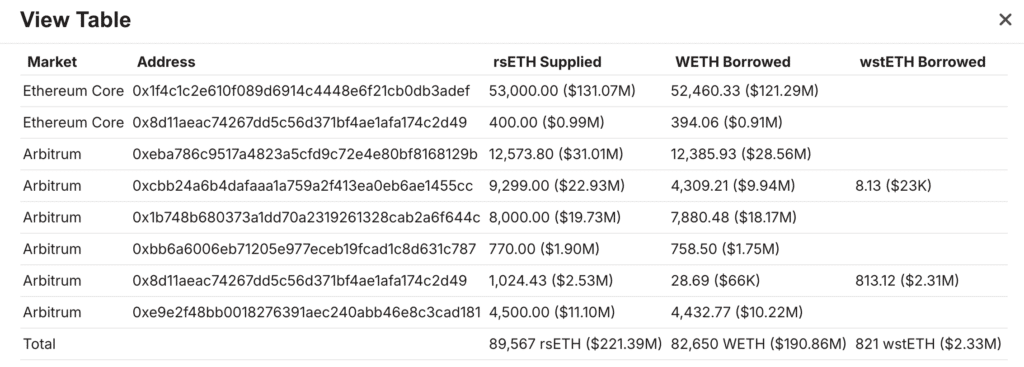
Why Liquidity Matters for Aave
Liquidity is essential for the smooth operation of decentralized lending markets. Larger liquidity pools improve borrowing capacity, support efficient capital movement, and help reduce volatility during periods of market stress.
By increasing USDT reserves within Aave, Babylon strengthens the protocol’s ability to serve borrowers while supporting healthier lending conditions. Since all interest earned from the deposit will be returned to the ecosystem, the initiative also creates an ongoing benefit instead of a one-time contribution.
This long-term approach reflects a broader focus on sustainable ecosystem growth rather than short-lived incentives.
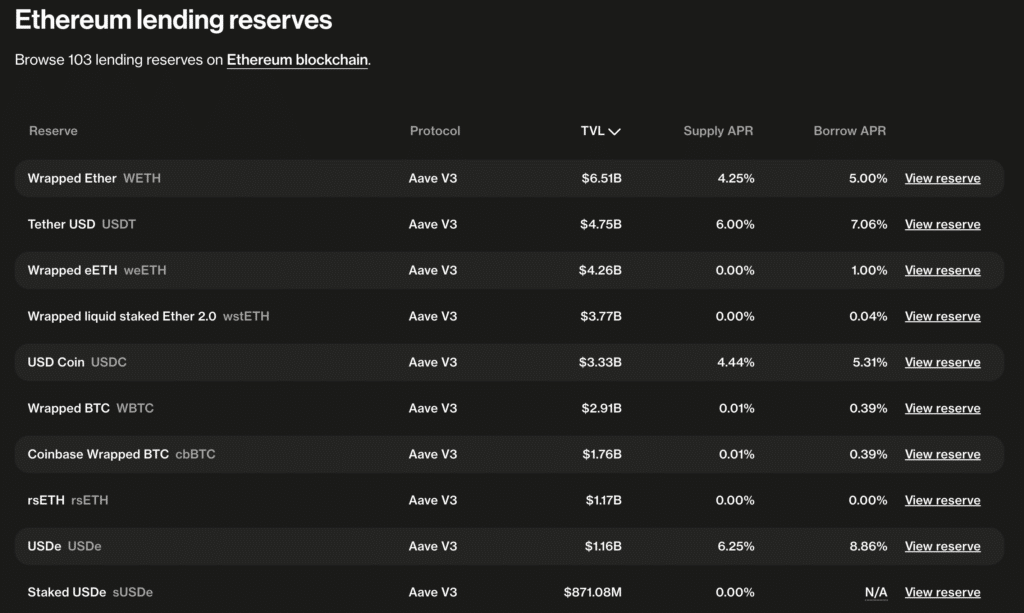
Is Aave Safe After rsETH Exploit?
One of the most discussed topics following the incident is: is Aave safe after rsETH exploit? Babylon Aave support plays a significant role in answering this concern. While no system in DeFi is entirely risk-free, the injection of capital helps reinforce liquidity depth and reduces short-term volatility risks.
Babylon Aave support, combined with Aave protocol latest news updates, suggests that the platform is actively managing exposure and improving resilience. The structured liquidity addition helps stabilize borrowing markets and reduces potential cascading liquidations.
From a risk perspective, Babylon Aave support demonstrates how Aave recovery after DeFi exploit scenarios are increasingly being handled through coordinated capital reinforcement rather than isolated protocol fixes.
Conclusion: Babylon Aave Support Redefines DeFi Collaboration
Babylon Aave support stands as a notable example of how decentralized finance is evolving into a more cooperative ecosystem. The $3 million USDT injection into Aave is not just a liquidity event but a strategic confidence signal following the rsETH exploit disruption.
Babylon Aave support highlights the growing importance of cross-ecosystem participation, where foundations actively reinforce major protocols during instability. This approach strengthens DeFi market recovery after exploit 2026 scenarios and signals a shift toward more resilient financial infrastructure.
As DeFi continues to mature, Babylon Aave support may be remembered as a key moment where liquidity support transformed into ecosystem-wide collaboration. Market participants are encouraged to monitor ongoing Aave ecosystem developments closely, as similar interventions may shape the next phase of decentralized finance evolution.
Appendix: Glossary of Key Terms
DeFi refers to decentralized finance systems built on blockchain networks that remove traditional intermediaries.
Aave is a leading lending protocol enabling users to borrow and lend crypto assets.
Liquidity injection refers to the addition of capital into a financial system to stabilize markets.
rsETH is a liquid staking derivative asset affected by a recent exploit event.
USDT is a stablecoin pegged to the US dollar, commonly used for liquidity provisioning in DeFi ecosystems.
Frequently Asked Questions About Babylon Aave Support
What is Babylon Aave support?
Babylon Aave support refers to the $3 million USDT liquidity injection into Aave designed to stabilize the protocol after the rsETH exploit.
Why did Babylon invest in Aave?
The investment aims to restore confidence and improve liquidity conditions following DeFi market disruptions.
How is the $3M USDT distributed?
Funds are split between Aave V3 and Aave V4 to strengthen both mature and next-generation liquidity systems.
Does this improve Aave safety?
It improves liquidity stability but does not eliminate underlying smart contract or market risks.
What happens to the interest earned?
All interest generated is reinvested into the Aave ecosystem for further support.
References