

Last updated: November 2, 2026
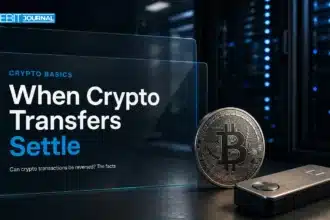
Can crypto transactions be reversed? Usually not once a transfer has been confirmed and finalized on the blockchain. A refund may still happen if the recipient returns the funds, or recovery may follow an investigation, but neither action erases the original transaction.
Quick answer
Most crypto networks don’t provide a chargeback button: a confirmed transfer is generally permanent under the protocol. A pending transaction may sometimes be replaced, while a completed payment can only be returned by its recipient or recovered through a separate process.
Can crypto transactions be reversed? Check these steps
Start by identifying the transaction’s status and where the assets were sent. A wallet, an exchange and a blockchain have different roles, so the right next step depends on which one handled the transfer.
- Check whether it’s pending. Look at the status in the wallet or service used to send it. A pending transaction has not yet reached the same status as a confirmed or finalized one. Don’t assume that a delay means the funds have been returned.
- For a pending Ethereum transfer, check replacement options. Ethereum.org says a pending transaction can often be replaced by sending a 0 ETH transaction to the same address with the same nonce. This is a replacement attempt, not a way to reverse a transfer already included and finalized on-chain. Wallets may present this process differently.
- If it completed, contact the recipient or service. Bitcoin.org says a recipient can refund a Bitcoin payment. Coinbase also says that recovery outside the protocol generally depends on asking the recipient for a refund. If an exchange handled the transfer, contact its support team promptly, but don’t assume it can undo an on-chain payment.
- If you suspect fraud, preserve the details. Keep the transaction information and communications, and report the incident to the relevant platform and appropriate authorities. The FTC says crypto payments typically aren’t reversible, unlike some credit-card disputes. Be wary of anyone promising recovery in exchange for an upfront payment or asking for your seed phrase.

What can happen in different situations
“Reversal” can mean several things. The network might accept a replacement while a transaction is pending, a recipient might send a new payment, or authorities might recover assets later. Only the first concerns an unfinalized transaction, and none should be confused with deleting a completed transfer.
| Situation | What may be possible | What it means |
|---|---|---|
| Pending Ethereum transaction | Replacement may be possible | Ethereum.org describes replacing it with a same-nonce transaction. It does not undo a finalized transfer. |
| Confirmed Bitcoin payment | Recipient may refund it | Bitcoin.org says the protocol can’t reverse a payment. It recommends waiting for 6 confirmations for high-value transfers; blocks are added about every 10 minutes on average. |
| Completed USDC transfer | Recipient may return funds; address controls may apply | Circle’s USDC Terms, last updated October 15, 2026, say supported-chain transfers can’t be reversed or recalled once initiated. Circle may block addresses in specified circumstances, which isn’t the same as reversing a transfer. |
| Fraud investigation | Authorities may recover assets | Recovery is separate from changing the transaction record. |
Confirmation and finality aren’t identical across networks. Bitcoin.org describes confirmations as increasing confidence over time, not as instant absolute settlement. Ethereum.org says finalized proof-of-stake blocks are treated as permanent except in a consensus failure involving an attacker burning 33% of total staked ETH; finalization checkpoints require votes from 66% of staked ETH.

Common mistakes and risks
Confusing a refund with a reversal. If the recipient sends the same amount back, that’s a new transaction. The original transfer remains part of the record. That’s why searching for a way to “undo” a payment can lead to misleading support offers.
Assuming a platform can recall an on-chain payment. Coinbase says digital-currency transactions can’t be canceled or altered once initiated under the protocols. A custodial service may have its own support process, but that doesn’t give it a general protocol-level reversal function.
Treating a freeze as a rollback. Circle explains that blocking an address can stop it from sending or receiving USDC or EURC, but completed transfers remain irreversible. A freeze may affect what happens next; it doesn’t make the earlier transfer disappear.
Trusting recovery promises. The U.S. Department of Justice said on March 13, 2026, that the FBI had seized 470,773 USDT traced to victims’ payments, with about $470,735 set to be returned to two victims after forfeiture. This illustrates recovery through investigation and legal process, which is separate from an on-chain reversal.
A mistaken transfer or scam can mean losing the full amount. Crypto also carries volatility, exchange and smart contract risks, and legal rules differ by country. No support agent or recovery service needs your seed phrase to investigate a transaction. Don’t share it.

Frequently asked questions
Can crypto transactions be reversed after confirmation?
Generally, no. Bitcoin.org says Bitcoin payments can’t be reversed by the protocol, and Ethereum.org says replacing a pending transaction doesn’t reverse one already included and finalized. A recipient can make a separate refund, but the original transfer remains recorded.
Can I cancel a pending crypto transaction?
It depends on the network and status. Ethereum.org says a pending transaction can often be replaced using the same nonce and a 0 ETH transaction to the same address. That option doesn’t apply to a transaction already finalized, and a replacement isn’t a refund.
Can I get crypto back if I sent it to the wrong person?
There is no general chargeback mechanism. The recipient may return the funds, or an exchange may be able to explain its process if it was involved. If the transfer relates to fraud, reporting it can support an investigation, but the DOJ example shows that recovery requires a separate process and isn’t assured.
Sources
- Some things you need to know – Bitcoin (bitcoin.org)
- Frequently Asked Questions (ethereum.org)
- Frequently Asked Questions (ethereum.org)
This article is for informational purposes only and does not constitute financial or investment advice. Cryptocurrencies are highly volatile; always do your own research before investing.