

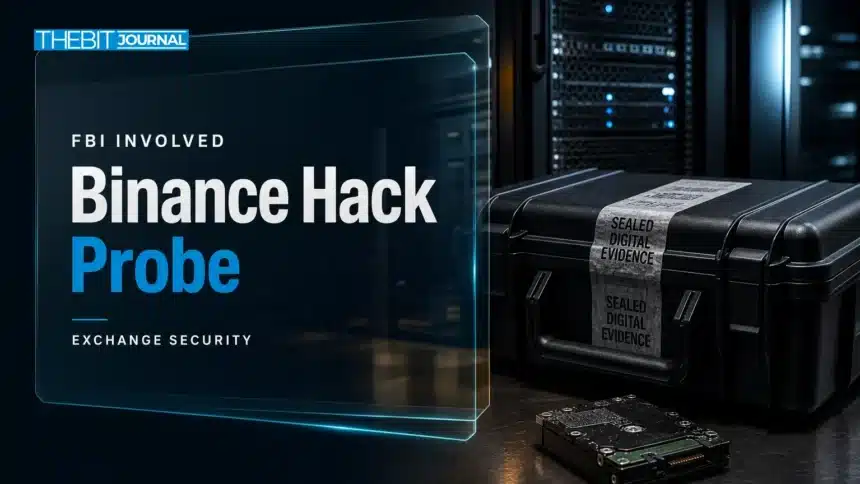

The Binance hack has drawn the FBI and US Secret Service into an international investigation, while Circle has frozen approximately $823 million in USDC linked to the theft, according to Decrypt’s October 30 reporting citing Reuters. Binance says it has reserved more than $6.34 billion to cover stolen assets, but published accounts differ on the theft’s size and how much has been immobilized.
Why it matters
The Binance hack illustrates stablecoin issuers’ power to block transfers. Freezing tokens can interrupt an attacker’s access to funds, but it doesn’t establish that customers have been repaid or that investigators have identified everyone responsible.
What we know about the Binance hack
Decrypt reported on October 30 that a person familiar with the matter told Reuters Binance was cooperating with law enforcement worldwide, including the FBI and Secret Service. The FBI confirmed awareness of the incident and said it was working with public and private partners to assess its scope and coordinate investigative steps.
The Secret Service hadn’t commented, according to Decrypt. The outlet noted that the agency investigates financial crimes, computer crimes and crimes involving digital currencies, alongside its protective duties. Decrypt also described an earlier collaboration: Operation Atlantic, an April effort involving the Secret Service, the UK’s National Crime Agency, Binance, Coinbase and other crypto firms. That operation identified more than 20,000 victims of approval phishing scams, traced $45 million in stolen funds and froze $12 million. Those figures concern the earlier operation, not the Binance theft.
Circle CEO Jeremy Allaire said the USDC issuer was coordinating with law enforcement and had frozen more than $800 million associated with the incident, Decrypt reported. The outlet put the approximate amount at $823 million in its October 30 account.
According to Decrypt, Circle and rival issuer Tether can blacklist blockchain addresses, preventing their tokens from being transferred out of those wallets. Immobilizing those assets is different from returning them to Binance or its customers.
Binance hack attribution points to TraderTraitor
Decrypt reported that blockchain intelligence firms TRM Labs and Chainalysis linked the attack to TraderTraitor, a North Korean hacking group. The outlet also connected the group to the $1.5 billion Bybit theft in February 2025, which the FBI attributed to North Korean hackers.
The TraderTraitor attribution reported by Decrypt comes from those blockchain intelligence firms. The FBI comments quoted in the supplied reporting address the investigation, not responsibility for the Binance attack. Its attribution of the separate Bybit theft does not establish an FBI attribution in this case.
What is still unclear
The Binance hack totals aren’t consistent across the reports. Cointelegraph’s October 30 report described a $6.3 billion theft, while Decrypt used both $6.3 billion and $6.4 billion. Those accounts don’t establish a single reconciled loss figure.
Tether’s freeze amount is less clear still. Decrypt’s report includes $975.1 million in its summary, approximately $1.5 billion in its body, and an October 29 statement from CEO Paolo Ardoino referring to more than 1.567 billion USDT. Without a reconciliation, those figures shouldn’t be treated as interchangeable or added together.
Cointelegraph reported that Binance said about $3 billion had been frozen. Decrypt described approximately $3 billion as located or frozen, citing CEO Richard Teng’s October 30 update. Locating funds, blocking transfers and recovering assets are distinct milestones.
The available reporting also doesn’t establish a final technical explanation for the breach. These accounts do not confirm the entry point or establish how much of the stolen assets can ultimately be returned.
Market snapshot on October 30
The tracked crypto assets were lower over the preceding 24 hours, but the available data doesn’t isolate the Binance hack as the cause. CoinGecko’s October 30 snapshot at 21:13 UTC showed Bitcoin down more over that period than BNB.
| Asset | USD price | 24-hour change |
|---|---|---|
| Bitcoin | $76,633 | -3.13% |
| Ethereum | $2,236.18 | -1.24% |
| BNB | $697.85 | -1.35% |
All prices and changes above are from CoinGecko as of October 30, 2026, at 21:13 UTC. Alternative.me’s Crypto Fear & Greed Index stood at 30, classified as Fear, on October 30.
These figures describe market conditions, not the theft’s effect on prices. Neither the snapshot nor the attribution findings establish how token prices will move next.
What it means for investors
For customers, a central question is whether Binance’s funding commitment translates into completed reimbursement. Decrypt reported that Binance would use company funds and its Secure Asset Fund for Users, with Teng saying more than $6.34 billion had been reserved on October 30.
That is a company commitment, not independent verification of completed payments. Binance’s loss-coverage pledge, as reported by Decrypt, should be distinguished from evidence that customers have received funds.
The incident illustrates the risk of assets being stolen from an exchange. Stablecoin freezes introduce another distinction: an issuer can block transfers without returning the tokens to their owner. A located wallet and spendable recovered funds aren’t equivalent.
Bottom line
The Binance hack investigation involves US agencies and stablecoin issuers, according to the reporting, but the recovery picture remains incomplete. Reconciled freeze totals, a confirmed technical explanation and evidence of customer repayment would help resolve the outstanding questions. The available reporting does not establish when those answers might arrive.
Sources
- Secret Service, FBI Join Binance Hack Probe as Circle Freezes $823 Million (Decrypt)
- FBI and Secret Service join response to Binance’s $6.3B hack (Cointelegraph)
This article is for informational purposes only and does not constitute financial or investment advice. Cryptocurrencies are highly volatile; always do your own research before investing.