



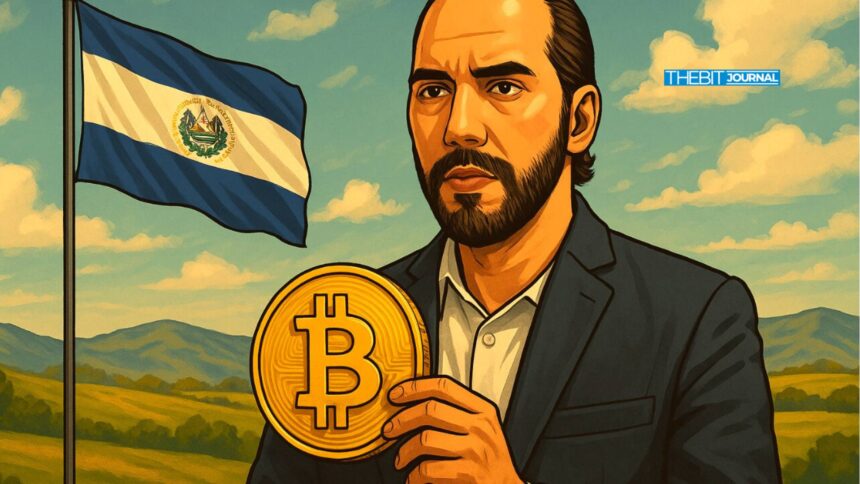

According to recent updates, El Salvador Bitcoin security has taken a new turn as the nation spread its entire Bitcoin reserve across multiple wallets. This move is not only about better custody but also about preparing for future risks linked to quantum computing.
The decision reflects a growing effort to secure national reserves and shows how governments can take extra care when handling digital assets.
A Strategic Shift in Custody
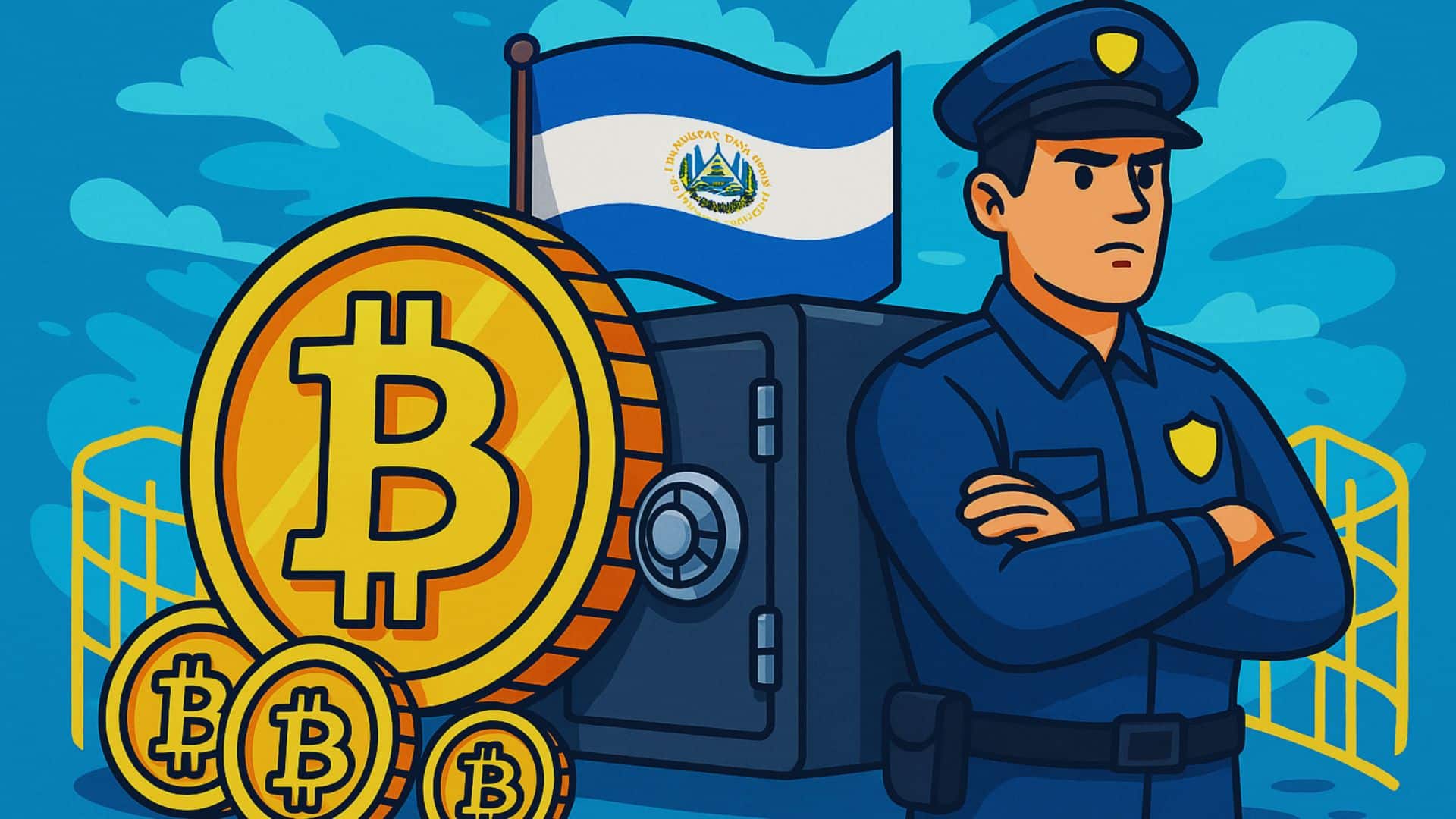
El Salvador has held thousands of Bitcoin in one central wallet since adopting the asset as legal tender. That changed when the government divided more than 6,000 BTC into fresh wallets, each capped at 500 BTC. Officials described this as a step toward stronger El Salvador Bitcoin security and better protection against possible vulnerabilities .
Analysts explain that splitting holdings reduces the risk tied to exposed public keys. When Bitcoin moves from one address, its public key is revealed. In theory, future quantum computers could use this data to crack private keys. While that technology does not exist yet, the precaution reflects forward thinking.
Read more: Bitcoin Price Prediction: How El Salvador’s New Law Fuels Bitcoin Bull Case
Balancing IMF Rules and Bitcoin Goals
El Salvador’s shift comes after a 2024 IMF loan that required easing Bitcoin rules and limiting state involvement. Despite this, the country continues its “one Bitcoin a day” plan, showing that El Salvador Bitcoin security remains a clear priority under global pressure.
Another observer Adam Back, a respected Bitcoin developer highlighted that El Salvador’s approach aligns with “sound bitcoin custody practice,” which is both verifiable and carries weight.
Quantum Security: Risk or Hype?
Quantum computing is still far from breaking Bitcoin’s encryption. But conversations about “quantum risk” have grown louder. El Salvador’s decision shows how El Salvador Bitcoin security can serve as a model for other nations.
By avoiding address reuse and limiting the size of each holding, the country lowers its exposure to theoretical attacks.
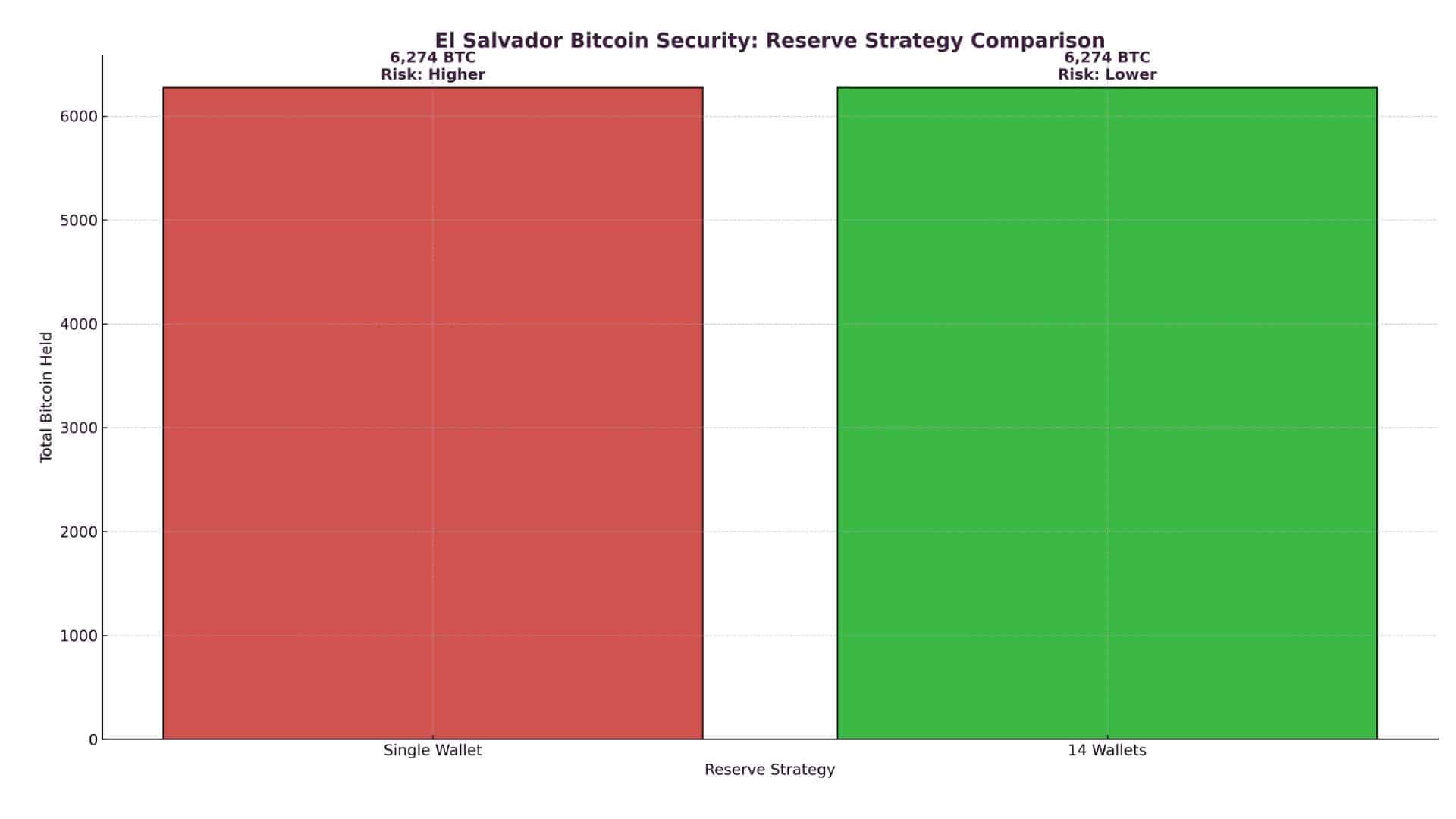
Here’s a quick table showing the change:
| Reserve Strategy | Holdings | Risk Level |
|---|---|---|
| Single wallet | 6,274 BTC | Higher |
| 14 wallets (max 500 BTC) | 6,274 BTC | Lower |
Market Reaction and Outlook
The move did not cause any major shift in Bitcoin’s price, which has hovered near $108,000. Traders saw the transfer as an internal adjustment rather than a sell-off. Still, many in the market welcomed the step as a sign of maturity.
Screenshots and comments shared on X highlighted the transparency of the transactions, which were visible on-chain. Observers could verify the changes in real time.
Conclusion
Based on the latest research, El Salvador Bitcoin security shows a cautious approach to national reserves. Quantum threats may be distant, but splitting holdings signals responsibility and preparation. It reminds crypto holders that even long-term strategies need adjustment, and trust in digital assets depends on careful planning.
Read more: Bitcoin Diplomacy: U.S. and El Salvador Discuss Joint Crypto Future
Summary
El Salvador has strengthened its Bitcoin strategy by splitting more than 6,000 BTC into multiple wallets. This step aims to improve El Salvador Bitcoin security, reduce risks tied to exposed public keys, and prepare for possible quantum computing threats.
While the risk remains theoretical, the move signals maturity and responsibility. It also shows how the country balances IMF loan conditions while staying committed to its Bitcoin accumulation plan.
Glossary of Key Terms
Quantum Security: Protecting data against future quantum-computer attacks.
Public Key: A cryptographic code that allows users to receive Bitcoin.
Private Key: The secret code that allows Bitcoin to be spent.
Address Reuse: Using the same Bitcoin wallet address multiple times, which can expose keys.
FAQs for El Salvador Bitcoin Security
Q1: Why did El Salvador split its Bitcoin holdings?
To improve security, reduce wallet exposure, and prepare for possible future risks.
Q2: Is quantum computing a real threat to Bitcoin?
Not today, but researchers warn it could become a concern in the future.
Q3: Did this move affect Bitcoin’s market price?
No, the market treated it as an internal transfer, not a sale.
Q4: How much Bitcoin does El Salvador hold?
About 6,274 BTC, worth over $680 million at current prices.