




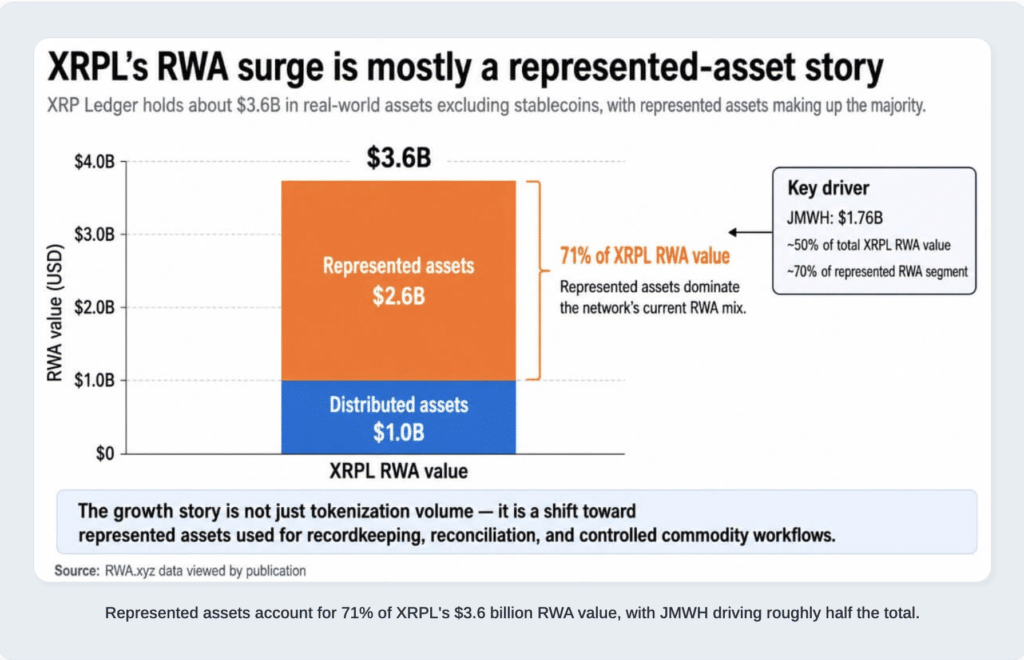
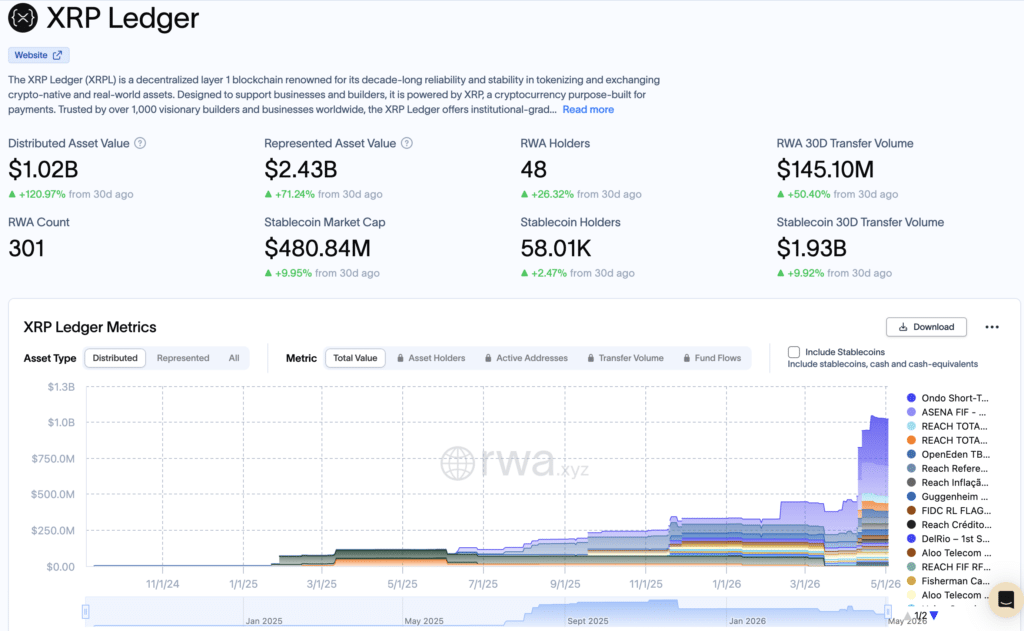
XRP ledger energy tokenization is rapidly shaping into a structural force driving XRPL’s growing real-world asset economy. The network currently represents around $3.6 billion in RWAs, which indicates a move beyond speculative crypto trading towards operational blockchain infrastructure.
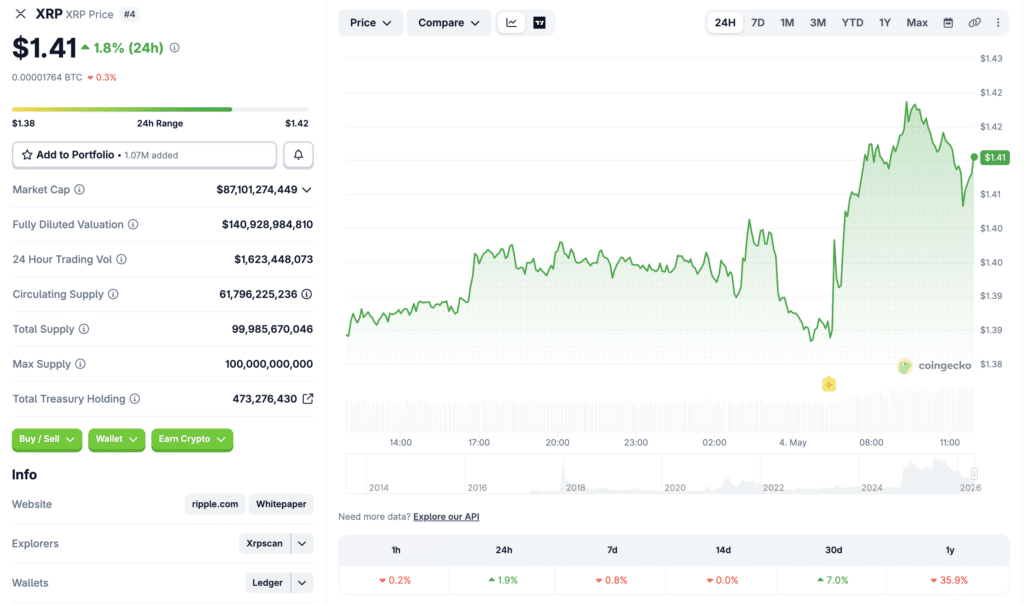
Just as Ripple cut its teeth marketing XRP as a payments ledger, market participants are increasingly believing that XRPL is not just a payment ledger, but will serve important functions in the commodity and energy systems of the future. Strong liquidity keeps XRP trading near $1.40 USD with good daily volume. XRP Ledger energy tokenization is now framed as an institutional-level model for energy-backed digital assets.
XRPL Energy Tokenization Overview and Structural Shift in RWAs
The utility of XRP Ledger energy tokenization marks a step away from conventional crypto use and toward real-world commodity infrastructure. It is more favorable to energy contracts, traceability layers and reconciliation frameworks. Now the use cases for XRPL tokenization are entering regulated environments where oversight and audit-ability takes precedence over speculation.
This evolution explains why more institutional issuers are jumping on the XRP Ledger energy tokenization bandwagon. No longer just a settlement layer for payments, the network is now a structured ledger that authenticates energy commitments; it reinforces XRP Ledger RWA growth as one of the core narratives in 2026.
Understanding the Market Dynamics Behind XRP Ledger’s New $3.6B RWA Expansion
Explaining the Split Between Distributed vs Represented AssetsThe XRP Ledger $3.6B RWA market $2.6 billion is in represented assets and $1 billion is distributed. The concentration of represented assets allows XRP Ledger energy tokenization, meaning the asset remains within a walled garden while verification occurs via the blockchain. That includes an energy structure, which is used by institutions but will not have fully open transfer.
In short, XRP Ledger energy tokenization is creating an evolution of hybrid model with blockchain being a reconciliation layer and not a completely decentralized trading market, which could potentially define how tokenised energy commodities blockchain systems developed around the globe.
JMWH and the Rise of Tokenized Energy Commodities on XRPL
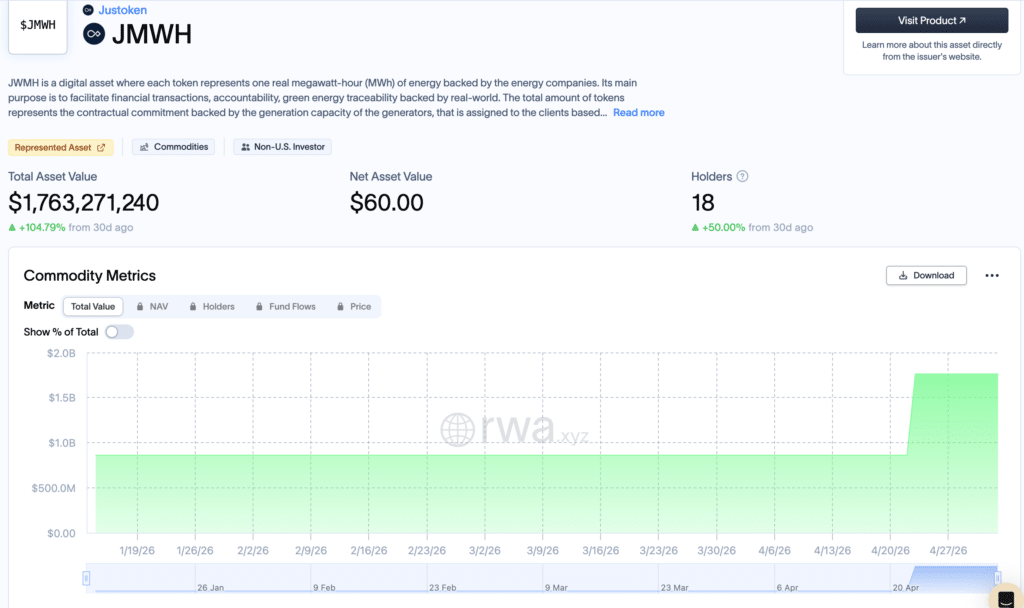
JMWH is the XRP Ledger energy token which forms the basis of XRPL-based tokenization growth (one JMWH corresponds to approximately one megawatt-hour or real energy). JMWH alone holds almost half of XRPL’s total RWA value, at a valuation of around $1.76 billion and extremely rapid monthly growth. This concentration presents both opportunity and risk.
In this regard, XRP Ledger energy tokenization represents a model of network growth from single-asset monoculture. This is where the magic of tokenized energy on blockchain comes in – energy production can be mapped directly onto verifiable digital units connected to measurable tangible production from the real world.
Why Energy Fits Blockchain Infrastructure and XRPL Design
When considering operational complexity the advantages of tokenization as an energy commodity become all the more clear. Contracts must be executed and consumption tracked to reconcile billing and generate ESG reports in energy markets. These workflows are enabled in XRP Ledger energy tokenization by metadata layers and limited-purpose tokens. Our blockchain energy trading platform model is capable of allowing issuers to inject compliance tools directly into the assets.
In this context, XRP Ledger energy tokenization is particularly relevant for institutional energy providers. XRPL is thus giving you a structured recordkeeping solution for regulated commodity by avoiding speculative trading that can be expected from unstructured platforms and use of enterprise grade workflows.
XRPL Technical Advantages and Competitive Position in Tokenization
XRP Ledger energy tokenization benefits from built-in features such as authorization controls, freeze functions, and delegated administration. These capabilities position XRPL differently from more open ecosystems. When comparing XRP Ledger vs Ethereum for tokenization, XRPL prioritizes compliance-driven infrastructure over composable DeFi ecosystems.
This design supports XRP Ledger real world assets by enabling controlled issuance models. Ripple XRP Ledger adoption is increasingly tied to enterprise-grade tokenization frameworks. XRP Ledger energy tokenization therefore fits institutions seeking predictable compliance structures rather than permissionless liquidity environments.
Market Overview, Growth Forecasts and Concentration Risks
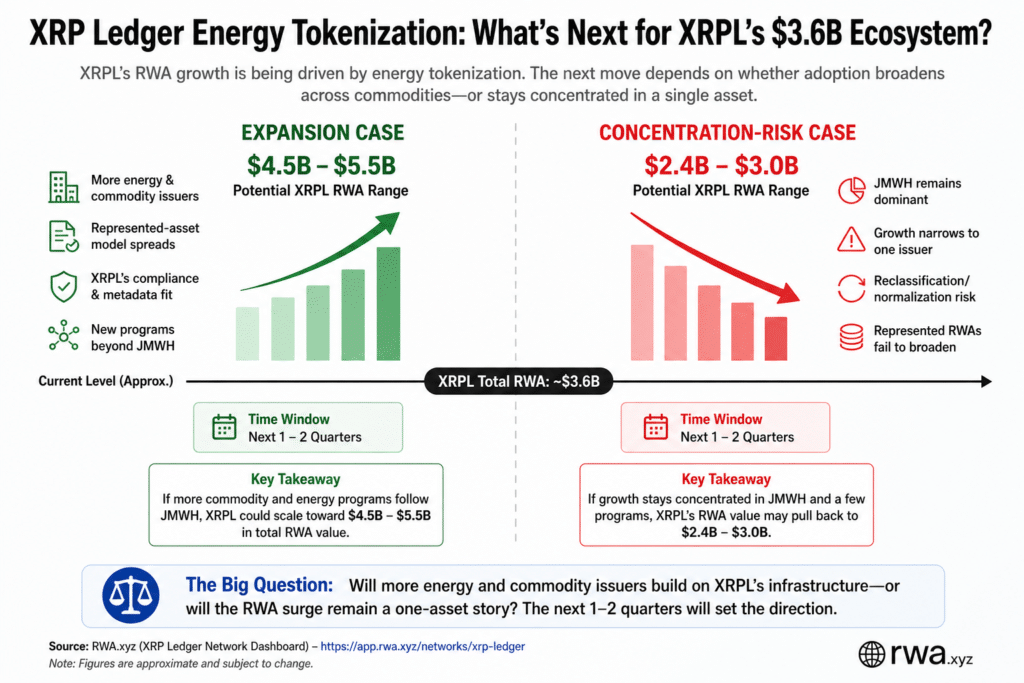
If more energy and commodity issuers adopt this model, XRP Ledger energy tokenization could drive XRPL (XRP Quantum-Resistant Blockchain)-backed real-world asset (RWA) base to USD $4.5–$5.5 billion. What remains is risk concentrated in single-asset dominance, most acutely JMWH. Structural limitations in XRP Ledger energy tokenization could also occur if represented assets do not grow into decentralized models.
XRP Ledger 2026: Real world assets gain solid momentum, but sustainability requires more widespread adoption XRP Ledger energy tokenization does not create new value and would trade flat or sniff toward the average price of total RWA (at $2.4–$3.0 billion).
Conclusion: Strategic Position of XRP Ledger Energy Tokenization
XRP Ledger energy tokenization is positioning XRPL as a specialized infrastructure layer for energy and commodity markets. The $3.6 billion RWA milestone reflects growing institutional interest in blockchain-based reconciliation systems. However, concentration risk and limited asset diversification remain critical challenges.
XRP Ledger energy tokenization demonstrates clear product-market fit for energy tracking and compliance workflows, but long-term expansion depends on multi-sector adoption. Market participants should monitor how new issuers integrate into XRPL’s ecosystem and whether tokenized energy commodities blockchain models expand beyond current dominance.
Appendix: Glossary of Key Terms
XRP Ledger energy tokenization refers to the process of converting real-world energy assets into blockchain-based tokens on XRPL.
RWA means real-world assets represented digitally.
JMWH is a token representing one megawatt-hour of energy.
Distributed assets are transferable across platforms, while represented assets remain within controlled systems.
Tokenization refers to digitizing physical assets for blockchain recording and settlement.
Frequently Asked Questions
What is XRP Ledger energy tokenization?
It refers to the process of representing energy production and contracts as blockchain-based tokens on XRPL for tracking and settlement.
Why is XRPL’s RWA growth increasing?
XRP Ledger energy tokenization and commodity token models are driving institutional adoption of XRPL for infrastructure use cases.
How does JMWH work?
XRPL energy token JMWH represents one megawatt-hour of energy backed by real production and recorded on-chain.
Is XRPL competing with Ethereum?
XRP Ledger vs Ethereum for tokenization differs in design, with XRPL focusing on compliance and Ethereum focusing on decentralized applications.
References