







As the economic consequences of Israel’s escalating war against Iran become ever more evident, the war cost is capturing financial attention in financial circles.
If strict wartime restrictions remain in place, estimates by Israel’s Finance Ministry suggest that the economy could lose more than 9 billion shekels, or about $2.93 billion every week.
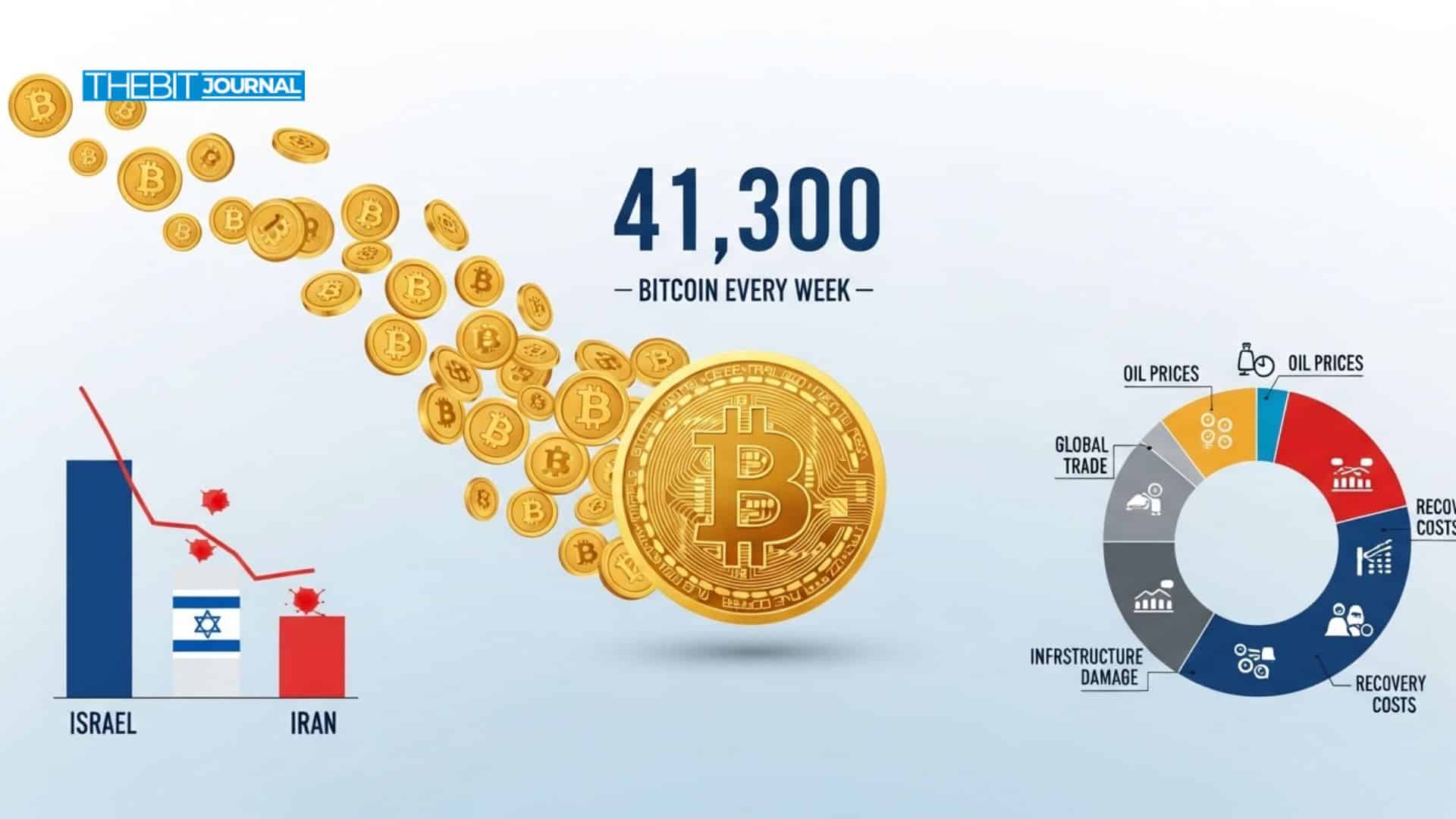
Measured against the cryptocurrency market, the Israel-Iran war costs out to about 41,300 Bitcoin at a BTC price of low-$70k.
Thursday’s comparison was not a signal that Israel is buying Bitcoin or considering it as a reserve. Instead, analysts see it as a means of converting macroeconomic costs to a unit that digital-asset markets know.
The weekly losses, at current levels, are well in above the number of new Bitcoin that comes into circulation via mining each week.
Israel’s Finance Ministry Estimates Weekly Economic Cost
Officials from Israel’s Finance Ministry recently described the potential cost of the war to the country, depending on how expansive emergency restrictions would be.
At the most stringent level, termed “red,” the economy could lose over 9 billion shekels a week. Those restrictions include school closures, travel lockdowns and limits that push most of the work force into essential services only.
Authorities also explained a less restrictive “orange” scenario that would allow more economic activity to continue. That would produce a weekly loss of about 4.3 billion shekels, or approximately $1.35 billion.
These estimates show that wartime costs go beyond the defense budget. They also point to how much of the economy has to hit pause when security constraints are tightened.
Before the escalation; Israel’s economy appeared quite strong. Growth hit 3.1 percent in 2025; and analysts had expected stronger growth for 2026 after a cease-fire in Gaza last October.
Wider restrictions now threaten to undo some of that recovery by dragging down both production and consumer activity.
The Origins of the Israel-Iran War Cost Comparison to BTC
There are multiple ways financial markets measure economic shocks. Recently, traders have started using Bitcoin as another yardstick.
Bitcoin estimate for the Israel-Iran war cost comes from converting the minister’s approximate $3 billion weekly loss at current market prices of around $70,000 per coin.
That calculation puts the weekly economic impact at about 41,300 Bitcoin. Under lighter “orange” restrictions, the figure drops to around 18,000 Bitcoin a week.
These numbers grow over time. The economic loss to the cumulative would be around $11.7 billion, or about 165,000 Bitcoin at similar prices if those stricter conditions were in place for four weeks.
The less restrictive scenario would still total about $5.4 billion, or more than 70,000 Bitcoin in a month.
Using Bitcoin as a comparison helps investors visualize the scale of the economic impact in terms of a widely traded global asset.
Comparing the Weekly Loss With Bitcoin Supply
The Israel-Iran war cost looks even more striking when one compares how many new coins are created and enter the market.
Since the April 2024 Bitcoin halving, the network generates approximately 450 BTC daily, or roughly around 3,150 Bitcoin a week.
That means the total weekly economic loss under the strictest restrictions would amount to more than thirteen weeks’ worth of Bitcoin’s entire mining supply.
Another useful comparison comes from institutional demand. Some big U.S. spot Bitcoin ETFs, like those managed by major asset managers, can absorb around 3,000 to 4,000 Bitcoin on strong inflow days.
41,300 Bitcoin at that speed means nearly two weeks of concentrated ETF accumulation. This comparison indicates that the magnitude of economic loss dwarfs the flows in the Bitcoin market typically observed over short time spans.
What 41,300 Bitcoin Would Mean for Global Holdings
If a country owned 41,300 Bitcoin, it would be one of the world’s largest sovereign holders of the cryptocurrency.
According to public data from BitcoinTreasuries; the largest known accumulators of Bitcoin are governments including the United States, China and the United Kingdom. Ukraine has approximately 46,351 BTC; with El Salvador having about 7,581 BTC.
A reserve equal to 41,300 Bitcoin would rank just behind Ukraine and ahead of El Salvador.
But there are no signs that Israel intends to build a national Bitcoin reserve. The Israel-Iran war cost comparison is purely an economic translation and analysts use this to show the magnitude of wartime losses.
Israel’s relationship with cryptocurrency has proven to be complicated. Banks in the country have maintained a conservative approach toward catering to crypto firms, and at times courts were on their side upholding their right to refuse such services.
Despite these challenges, Israel’s digital-asset sector has continued to expand steadily with crypto inflows between 2024 and 2025 topping $713 billion, showing strong engagement from investors and tech firms.
Conclusion
The Israel-Iran war cost Bitcoin figure points to the amount of enormous liquidity stress generated by the ongoing battle.
Estimates from the Finance Ministry have calculated that strict wartime restrictions would cost more than $2.9 billion hit to the economy each week, or around 41,300 Bitcoin at current prices.
Even if the figure is simply a conversion for perspective, it reveals how quickly economic losses can add up during long-lasting conflict. It could add up to tens of billions over a month.
For financial markets, the comparison is a useful perspective: the war’s economic impact already dwarfs normal Bitcoin supply flows and even large institutional purchases.
Glossary
Bitcoin Halving: An event that cuts in half the number of new Bitcoins generated by mining; which occurs approximately every four years.
Bitcoin Mining: The mechanism by which new Bitcoin is released into circulation and transactions are confirmed on the blockchain.
Spot Bitcoin ETF: A Bitcoin exchange-traded fund that actually holds Bitcoin; and one in which investors can get exposure through traditional stock markets.
Macroeconomic Impact: The aggregate impact of events like wars or financial crises on a nation’s overall economy.
Economic Restrictions: Government measures that restrict normal activity during emergencies; such as limits on travel or business closures.
Frequently Asked Questions About Isreal-Iran War Cost
How much does Israel’s war cost per week?
Estimates from the Finance Ministry indicate that without ease; strict wartime restrictions could cost the economy over 9 billion shekels ($2.93 billion) a week.
Why are we comparing the cost to Bitcoin?
Analysts use Bitcoin as a global financial yardstick so investors can grasp the magnitude of economic losses.
How much is the weekly cost in Bitcoin?
At $70,000 prices; that weekly loss translates to roughly 41,300 Bitcoin.
Will Israel purchase Bitcoin with this money?
No. The comparison is just a financial conversion meant for context.
References