

Last updated: November 21, 2026
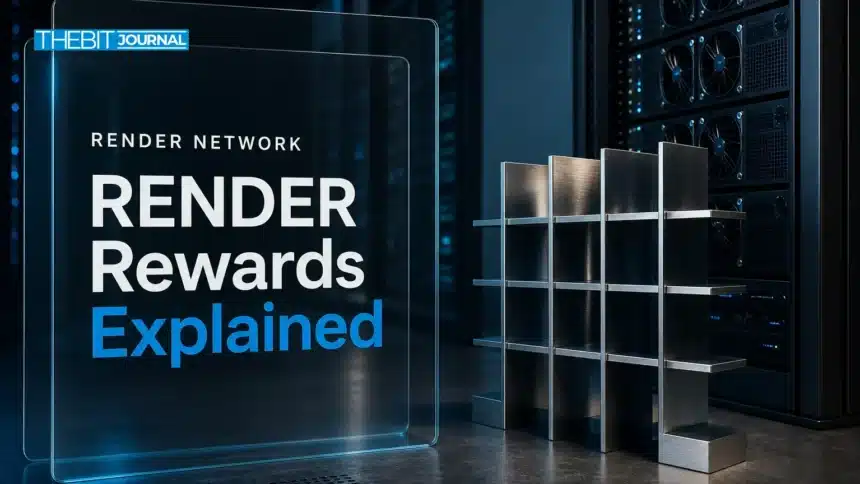
This render staking guide addresses a common point of confusion: holding RENDER isn’t the same as staking it for network rewards. As of November 21, 2026, Render’s documented rewards go to node operators, while RNP-011, a proposal for staking RENDER with proposed Generation Nodes, is marked withdrawn.
Key Takeaways
- Render doesn’t document an active program that rewards people simply for holding or staking RENDER.
- RNP-011, a proposal for staking with Generation Nodes, is marked “Withdrawn” in the Render Network Proposals repository.
- Node operators can receive emissions based on completed work and availability, under network rules.
- Render’s safety guidance says administrators will never message users directly about staking, swaps, migrations, or airdrops.
Render staking guide: Is there an active program?
No active holder-staking program is documented in the sources reviewed for this guide. As of November 21, 2026, the Render Network Proposals repository marks RNP-011, which described staking RENDER with proposed Generation Nodes, as “Withdrawn.” The withdrawn proposal should not be treated as an active Render rewards program.
Render’s FAQ describes rewards for node operators, not passive rewards for token holders. A third-party claim of “official Render staking” is not confirmed by the withdrawn proposal. Don’t mistake a proposal’s description for a current product or a promised return.
Holders can still participate in network decisions. Render’s holder-participation page points to governance and Render Network Proposals (RNPs), but these aren’t a staking product and don’t promise income. For context on acquiring the token, see our practical guide to buying RENDER.

How Render Network rewards actually work
Render’s documented emissions are tied to network operation. According to the Render Foundation FAQ, rewards are allocated each epoch based on a node’s availability and its share of completed work. The system rewards contribution to the rendering network, not simply locking tokens in a wallet.
Implemented proposal RNP-015 describes availability rewards using weighted points based on active-node uptime. Its reward calculations also use node and performance factors. These mechanics are for network operators, not a simple deposit-and-earn arrangement for ordinary holders.
The approved Year 3 emissions proposal set node-operator rewards at 15,000 RENDER per week for completed jobs and 2,800 RENDER per week for availability. It described 17,800 RENDER per epoch, or approximately 71,000 to 90,000 RENDER per month, from December 20, 2025 through December 19, 2026. These figures describe a specific emissions allocation, not an individual operator’s payout or a rate that can be assumed to continue. The period is due to end in December 2026, so check current RNPs for any later allocation.
What RENDER holders can do instead
Render’s official holder-participation page points to governance and following RNPs. Proposals let holders track proposed changes and their status. Check whether a proposal is active, approved, implemented, rejected, or withdrawn before relying on its details.
Holders may also need to distinguish between RNDR on Ethereum and RENDER on Solana. Render Foundation’s safety guidance says RNDR can be upgraded to Solana-based RENDER at a 1:1 rate and that no upgrade deadline has been announced. It directs holders to the official upgrade portal. Confirm current instructions through Render’s own site before transacting, since sending tokens on the wrong network can create loss or recovery problems.
For a comparison of delegation-based participation on another network, read our guide to Injective staking and delegation. Mechanics vary by project, so another token’s process shouldn’t be assumed to apply to RENDER.
How to check a RENDER staking offer safely
A reliable render staking guide separates verified network functions from claims made by outside services. Start with the current Render Foundation site and RNP repository. Check a proposal’s status and look for an official announcement explaining the product and its terms. Don’t rely on a screenshot, social post, or search result alone.
Render Foundation’s safety guidance says administrators will never DM users about staking, token swaps, migrations, or airdrops. Treat unsolicited messages asking you to connect a wallet, approve a transaction, or share a seed phrase as a serious warning. Never give anyone your seed phrase. Legitimate support won’t need it.
Crypto also carries risks beyond misleading offers. Wallet transactions can be irreversible, third-party services can fail or be compromised, and token prices can fall sharply. RENDER holders can lose some or all of their tokens’ value. A claimed annual percentage return doesn’t prove an offer is authorized, sustainable, or safe.
What the Render staking guide means in practice
As of November 21, 2026, Render’s official materials don’t describe an active, passive staking program for holders. The Generation Node staking proposal is withdrawn. Current network rewards described by Render are tied to operating nodes and contributing completed work or availability.
This distinction can help holders avoid treating an unofficial yield offer as a network feature. If Render introduces a holder program, its official documentation and proposal status should show the change. Until then, a render staking guide should explain what’s documented, not turn a withdrawn proposal into a deposit tutorial.
Frequently asked questions
Can you stake RENDER tokens for passive rewards?
Render’s documented rewards are for node operators, not simply for holding RENDER. As of November 21, 2026, the Render Network Proposals repository marks holder-staking proposal RNP-011 as withdrawn.
How do RENDER network rewards work?
According to the Render Foundation FAQ, emissions are allocated each epoch based on node availability and its share of completed work. Implemented proposal RNP-015 describes availability rewards using a weighted-points system.
Is an offer promising RENDER staking automatically a scam?
A claim alone doesn’t establish whether an outside service is a scam, but don’t treat an offer as an official Render program without confirmation from Render’s own channels. Be especially cautious of unsolicited messages, wallet approvals, and requests for a seed phrase.
How can RENDER holders participate in the network?
Render’s holder-participation page points to governance and Render Network Proposals. These let holders follow network decisions, but do not promise rewards or provide passive staking income.
Sources
- Render price and market data (CoinGecko)
- Render Network Proposals (github.com)
- Important Safety Information | Render Network Knowledge Base (know.rendernetwork.com)
This article is for informational purposes only and does not constitute financial or investment advice. Cryptocurrencies are highly volatile; always do your own research before investing.