

Last updated: November 20, 2026
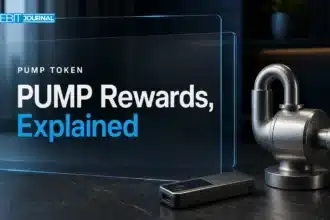
The pump.fun staking guide answer is straightforward: as of November 20, 2026, Pump.fun’s official materials describe buybacks and burns for PUMP, not a native PUMP staking program. The platform does have a separate Holder Rewards feature for certain creator coins, but that is not a yield paid to PUMP holders.
TL;DR
- Pump.fun’s official token page describes a revenue-funded PUMP buyback-and-burn mechanism, not PUMP staking.
- Holder Rewards distribute fees from an eligible individual coin to that coin’s holders, subject to conditions and costs.
- Don’t confuse SOL validator staking, PUMP buybacks, or creator-coin rewards. Each involves different assets and risks.
Pump.fun staking guide: what the term means
People searching for a pump.fun staking guide may mean one of three things: earning a return by locking or delegating PUMP, receiving value from the platform’s token mechanism, or collecting fees tied to a coin launched on Pump.fun. Those are different processes. The official $PUMP page describes the second, while the fee documentation describes the third.
Staking generally means committing a token to support a network or protocol under specific rules. Pump.fun’s token white paper describes Solana validators staking SOL and receiving SOL for proposing and attesting to blocks. It does not describe PUMP as the asset staked by those validators. For background on the app and token, see our explanation of how Pump.fun and PUMP work.
Can you stake PUMP on Pump.fun?
As of November 20, 2026, the available official token information does not describe a native way to stake PUMP for protocol rewards. Instead, Pump.fun says it uses half of each dollar the platform earns to buy PUMP, which is then burned. A buyback reduces token supply when tokens are removed, but it is not a payment to people who hold PUMP.
That distinction is reflected in a November 20 on-chain analysis by BlockPinned Terminal, which reported zero payments made to PUMP holders. The analysis distinguished the buyback activity from Holder Rewards for individual coins. So a page or message promising automatic PUMP staking income should not be treated as an official feature without confirmation from Pump.fun’s own current documentation.
How Pump.fun Holder Rewards work
Holder Rewards relate to creator fees from a particular coin, not to PUMP ownership across the platform. According to Pump.fun’s official fee documentation, an eligible holder must hold at least $20 equivalent of that coin. Fees accrue in a vault and are distributed pro rata to eligible holders in the pool’s quote asset, meaning the asset paired with that specific coin.
For example, if a coin’s pool uses a particular asset as its quote asset, Holder Rewards are paid in that asset, not automatically in PUMP. Pump.fun says distributions are not assured and are net of distribution costs. The amount received may vary, and holding a coin does not ensure a payout.
This is not the same as staking: holders do not receive a general PUMP yield simply for keeping PUMP in a wallet. Before interacting with a coin or any reward interface, confirm which asset qualifies, what the pool’s quote asset is, and what fees apply. Our PUMP token buying guide covers token identification, while this article focuses on the separate rewards question.
Buybacks, burns, and holder payouts are different
Pump.fun’s buyback-and-burn mechanism can affect token supply, but it does not promise a direct distribution to holders. The official token page reported cumulative buybacks of $465 million by October 4, 2026, equal to 16.85% of the total supply at that time. Those are dated figures, not a forecast of future activity or token value.
BlockPinned Terminal’s November 20, 2026 analysis reported 178.4 billion PUMP burned, or 17.8% of the original one-trillion supply, and 516.9 billion PUMP in treasury and distribution wallets. The same analysis reported October revenue of $60.79 million and $29.02 million in PUMP buybacks. These figures describe platform activity, not staking rewards or a direct payment to an individual holder.
Market prices can move sharply regardless of buybacks. CoinGecko recorded PUMP at $0.00241285 at 20:22 UTC on November 20, 2026, down 52.04% over the prior 30 days. That snapshot is historical, not a current quote. A token can lose value, and burns do not remove volatility, liquidity, regulatory, custody, or total-loss risks.
How to check a claimed staking offer
Use this pump.fun staking guide as a way to sort claims, not as a promise of income. Start by identifying the exact asset and mechanism named in the offer. If it says PUMP staking, compare that claim with the official token page and current documentation. If it refers to Holder Rewards, check that it is about a specific coin and review the eligibility threshold, payout asset, distribution costs, and whether distributions are assured.
Be cautious with unsolicited links, copied websites, and messages asking for a wallet’s seed phrase. A third-party service may add smart contract, exchange, or custody risk even if it uses Pump.fun’s name. Official documentation can change, so check the source directly before connecting a wallet or signing a transaction. Our Pump.fun risk check offers further context on token-specific risks.

Pros and cons of Pump.fun reward mechanisms
| Potential benefit | Limit or risk |
|---|---|
| The official token page explains the buyback-and-burn mechanism. | Buybacks are not direct staking payments to PUMP holders. |
| Holder Rewards specify an eligible coin, a holding threshold, and a payout asset. | Distributions are not assured and are net of costs. |
| On-chain activity can be examined separately from promotional claims. | Creator-coin prices and PUMP can be volatile, with risk of substantial or total loss. |
Who this is and is not for
This explanation is for readers trying to distinguish PUMP staking from Pump.fun’s documented token and creator-fee mechanisms. It can also help anyone checking whether an advertised reward matches the platform’s published terms.
It is not a guide to earning a fixed return, and it can’t establish that a third-party site or token is safe. People seeking predictable income may find that the documented mechanisms do not offer it. Crypto rules differ by country; readers with tax or legal questions should consult a qualified professional.
Bottom line
The pump.fun staking guide takeaway is that Pump.fun’s official materials, as of November 20, 2026, describe PUMP buybacks and burns rather than native PUMP staking. Holder Rewards are a separate, conditional distribution of an individual coin’s creator fees. Check the asset, official terms, costs, and risks before treating any offer as a reward program.
Sources
This article is for informational purposes only and does not constitute financial or investment advice. Cryptocurrencies are highly volatile; always do your own research before investing.