




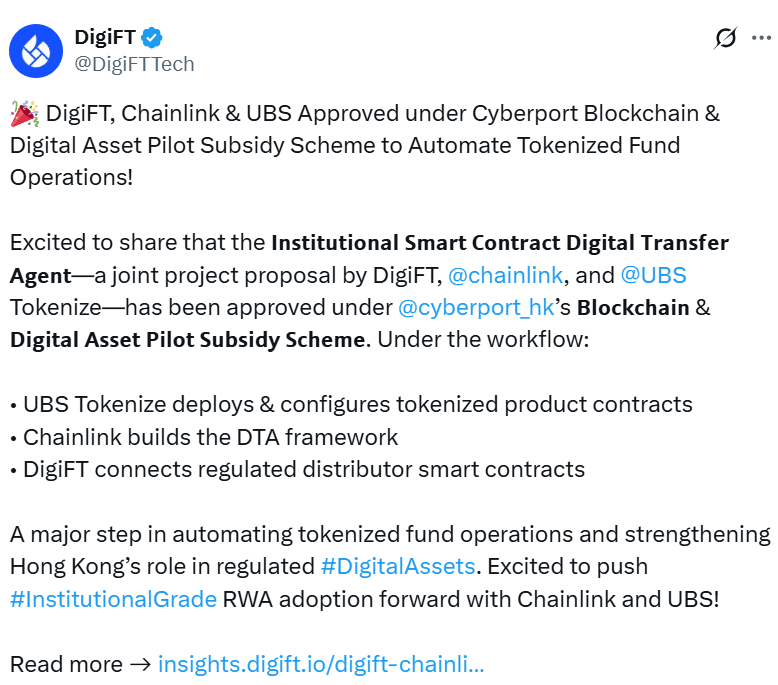
Chainlink, UBS, and DigiFT have formed a strategic partnership to launch a pilot study focused on automating real-world asset (RWA) tokenization. This collaboration aims to eliminate the errors associated with manual fund management by leveraging blockchain technology for better efficiency.
Blockchain Infrastructure to Automate RWA Tokenization Process
The partnership will build a blockchain infrastructure to automate the distribution, settlement, and lifecycle management of tokenized products. This project is part of Hong Kong’s Cyberport Blockchain & Digital Asset Pilot Subsidy Scheme, a sandbox for testing new crypto innovations.
What is RWA Tokenization?
It is the transformation of conventional assets, such as real estate or bonds, into digital tokens through blockchain. Tokenization of these assets simplifies trading, improves liquidity, and enables new class of institutional investors to enter the market.
Also Read: Bitcoin Race Heats Up: Hong Kong and Germany Join the Strategic Reserve Trend
Its oversight of digital assets means that Hong Kong is a natural testbed for RWA tokenization models. Hong Kong has also been more favorable toward crypto and blockchain, unlike mainland China which has implemented harsher regulations in the space.
But the area would continue to function within the larger framework of how China handles crypto, and there may be challenges.
Chainlink’s Role in Automating RWA Tokenization
Chainlink plays a pivotal role in this initiative by providing its Digital Transfer Agent contracts. These smart contracts are essential in automating the verification process for subscription and redemption requests for UBS’s tokenized products.
By automating these processes, Chainlink helps improve accuracy and reduce manual errors in tokenization.
Automating the tokenization process will help eliminate manual reconciliation, which often leads to errors. This will ensure that the value of a fund matches the value of the underlying asset, making the process more reliable.
RWA Tokenization Market Growth
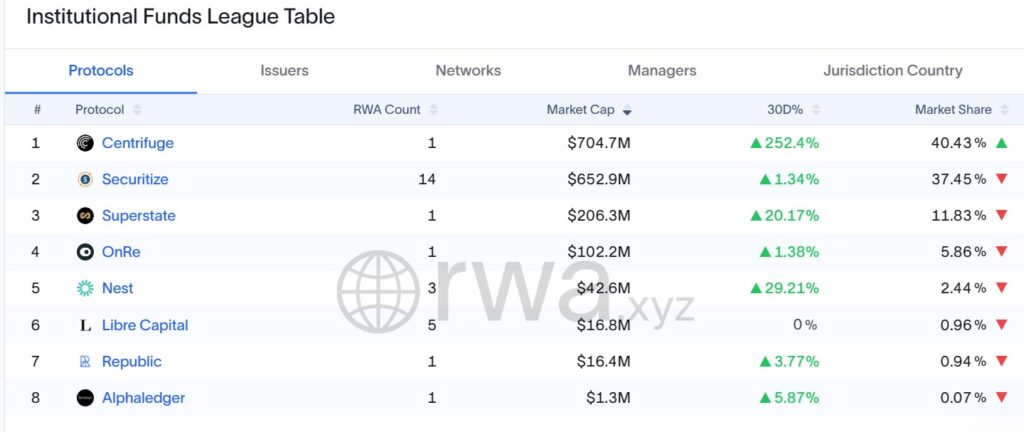
The RWA tokenization market is experiencing rapid growth in 2025. With more institutions entering the crypto space and tokenized assets gaining popularity, the market has seen significant investment.
For example, tokenized institutional alternative funds grew 47% to $1.74 billion in just 30 days. This reflects the growing demand for tokenization.
Global Asset Management Impact
The global asset management industry, valued at $132 trillion, is expected to benefit greatly from RWA tokenization. By automating the lifecycle management of tokenized products, the project aims to lower operational costs.
This will lead to greater profits for fund managers, while investors will see better returns due to the increased efficiency of the system.
DigiFT’s Compliance Role
DigiFT, a licensed exchange for tokenized RWAs, ensures that the technology meets the compliance standards required by Hong Kong’s financial institutions. DigiFT will also evaluate whether the blockchain infrastructure meets the interoperability requirements for tokenized products.
This pilot could then open the door to a more widespread adoption of tokenization in the financial services industry at large. It’s market is huge, and as more entities adopt blockchains for more activities, it will only grow.
And although the RWA tokenization sounds very promising, it also has its challenges. Regulation in Hong Kong is friendly but emerging. The project will have to adjust to whatever new laws or policies may arise, including those from China.
The Future of Tokenization
Such a pilot program can open the door for wider tokenization in the financial market. The tokenization market growth potential is huge, with more and more financial institutions interested in employing blockchain technology to enhance access of these assets.
Conclusion
The collaboration of Chainlink with UBS and DigiFT is a significant milestone in the field of tokenization. By the virtue of automation on some key processes, the project aims at increased efficiency and accuracy as well as cost saving in asset management.
With the regulatory backdrop in Hong Kong and major industry players behind the project, tokenizing RWAs is expected to be a game-changer for the world of finance.
Also Read: Hong Kong and Brazil Unite for a New Age in Cross-Border Tokenization
Summary
Chainlink, UBS, and DigiFT have partnered to launch a pilot project focused on automating real-world asset (RWA) tokenization. This collaboration uses blockchain technology to eliminate manual errors and improve asset management efficiency through smart contracts.
With Hong Kong’s supportive regulatory framework, the project aims to significantly impact the tokenization market. As interest grows, tokenization is expected to become a transformative force in digital finance, opening new investment opportunities.
Appendix: Glossary of Key Terms
RWA Tokenization – The process of converting real-world assets into digital tokens that can be traded on blockchain platforms.
Blockchain – A decentralized ledger technology that securely records transactions across multiple computers in a tamper-proof manner.
Smart Contracts – Self-executing contracts where the terms are directly written into code, running on blockchain platforms to ensure trustless execution.
DigiFT – A licensed exchange for tokenized real-world assets (RWAs), specializing in digital asset trading and compliance with Hong Kong regulations.
Chainlink – A decentralized oracle network that enables smart contracts to securely connect to external data sources and APIs.
Cyberport Blockchain & Digital Asset Pilot Subsidy Scheme – A Hong Kong initiative providing a sandbox environment for testing blockchain and digital asset technologies.
FAQs for RWA Tokenization
1- What is RWA tokenization?
It is the process of converting traditional assets into digital tokens on a blockchain for easier trading and increased liquidity.
2- How does blockchain help automate tokenization?
Blockchain automates the management of tokenized products, eliminating manual errors and enhancing efficiency through smart contracts.
3- What role does Chainlink play in tokenization?
Chainlink provides smart contracts to automate the verification and management of tokenized assets, ensuring accuracy and security.
4- Why is Hong Kong ideal for tokenization?
Hong Kong offers a clear and flexible regulatory framework, making it an ideal location for testing and implementing RWA tokenization projects.