




Samsung stock slid on Thursday, October 29 (Korea time), shortly after Samsung Electronics reported a record quarterly operating profit of KRW 107.4 trillion, or roughly $80 billion. Shares fell 2.69% to 235,500 won by 10:11 a.m. Korea time, BeInCrypto reported, and the selling deepened as the session went on.
Why it matters
Shares fell after a record quarter, and analysts said expectations had simply run ahead of the results. Samsung’s chip division earned almost all of the profit, but net income missed forecasts and the size of the next shareholder payout won’t be fixed until late January 2027.
What we know about Samsung’s record quarter
Consolidated revenue reached KRW 195.3 trillion, up 14% from the second quarter and another all-time high, according to Samsung’s official third-quarter release. The company called itself the world’s first tech firm to clear KRW 100 trillion in quarterly operating profit.
The headline number wasn’t a surprise, though. Samsung had already estimated the same profit total on October 8, so traders spent Thursday picking through the divisional breakdown instead.
| Metric (Q3 2026) | Reported | Expectation / comparison |
|---|---|---|
| Operating profit | KRW 107.4 trillion ($80.52 billion) | LSEG estimate KRW 107.66 trillion |
| Net profit | KRW 75.2 trillion | Market estimate KRW 83.6 trillion |
| Revenue | KRW 195.3 trillion | Up 14% quarter on quarter |
| Chip (DS) operating profit | KRW 106.5 trillion | On revenue of KRW 147.1 trillion |
| Cash dividend | KRW 4,601 per share | About KRW 30 trillion in total |
Operating profit rose about 783% from a year earlier and 20% from the second quarter, yet it still landed just under the LSEG consensus, Benzinga noted, citing CNBC. The bigger gap was lower down: net profit of KRW 75.2 trillion trailed expectations of KRW 83.6 trillion, ChainCatcher reported.
Chips carry Samsung stock while phones lose money
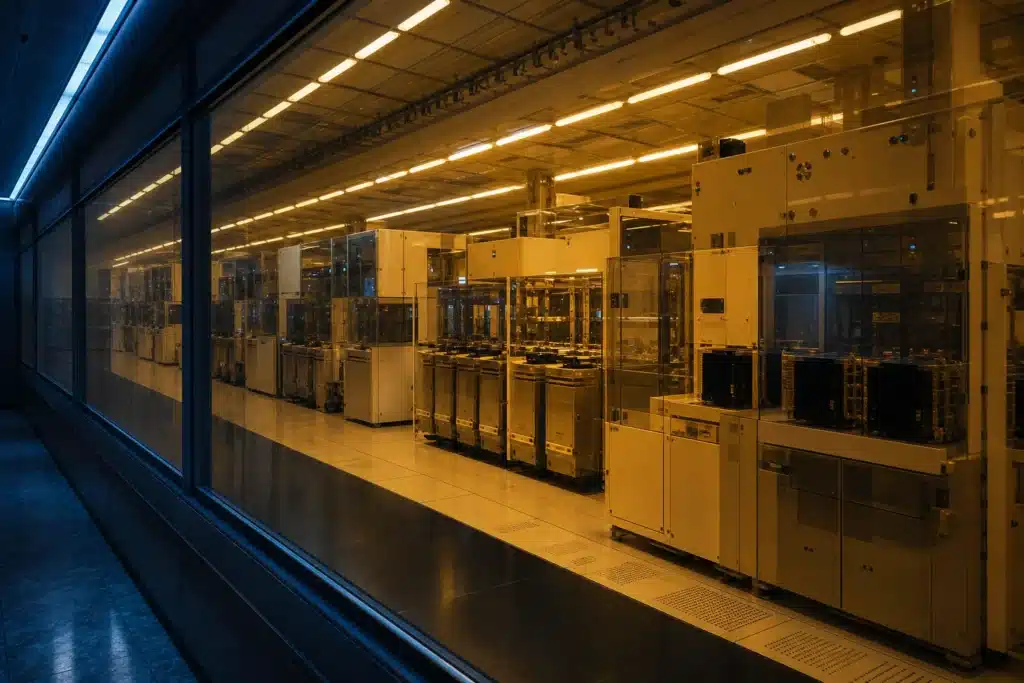
The Device Solutions division made KRW 106.5 trillion of the KRW 107.4 trillion total. Memory sales and profit hit records, and sales of HBM4, the high-bandwidth memory used in AI servers, rose significantly. Samsung Display added KRW 1.1 trillion.
The consumer side, by contrast, lost KRW 0.8 trillion. The mobile and networks unit lost KRW 0.6 trillion on KRW 37.7 trillion in revenue, a year after earning KRW 3.6 trillion, and Samsung attributed the drop to cost pressures. The TV and appliance unit’s loss widened to KRW 0.2 trillion, which the company put down to higher costs, including raw materials and logistics.
What is still unclear
The biggest open question is the buyback. Samsung expects KRW 55-75 trillion of its 2026 return budget to remain and says it will include a “substantial” share buyback and cancellation alongside cash dividends. The board will settle the figure at a meeting scheduled for late January 2027.
It’s also unclear where shares finally settled. Reports captured different moments: BeInCrypto cited a 2.69% drop early, while Invezz said the decline reached 6% to 231,500 won later in the session.
How Samsung stock and the KOSPI reacted
The shares had traded higher before the 10:00 a.m. release, building on a 9% jump on Wednesday after SK Hynix posted its own record quarter. They turned lower once the numbers came out. The KOSPI was down 133.87 points, or 2.23%, at 5,878.57, after surging more than 6% the previous day, the Seoul Economic Daily reported.
Why Samsung stock fell after a record
Analysts quoted by the Seoul Economic Daily said expectations for both the chip business and shareholder returns had climbed so high that the results couldn’t meet them. Market participants also pointed to possible profit-taking after the recent rally.
SK Hynix offers a point of comparison. A day earlier, Hynix announced a 100 trillion won return plan and its shares rose 10.9%, BeInCrypto reported. Samsung on Thursday detailed plans to return up to 110 trillion won to shareholders this year, including 30 trillion won in cash dividends, following an August announcement, according to Yahoo News Singapore.
There’s a pattern here too. On October 8, after its preliminary guidance, Samsung opened higher at 269,500 won and closed down 2.42% at 262,000 won, the Seoul Economic Daily reported on October 10.
Crypto markets were also lower. Bitcoin traded at $79,758 at 04:13 UTC on October 29, down 1.39% over 24 hours, according to CoinGecko data, leaving it just under the $80,000 mark. The Crypto Fear & Greed Index read 51 (Neutral) the same day.

What it means for investors
For anyone following Samsung stock, the quarter shows how heavily the company’s profit now depends on its chip business. Samsung’s memory business expects AI-driven demand in 2027 to far exceed industry supply, by a wider margin than in 2026, and the company projects about KRW 84.4 trillion in capital spending this year, KRW 76.8 trillion of it on chips.
That concentration cuts both ways. Shares in tech giants including Samsung fell from their June record highs on worries about US tech firms’ AI spending, and a slowdown in that spending could hit the division that produces nearly all of the profit. Company forecasts are projections and may not come true.
On returns, the dividend works out to a yield of about 1.7% on common shares and 2.2% on preferred shares, based on Seoul Economic Daily figures. Future dividends can be cut or suspended, and stocks can fall sharply in a single session, as Thursday showed. None of this is investment advice. Tax treatment of dividends differs by country, so readers should check with a qualified professional.
Bottom line
Samsung delivered a historic quarter, yet the shares ended up lower. Net profit missed forecasts, the buyback won’t be sized until January, and analysts and market watchers pointed to stretched expectations and profit-taking. The late January 2027 board meeting and the path of AI memory demand are the next things to watch.
Sources
- Samsung Stock Falls 3% Even as Profit Tops $80 Billion: Is a Record Quarter Not Enough? (BeInCrypto)
- Samsung Electronics Announces Third Quarter 2026 Results (news.samsung.com)
- Samsung stock plunges over 6% despite record $80B profit: here's why (invezz.com)
- Samsung Stock Falls 6% as Record Profit Misses Estimates – Benzinga (www.benzinga.com)
- Samsung's Q3 net profit of 75.2 trillion won fell short of expectations, and it will distribute a dividend of 30 trillion won (www.chaincatcher.com)
- Samsung Falls 2% Despite Record Profit, 30 Trillion Won Dividend – Seoul Economic Daily (en.sedaily.com)
- Samsung Shares Slide 5% Despite Record 107 Trillion Won Profit – Seoul Economic Daily (en.sedaily.com)
- Samsung logs record quarterly profits despite investor AI jitters – Yahoo News Singapore (sg.news.yahoo.com)
- Samsung Shares Fall Despite Record Quarterly Profit – Seoul Economic Daily (en.sedaily.com)
This article is for informational purposes only and does not constitute financial or investment advice. Cryptocurrencies are highly volatile; always do your own research before investing.