

Last updated: November 19, 2026
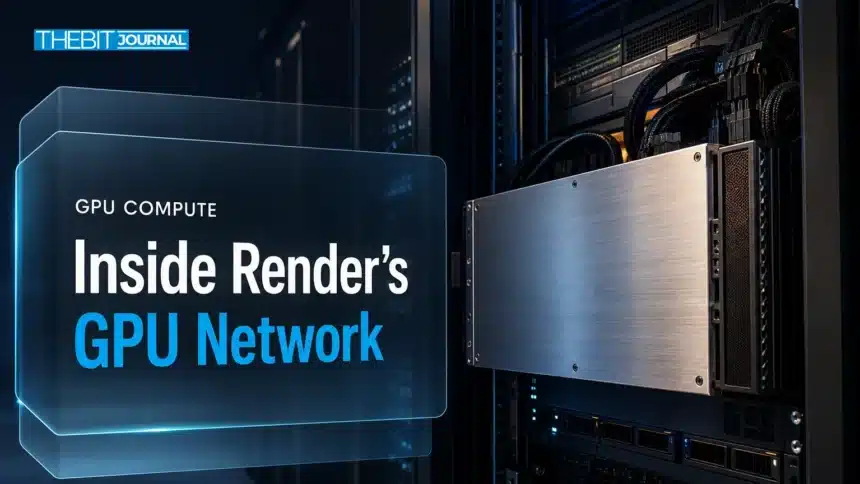
What is Render? It’s a decentralized GPU-compute network connecting customers who need rendering or other computing with operators who provide GPU capacity. Its Solana-based RENDER token supports network payments and rewards, but its market value can change sharply.
Understanding what is Render means looking at both the computing service and token mechanics. The figures below are dated November 19, 2026.
TL;DR
- Render matches customers needing GPU work with GPU node operators.
- Its burn-and-mint equilibrium model uses token burns for work credits and emissions to reward operators.
- Activity does not ensure token appreciation or falling supply. Emissions, demand, execution and market risks matter.
What is Render and what does it do?
Render Network is a GPU-computing marketplace. Customers submit rendering or other compute tasks, and GPU node operators contribute hardware capacity. The Render Foundation dashboard describes this decentralized model and tracks activity.
GPU capacity can help with work requiring more processing power than one computer can readily provide. The network supports rendering and other compute tasks. Available research doesn’t show capacity by task type, so activity figures aren’t a breakdown of customer demand.
On November 19, 2026, the Foundation dashboard recorded 82,560,409 rendered frames, 5,600 total nodes since inception and 130,108 RENDER holders. These are reported activity figures, not measures of revenue, service quality or future demand.
What is Render (RENDER) used for?
RENDER is the network’s Solana-based token. According to the Render Foundation dashboard, customers burn tokens to receive work credits, while the network emits tokens to node operators. This burn-and-mint equilibrium, or BME, ties token mechanics to network use.
A burn alone does not show that circulating supply has fallen over a period. Emissions can add tokens as burns occur, so the net effect depends on both.
How the burn-and-mint model works
Customers use RENDER to obtain work credits, with tokens burned through the process. Operators receive emissions for providing GPU resources. The balance between burns and emissions matters, but it’s not the only influence on market price.
Implementation was still underway in 2026. Salad said on July 3 that customers could fund accounts with RENDER and GPU providers could redeem balances to Solana wallets, while full migration and BME settlement remained in development. On November 6, Salad said it had started daily on-chain burns as a test before full RNP-023 Milestone 3 settlement. The first monthly Gateway Service burn, covering November, was expected to be sent in December.
TokenPost reported October 2026 gross job fees of $834,203, around 3.6 times September’s $232,323, with $792,486 assigned to burns. Those figures don’t prove circulating supply fell, since emissions also affect supply. TokenPost also reported a 5.9 million RENDER emissions budget for the year ending December 19, 2026, covering node rewards, grants, operations, research and development, and growth.
RENDER market data and token supply
CoinGecko listed these figures at 10:21 UTC on November 19, 2026. Prices and market capitalization can change after that snapshot.
| Measure | Figure | As of |
|---|---|---|
| RENDER price | $1.43 | November 19, 2026, 10:21 UTC |
| Market capitalization | $794.6 million | November 19, 2026, 10:21 UTC |
| Circulating supply | 556.4 million RENDER | November 19, 2026, 10:21 UTC |
| Maximum supply | 644.2 million RENDER | November 19, 2026, 10:21 UTC |
Tokenomics.com listed a community allocation unlock of 492,100 RENDER, or 0.1% of supply, for November 22, 2026. Unlocks and emissions differ from burns and can affect availability. These dated figures aren’t a forecast or a complete account of future supply.
What is Render’s potential, and what are the risks?
Render aims to connect GPU demand with distributed computing resources. Its prospects depend partly on customer use and operators’ ability to meet needs. Dashboard activity and October job fees show reported activity, but don’t establish long-term demand or token value.
The Foundation dashboard recorded the RNP-024 vote as closed on November 10, 2026, with a 143.3K-to-0 RENDER tally. The proposal described a Forth AI gateway, a time-limited incentive program capped at 500,000 RENDER and a separate marketing allocation capped at 150,000 RENDER. It said both would use existing resources without increasing the emissions cap. The proposal and vote do not establish that the gateway or allocations have been implemented.
A June 29, 2026 CFTC filing by Bitnomial self-certified a physically settled, margined RENDER/USD spot contract, with trading intended on or after July 1. The filing describes RENDER as the token powering the platform. The self-certification does not establish approval for other products or jurisdictions. Read the CFTC filing.
Render Network pros and cons
| Potential advantages | Risks and limits |
|---|---|
| Connects GPU operators and customers needing compute. | Demand or execution may disappoint. |
| BME links token use and operator rewards. | Emissions may offset burns; burns alone don’t prove supply is falling. |
| Dashboard reports network and holder activity. | Volatility, liquidity and sentiment can affect RENDER. |
| Proposals and integrations show ongoing development. | Technical, smart contract, exchange, regulatory and scam risks remain. |
Who Render may be for, and who it may not be for
Render may interest people researching decentralized GPU computing, network design or utility tokens linked to services. People researching the network can assess its technical design and the demands of GPU-compute work.
It may not suit those seeking predictable value, guaranteed demand or a simple supply-reduction story. RENDER can lose value. Risks include volatility, technical failures, smart contract or exchange problems, regulatory change and scams. Never share a seed phrase to access a service or claim a reward. Tax and legal rules vary by country; consult a qualified professional about personal obligations.
If you’re asking what is Render because you’re considering the token, keep that research separate from any acquisition decision.
Bottom line
What is Render? It’s a decentralized GPU-compute network with a token designed to support work credits and operator rewards through a burn-and-mint model. That links RENDER to network activity, but doesn’t make its value predictable or prove burns will exceed emissions.
Track evidence of service use, implementation and supply changes, while noting the dates of reported figures. Network growth, token economics and market performance are related, but separate questions.
Sources
- June 29, 2026, Bitnomial CFTC filing for Render US Dollar Spot Contract (www.cftc.gov)
- Render price and market data (CoinGecko)
- Render Network Dashboard (stats.renderfoundation.com)
This article is for informational purposes only and does not constitute financial or investment advice. Cryptocurrencies are highly volatile; always do your own research before investing.