





Dollar-backed stablecoins are often described as a neutral payments technology. A new issue note from the Bank of Korea argues they are anything but neutral for the foreign exchange markets of the countries whose currencies trade against them.
The study, authored by Bank of Korea researchers Jihyun Kim and Sangheum Cho and released on September 3, 2026, examines what happened in 12 currencies after Binance, the largest global crypto exchange, listed trading pairs between those currencies and stablecoins such as USDT between 2019 and 2025. The results cut in two directions at once, and both matter for policymakers now writing stablecoin rules across Asia, Latin America and Africa.
Lower premiums, but pressure on the exchange rate
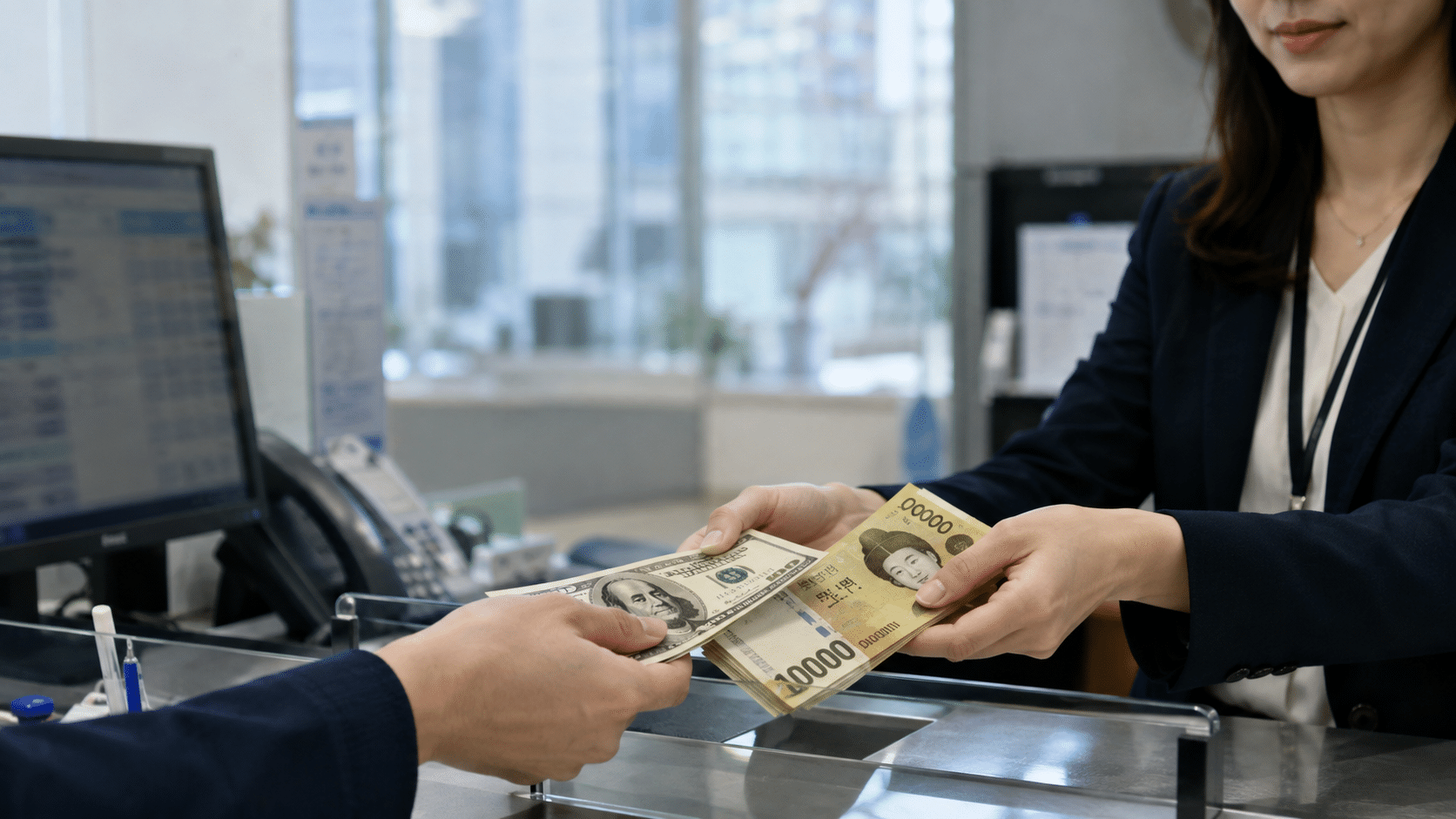
On the benign side of the ledger, the introduction of fiat-stablecoin pairs reduced local stablecoin premiums by roughly 0.33 to 0.38 percentage points. Premiums in this context measure how much more expensive a dollar stablecoin is in the local market compared with its one-dollar peg. When an exchange lists a direct pair, arbitrage becomes easier, the market deepens, and the premium compresses. For remittance users and traders in countries with capital controls or thin dollar markets, that is a genuine efficiency gain.
On the other side, the researchers found that net buyer-initiated order flow into stablecoins, meaning periods when locals are purchasing more stablecoins than they are selling, is significantly associated with depreciation of the paired local currency. The mechanism is intuitive once stated plainly: buying a dollar-backed token with local currency is economically similar to buying dollars. When that demand runs through an offshore crypto venue rather than the regulated banking system, it still shows up as selling pressure on the local unit, but largely outside the visibility of the central bank.
Bitcoin sentiment spills into currency markets
The paper’s most striking finding may be its spillover channel. Using Google search data as a proxy for crypto sentiment, the authors estimate that a one-standard-deviation rise in Bitcoin-related searches is associated with a 0.118 percent depreciation of the Brazilian real against the dollar, alongside a 0.109 percentage point increase in local stablecoin premiums. Risk appetite in crypto, in other words, does not stay inside crypto. In countries with direct fiat-stablecoin pairs, a speculative wave in Bitcoin translates into measurable pressure on the national currency.

Korea itself provided the natural control group. Because Binance does not list a direct won-stablecoin pair, the researchers found no significant exchange rate response in the won, only higher stablecoin premiums during periods of intense crypto demand. The authors read this as evidence that the pressure travels specifically through direct fiat on-ramps into stablecoins, not through crypto enthusiasm alone.
Related reporting: The Bit Journal previously examined Toss Bank’s proposed stablecoin settlement tests in South Korea. Payment experiments and the foreign-exchange transmission studied here are separate questions.
Why the timing matters for Seoul
The paper arrives in the middle of a live policy fight. South Korean lawmakers and regulators have spent 2026 arguing over the shape of a won-denominated stablecoin framework, with the Bank of Korea consistently taking the more cautious position against commercial banks and fintech firms that want faster issuance. The central bank’s own data point underscores what is at stake: according to Chainalysis figures cited in coverage of the study, purchases of stablecoins using won reached roughly $64 billion in the 12 months through June 2025, even without a direct pair on the largest global exchange.
For financial professionals, the study offers a framework that travels well beyond Korea. Any emerging market whose currency gains a direct stablecoin pair on a major offshore exchange may face two competing effects: a one-time compression of the premium that benefits users, followed by a potential channel through which crypto risk appetite can lean against the exchange rate. Central banks that monitor stablecoin flows only as a payments story may be missing a capital flows story.

Limits of the research
The authors are careful about causality. The evidence concerns Binance pair listings and selected currencies, rather than every exchange or currency market. An estimated relationship in that sample is not a universal forecast. The paper is a issue note, not settled doctrine. The findings concern the market structures and sample studied; they do not establish that every future stablecoin listing will produce the same exchange-rate response.
Frequently asked questions
What did the Bank of Korea study actually measure?
It measured what happened to local stablecoin premiums and exchange rates in 12 currencies after Binance listed direct fiat-stablecoin trading pairs between 2019 and 2025, using order flow and Google search data.
Do stablecoins help or hurt local currency markets?
Both, according to the paper. Direct pairs reduced local stablecoin premiums by about 0.33 to 0.38 percentage points, but net buying of stablecoins was significantly associated with depreciation of the paired currency.
What was the Brazil finding?
A one-standard-deviation increase in Bitcoin-related Google searches was associated with a 0.118 percent depreciation of the Brazilian real and a 0.109 percentage point rise in local stablecoin premiums.
Why was Korea itself not affected the same way?
Binance does not list a direct won-stablecoin pair. The researchers found no significant exchange rate response in the won, only higher premiums, which they interpret as evidence that the pressure travels through direct fiat pairs.
How large is Korea’s stablecoin market?
According to Chainalysis data cited in coverage of the study, purchases of stablecoins using won totaled roughly $64 billion in the 12 months through June 2025.
Does this study change any regulation?
Not directly. It is a issue note. But it lands while South Korea debates a won stablecoin framework, and it gives the cautious camp inside the Bank of Korea new empirical support.
Risk disclosure
Stablecoins carry issuer, reserve, depeg and regulatory risks, and trading them against local currencies involves foreign exchange risk. Historical correlations identified in academic research may not persist. This article summarizes a issue note and does not establish a trading forecast.
Disclaimer: This article is for informational purposes only and does not constitute investment, legal or tax advice. Digital assets are volatile and may be subject to regulatory restrictions in your jurisdiction. Always do your own research and consult a licensed professional before making financial decisions.
Sources
- Bank of Korea issue note, September 3
- SBS: study sample and mechanism
- Seoul Economic Daily: premiums and FX effects
- Coin Insider: won purchases of stablecoins
- Adbytes: detailed Brazil estimates