





This article was first published on The Bit Journal.
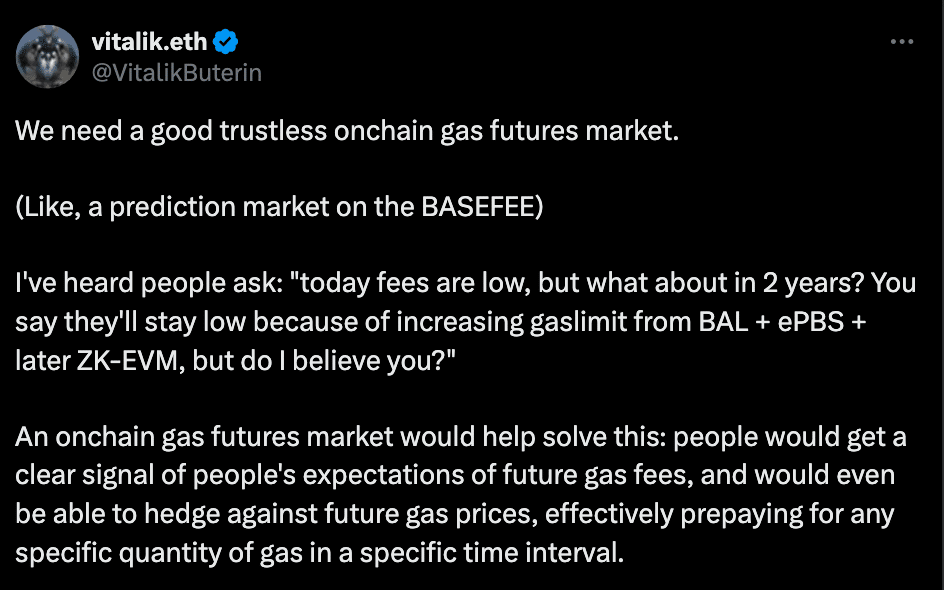
Vitalik Buterin, co-founder of Ethereum, has proposed an idea of having an on-chain trustless “gas futures” market for the network transaction fees.
The idea is to enable developers, large users and ordinary participants to pre-pay, or hedge against future gas, offering pricing predictability in spite of Ethereum’s history of wildly fluctuating fees.
The plan has prompted heated argument. Some cheer it as clever financial innovation while others have warned of structural and economic danger ahead.
While the Ethereum community is watching closely, the proposal also raises some deep questions about the future of gas pricing, network scalability and whether blockchain fees could ever act as a traditional commodity.
What Are Ethereum Gas Futures?
Gas on Ethereum is the fee users pay to complete transactions or run smart-contract processes. Gas prices shift as a result of network demand making planning hard for both developers and heavy users.
In his post on X, Buterin wrote that:
“we need a good trustless onchain gas futures market (like a prediction market on the BASEFEE).”
Under the proposal, users or dapps could lock in a gas cost amount for future usage in gas or hedge themselves against spikes in fees using on-chain contracts.
For example, if a project knows it is going to have high volumes of transactions in the future, they might buy futures contracts at fixed costs for gas.
Buterin thought this would send a very clear signal of what users’ future gas fee expectations should be and provide the certainty to build/test/plan around.
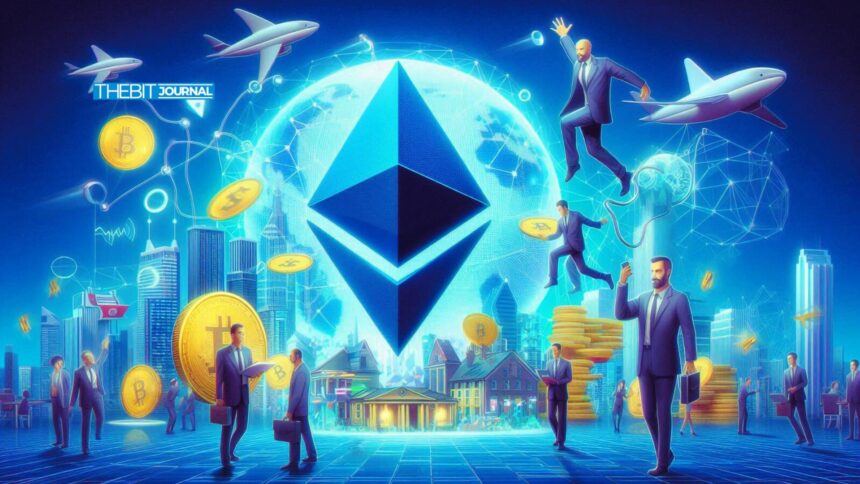
In essence, gas on Ethereum would become treated like a commodity, in which blockspace is something that can be traded, hedged and speculated upon.
The proposal went so far as to suggest that the protocol itself could be a counter-party (and the short side) of this trade, rather than users executing trades via auctioning base-fee claiming rights per block. .
Why Buterin’s Gas Futures Resonates.
Over the course of 2025, ETH gas fees have largely been decreasing. Standard transfers averaged 0.474 gwei, around one cent per transaction, based on Etherscan.
More complicated transactions like token swaps, NFT mints, cross-chain bridges still cost more (tens of cents), but are significantly below those levels during past fee spikes in the bull market.
Even with these reduced basic fees, the volatility is worrisome. Fees have swung between peaks of $2.60 and lows of 18 cents based on congestion and demand.
For developers, dApps and institutions looking to undertake multi-month projects or to use MM at very high volumes, that uncertainty makes budgeting both a challenge and a risk.
Buterin’s proposal aims to fix that by offering up users and developers a way to hedge, speculate, and stabilize those costs which could make Ethereum more appealing for dapps at scale, enterprises, or long-term projects.
Mixed Reactions – Support, Skepticism, Concerns Over Economy
Buterin is not the only one raising this, but there is also no consensus on the response. Some voices in the Ethereum community welcome the ambition.
For example, early-stage projects such as ETHGas, a project to create real-time gas trading infrastructure, see the futures market as being on a path to risk-managed blockspace.
The vision was previously described by ETHGas cofounder Kevin Lepsoe in terms of the ability for “transaction costs or ‘gas prices’ to be risk-managed within a traditional commodity risk-management model.
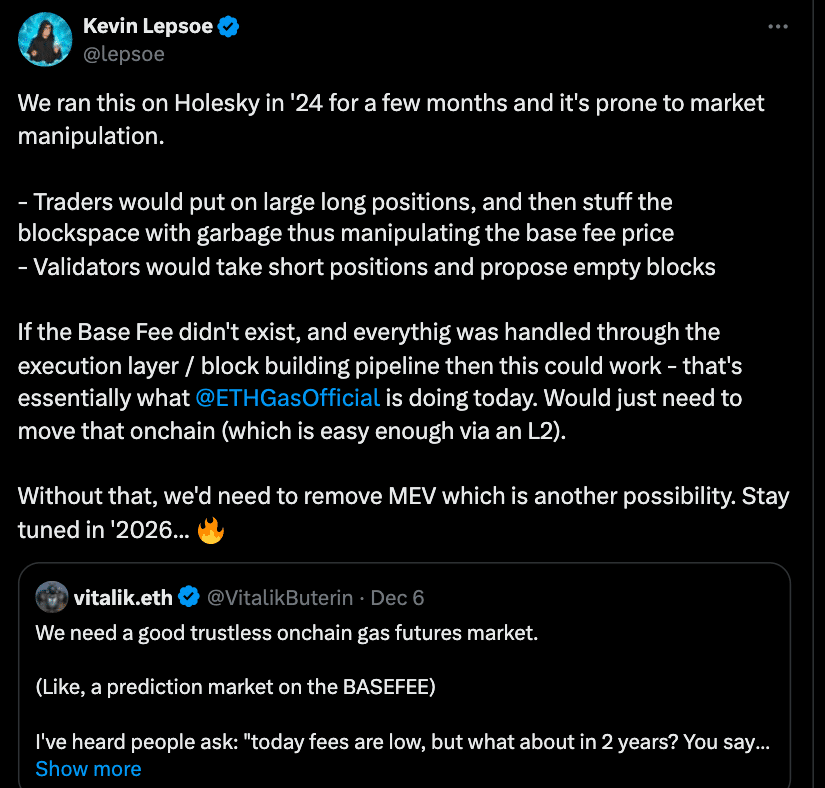
On the other hand, there is also very strong resistance from those in positions of authority.
The pseudonymous strategist Hasu (affiliated with Flashbots) criticized the proposal by highlighting a basic issue: “no natural short side.”
For one, he noted that lots of users want to hedge high gas (i.e. “short gas”), but very few actually want to “long” gas, making it hard to build a sustainable futures market.
In the same vein, Martin Koppelmann, co-founder of Gnosis pointed out that Ethereum’s fee burn mechanism adds another layer of complexity to any futures scheme.
Under the current model, much of that gas fee gets burned rather than paid to validators, so there is no steady income or “yield” from holding those gas futures, and thus neither a stable commodity-like market nor an asset.
These critiques don’t disprove the notion, but they do illustrate why many inside the ecosystem consider it bold, experimental and far from a sure thing.
Conclusion
Ethereum’s scaling roadmap is a big part of this discussion. Buterin cited pending technical upgrades, including upping the block gas limit through mechanisms like “BAL,” ePBS, and future ZK-EVM rollouts, as to why fees might remain low, but also uncertain moving forward.
Should those upgrades succeed and with it low-fee but variable costs, a futures market could assist users and developers in locking in costs before demand spikes hit, providing predictability and certainty in a world where blockspace is still at a premium.
Projects such as ETHGas themselves, and other infrastructure builders, may help to provide the technical underpinnings: smart-contract-based futures, on-chain auctions, gas-forward contracts, etc.
Should adoption get under way, Ethereum could shift toward a fixed-supply, “blockspace economy” that is more mature and tradeable; gas becomes more than just a fee but also something one can hedge.
Glossary
Gas (on Ethereum): A transaction and contract execution fee which is paid to the network. It compensates validators for the computational work they do.
Gas Futures / Gas Futures Market: A hypothetical market where a consumer could agree to pay a set price for gas they will use at some future date (akin to commodity futures).
Basefee: The minimum fee per unit of gas required in an Ethereum block (excluding tips), a statistic for the proposed gas-futures contracts.
Futures Contract: A financial contract to purchase or sell an asset at a certain price on a specified future date.
Blockspace: The space on a blockchain block, basically, the “room” for transactions. Blockspace on Ethereum is sold by gas fees.
Hedging: Strategy to offset risk, such as, locking in gas costs now so one isn’t hit with higher prices later.
Frequently Asked Questions About Ethereum Gas Futures
What did Vitalik Buterin suggest?
He suggested building an on-chain gas futures market with Ethereum to enable users to pre-purchase or hedge gas fees for future spans which would link the transaction cost to predictable parameters.
If gas fees are low now, why do users need a gas futures market?
Fees are, in fact, relatively low in 2025, but they have always been extremely volatile, skyrocketing during periods of high demand. A futures market would provide certainty to developers and other heavy users who plan far ahead even if fees fluctuate.
What are the criticisms of this proposal?
Critics say that there’s “no natural short side”; in other words, few would be willing to bear the cost if demand falls. Others point out that Ethereum’s fee-burn model discourages holding or trading gas futures.
Would such a proposal really be feasible?
Technically speaking, yes, there are smart contracts and infrastructure (such as from the projects ETHGas), but it would need considerable community alignment, liquidity, and governance decisions around auctions, settlements, and long-term incentives.
References
The Block
Cryptonews
KuCoin
MEXC
Ethgas