


Last updated: November 26, 2026
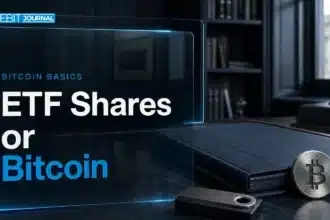
Bitcoin ETF vs owning bitcoin comes down to what you hold: shares in a fund that tracks bitcoin’s price, or bitcoin itself. Both can move with the same market, but differ in custody, fees, trading access and what you can do with the asset.
Quick answer
A spot Bitcoin ETF gives you fund shares through a brokerage account. Direct ownership gives you bitcoin, held with a custodian or in a wallet you control. An ETF may be simpler to manage through a brokerage, but it has fees and doesn’t let you transfer or use bitcoin on the network.
Bitcoin ETF vs owning bitcoin, step by step
First separate price exposure from possession. A spot fund is designed to track bitcoin, but its shares represent an investment in a trust, not direct ownership of bitcoin. The SEC approved the listing and trading of multiple spot bitcoin exchange-traded products on US national securities exchanges on January 10, 2024. The agency calls them ETPs, though they’re commonly known as spot Bitcoin ETFs. The SEC’s statement on spot bitcoin ETPs explains the distinction.
- Decide what you want to hold. An ETF means holding fund shares through a brokerage. Direct ownership means holding bitcoin through an exchange or wallet. If you control the wallet keys, you’re responsible for keeping them secure.
- Check how you’d access it. ETF shares follow the exchange’s trading schedule. Fidelity says its FBTC fund trades during stock-market hours. It also says bitcoin in its Crypto account can be traded seven days a week, 23 hours a day, and moved through the blockchain network.
- Compare ongoing costs. Funds can charge a sponsor fee. The iShares Bitcoin Trust ETF product page listed a 0.25% fee as of September 10, 2026, or about $25 a year per $10,000 invested, before compounding and other costs. Direct ownership avoids a sponsor fee, but exchange, network or custody costs may apply.
- Consider custody and use. An ETF share represents an investment in a trust, not direct ownership of bitcoin, so it is not itself bitcoin you can transfer to a personal wallet. Direct bitcoin can be transferred on the network, but losing wallet access or sending it to the wrong address can cause permanent loss.
- Check tax and account rules. Treatment can differ by jurisdiction and circumstances. In the US, the IRS treats digital assets such as bitcoin as property and says selling bitcoin for dollars can produce a capital gain or loss. Read the IRS guidance and consult a qualified tax professional about your situation.

Bitcoin ETF vs owning bitcoin: key differences
Both options expose you to changes in bitcoin’s market price, and neither prevents a sharp decline. CoinGecko reported bitcoin at $60,730 at 14:26 UTC on November 26, 2026, down 24.24% over 30 days. That dated snapshot illustrates volatility, not a forecast.
| Feature | Spot Bitcoin ETF | Direct bitcoin |
|---|---|---|
| What you hold | Shares in a trust or fund | Bitcoin, held with a service or in a wallet |
| Custody | Fund arrangements handle the underlying asset | You or a service provider secure the bitcoin |
| Transfers | Shares move through brokerage systems | Bitcoin can be sent through the blockchain network |
| Trading access | Follows exchange and brokerage access | Depends on the platform; Fidelity reports 23-hour, seven-day access for its Crypto account |
| Costs | May include sponsor and brokerage fees | May include trading, network or custody costs |
| Extra risks | Fund, brokerage and market risks | Exchange, wallet, key-management and market risks |
This isn’t simply a choice between “safer” and “riskier.” The SEC says spot bitcoin ETP shares aren’t registered under the Investment Company Act of 1940, so they don’t have that law’s protections for registered investment companies. Direct ownership brings other responsibilities, especially when you manage your own wallet.

Common mistakes and risks to understand
An ETF share isn’t interchangeable with bitcoin. It provides price exposure, but can’t be used to pay someone on the Bitcoin network or moved into a personal wallet. Also, don’t compare only the advertised fee. Brokerage charges, spreads, custody and network costs affect the total, and fees and product terms can change.
Neither format protects against volatility. Bitcoin can lose value quickly, and holders can lose some or all of the amount committed. ETF investors face fund structure, brokerage and market risks. Direct holders may face exchange failure, theft, scams, lost wallet access or irreversible transfers to incorrect addresses. Never share a wallet’s seed phrase or private keys.
Tax treatment also requires care. The IRS says US digital-asset sales can create a capital gain or loss, and broker reporting rules are phasing in Form 1099-DA requirements. The IRS guidance cited here addresses digital-asset transactions and does not by itself establish the tax treatment of fund shares. Rules vary by country, so consult a qualified professional rather than assuming both receive the same treatment.

Bitcoin ETF vs owning bitcoin FAQ
Is a Bitcoin ETF the same as owning bitcoin?
No. A spot Bitcoin ETF share represents an investment in a trust, not direct ownership. It gives you fund-based exposure, but you can’t use the underlying bitcoin for an on-chain transfer.
Can I move Bitcoin ETF holdings to a crypto wallet?
No. ETF shares stay in a brokerage account and aren’t bitcoin that can be sent over the blockchain. To hold bitcoin in a wallet, a person needs to acquire it through a service that supports withdrawals, then manage transfer and custody risks.
Which has lower fees, a Bitcoin ETF or direct bitcoin?
It depends on the fund, broker, exchange and custody method. A fund may charge an annual sponsor fee; direct bitcoin can involve trading, network or custody costs. Compare current fee schedules and total costs for the specific services, as fees can change.
Sources
- SEC Statement on the Approval of Spot Bitcoin Exchange-Traded Products (www.sec.gov)
- Bitcoin price and market data (CoinGecko)
- Is the Bitcoin Bottom In? Galaxy's 13-Signal Checklist Has an Answer (BeInCrypto)
This article is for informational purposes only and does not constitute financial or investment advice. Cryptocurrencies are highly volatile; always do your own research before investing.