

Bitcoin is again being measured against gold, but the contest is not simply about price. The latest Bitcoin vs gold debate is being shaped by interest rates, inflation, geopolitical tension and confidence in how each asset’s supply is priced. Bitcoin traded near $63,000 on July 28 as markets prepared for central-bank decisions and economic data. The question is whether capital stays defensive in gold or rotates toward a scarcer digital asset.
Bitcoin vs Gold Faces a Decisive Macro Week
The Federal Reserve’s July meeting runs from July 28 to July 29, with its policy decision and press conference due Wednesday. One day later, the Bureau of Economic Analysis will publish June personal income and spending data, including the PCE price index. The Fed closely watches core PCE because it removes volatile food and energy prices and shows underlying inflation more clearly.
These events matter because Bitcoin reacts strongly to liquidity expectations. Softer inflation or a more supportive Fed message could weaken bond yields and improve demand for risk assets. A tougher stance could lift the dollar and pressure crypto. Gold may struggle when real yields rise, though geopolitical fear can support it.
The Bitcoin vs gold comparison rests on different investor needs. Gold is used to preserve capital during uncertainty. Bitcoin is increasingly treated as a scarce monetary asset, yet it still trades with the volatility of a technology-led risk market.
Easing Geopolitical Fear Changes the Balance
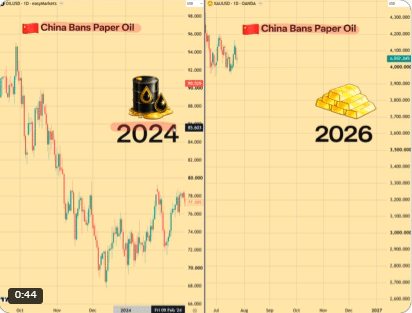
Gold gained support when tension between the United States and Iran encouraged defensive positioning. As tensions cooled, investors reconsidered how much protection they needed. That does not guarantee a gold decline, but it removes one source of urgent demand.
Bitcoin may benefit when fear fades and investors accept more volatility. In the Bitcoin vs gold contest, sentiment can shift quickly. Gold often attracts capital when markets seek shelter, while Bitcoin tends to perform better when liquidity improves and investors expect growth.
Still, the line is not clean, Bitcoin can fall during market stress because leveraged traders sell liquid assets first. It may behave like digital gold over years and like a high-beta technology asset over days.
On-Chain Valuation Offers a Different Signal
Bitcoin’s realized price was recently estimated near $53,000, while the market price stood roughly 18% above it. Realized price values each coin at the price when it last moved on-chain. It acts as an approximate network cost basis.
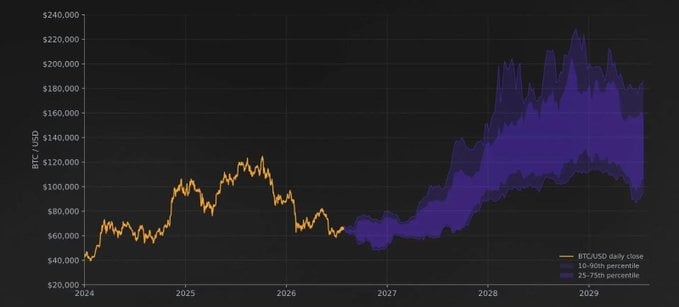
A market price close to realized price can suggest that speculative excess has been reduced. It does not prove that a bottom has formed, though it may show that holders are no longer sitting on the large unrealized gains seen near cycle peaks.
Bitcoin was also described as deeply oversold relative to gold and the Nasdaq. Relative oversold readings show that one asset has underperformed another by an unusually wide margin. They can highlight value but may remain stretched for weeks. The Bitcoin vs gold signal therefore needs confirmation from price structure, volume and macro conditions.
Key Indicators Investors Are Watching
| Indicator | Why It Matters | Possible Signal |
|---|---|---|
| Fed decision | Shapes rates and liquidity | A dovish tone may support Bitcoin |
| Core PCE | Tracks underlying inflation | Softer data may ease yield pressure |
| Realized price near $53,000 | Estimates network cost basis | A narrow gap may show reduced excess |
| BTC versus Nasdaq | Measures relative risk performance | Extreme weakness may attract buyers |
| Geopolitical risk | Drives defensive demand | Lower fear may reduce gold’s edge |
No single measure can settle Bitcoin vs gold. The stronger case appears when several indicators move together.
Transparency Strengthens Bitcoin’s Scarcity Case
Gold is physically scarce, but ownership and derivative claims are spread across vaults, funds, futures and private markets. Bitcoin follows a public issuance schedule and records transactions on a distributed ledger. Its maximum supply is limited to 21 million coins, and network activity can be independently checked.
That transparency supports the Bitcoin vs gold thesis when investors question whether paper claims reflect physical demand. However, transparent supply does not remove price risk. Leverage, regulation, custody failures and investor psychology can still produce sharp losses.
Conclusion
Bitcoin does not need to replace gold to gain a larger role in global portfolios. A realistic outcome is coexistence: gold as a mature defensive reserve and Bitcoin as transparent scarcity with greater upside and volatility.
The next phase of Bitcoin vs gold will depend on whether inflation cools, the Fed opens the door to easier policy and geopolitical tensions remain contained. On-chain valuation suggests Bitcoin is no longer priced with the same excess seen near market highs. A durable breakout still requires stronger demand, improving liquidity and confirmation above resistance.
Frequently Asked Questions
Can Bitcoin overtake gold?
Bitcoin could outperform gold during risk-on periods, but surpassing gold’s market value would require sustained adoption and large capital inflows.
Why does the Fed affect Bitcoin?
Fed policy changes borrowing costs, dollar strength and liquidity, all of which influence demand for speculative and scarce assets.
Is realised price a buy signal?
No. It is a valuation reference showing the estimated average cost basis of coins based on their last on-chain movement.
Glossary of Key Terms
Core PCE: An inflation measure excluding food and energy.
Realised price: Bitcoin’s estimated network cost basis.
Real yield: A bond yield adjusted for inflation.
Risk-on: A market setting in which investors favour assets with higher expected returns.
Disclaimer:
This article is for informational purposes only and does not provide financial or investment advice. Cryptocurrency prices are volatile, and readers should conduct independent research before making decisions.
Sources