



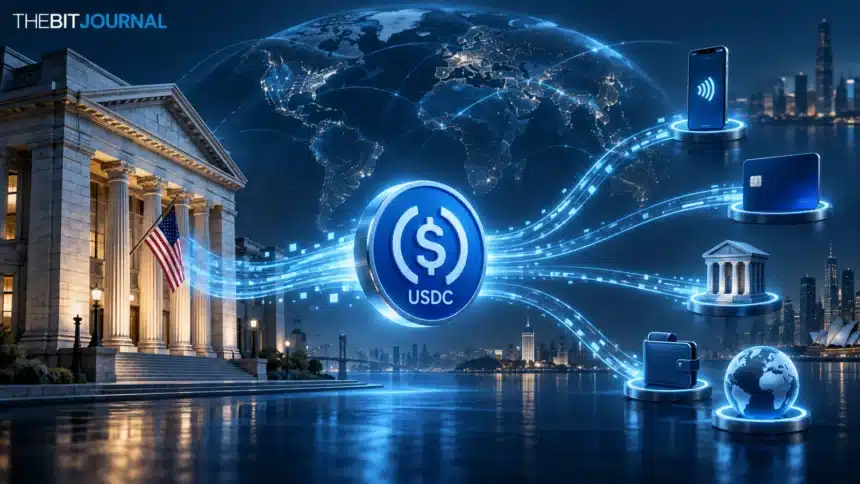

Circle and Volante Technologies are working to put USDC transactions inside the payment systems banks already operate, addressing a less glamorous obstacle to stablecoin adoption: connecting a blockchain transfer to the controls, records and funding processes surrounding it. Their September 28 announcement describes a collaboration through which financial institutions can evaluate stablecoin workflows alongside conventional payment rails.
The joint announcement identifies minting, redemption, wallet registration, funding and payment execution among the functions under consideration. It does not announce that every Volante customer has launched a USDC service. The distinction is important: access to an integration is an implementation opportunity, while a bank’s production launch requires its own operational and regulatory decisions.
A payment is more than a token transfer
A blockchain can record that one address sent tokens to another. A bank must also establish who requested the payment, whether the recipient is permitted, which account should fund it and how the transaction appears in customer records. If those steps live in separate systems, a faster transfer can still leave staff reconciling exceptions manually.
Embedding a stablecoin workflow within a payment platform could make that handoff less cumbersome. For example, a corporate customer might submit a payment instruction through an established banking channel while the bank determines which settlement route is available. The business benefit would come from coordinating the entire instruction, not simply attaching a wallet to the front of an existing service.
That is why the announcement’s emphasis on existing infrastructure matters. Banks have invested in access controls, approvals and accounting connections. Replacing those systems solely to introduce one payment rail creates another migration project. An integration that uses familiar operations may lower that barrier, although the announcement provides no measured implementation savings or production performance results.

The dollar still has to enter and leave
USDC’s usefulness to a business depends partly on what happens before and after an onchain transaction. A company paying suppliers may hold bank deposits rather than tokens. Its supplier may want local currency in an ordinary account. Minting and redemption therefore sit beside the transfer itself, and conversion costs can influence whether the route is economical.
Circle’s USDC information describes the issuer’s digital-dollar product. For a bank evaluating it, the relevant questions extend beyond the token’s intended dollar value: access to redemption, supported networks, operational cutoffs and the obligations of intermediaries all affect the customer experience. An always-available blockchain cannot by itself make every connected banking service operate around the clock.
TBJ previously examined Visa’s stablecoin payments strategy. The common thread is distribution through established financial infrastructure. A digital asset becomes more useful when firms can integrate it into a complete payment journey, including the familiar endpoints where customers receive and spend money.

Integration does not erase different risks
A multi-rail platform can make different payment methods look similar to an operator, but the underlying claims are not identical. Holding a stablecoin and holding a deposit at a bank involve different issuers and contractual arrangements. The payment interface should not obscure that distinction from a customer choosing how to keep working capital.
Network selection adds another operational layer. The sender and recipient must use compatible infrastructure, and the bank needs procedures for delayed transactions, unavailable services and incorrect instructions. Screening a recipient before execution is also different from recovering a transfer after it has occurred. A faster rail puts more weight on getting the instruction right before funds leave.
None of these issues makes integration unworkable. They explain why banks tend to assess new rails through controlled workflows rather than treating a successful demonstration as a complete service. The meaningful benchmark is a payment that can be authorized, executed, reconciled and supported consistently under ordinary and stressed conditions.

Adoption will be measured in actual services
The next milestones are concrete customer implementations, supported corridors and clear disclosures about availability and cost. A named launch with recurring transaction activity would tell the market more than the size of a vendor’s client list. Institutions may also adopt the same infrastructure for different purposes, from treasury transfers to customer-facing international payments.
Circle and Volante have outlined a route toward that operational stage. The announcement’s significance is not a claim that stablecoins have replaced banking rails. It is the attempt to make a new rail usable within the systems responsible for moving bank customers’ money every day. Whether that produces a better service will depend on the complete workflow, not the speed of the blockchain leg alone.