



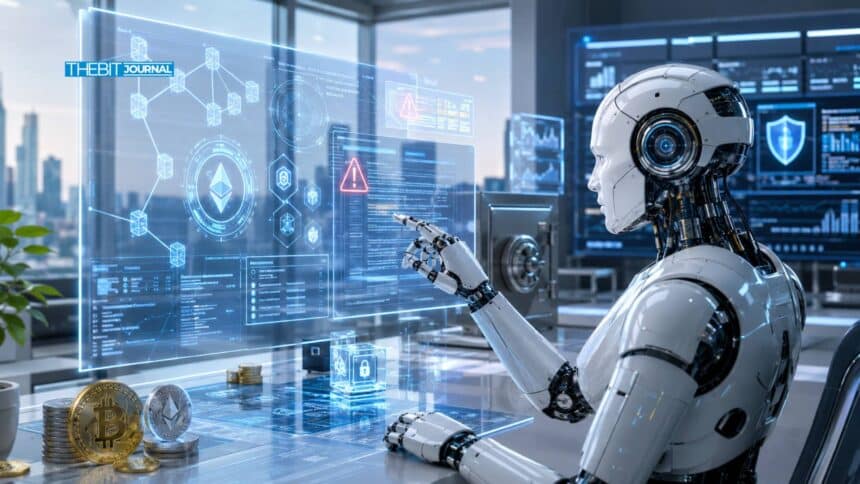

A fresh warning from one of DeFi’s early security voices has pushed a difficult question into the open: can decentralized finance still protect user funds in an age where AI agents can scan code, test weak points, and speed up attacks?
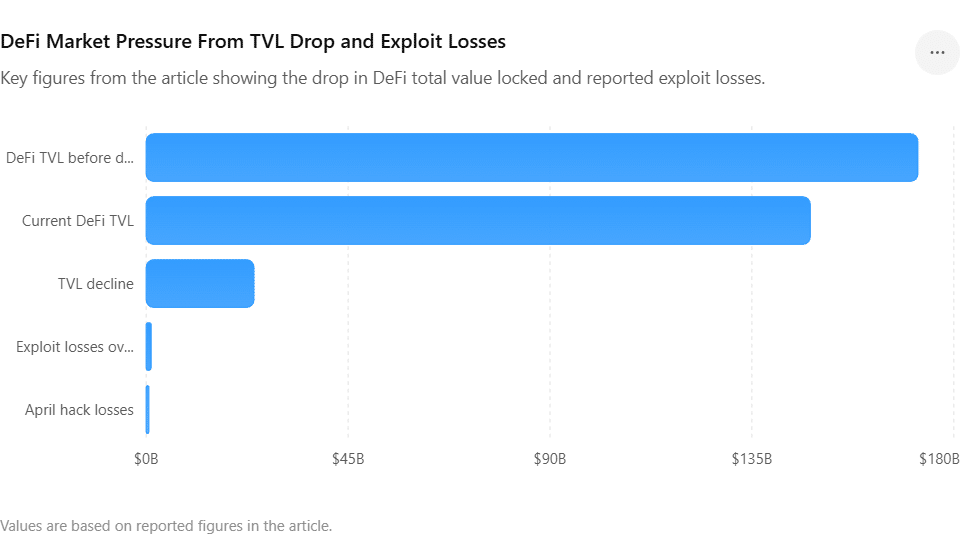
The concern comes as DeFi total value locked has fallen from about $172 billion to $148 billion, while exploit losses have crossed $1.1 billion over the past year. The debate is not just about bad code anymore. It is about speed, operational discipline, and whether protocols can defend themselves faster than attackers can adapt.
AI DeFi Security Becomes the New Market Test
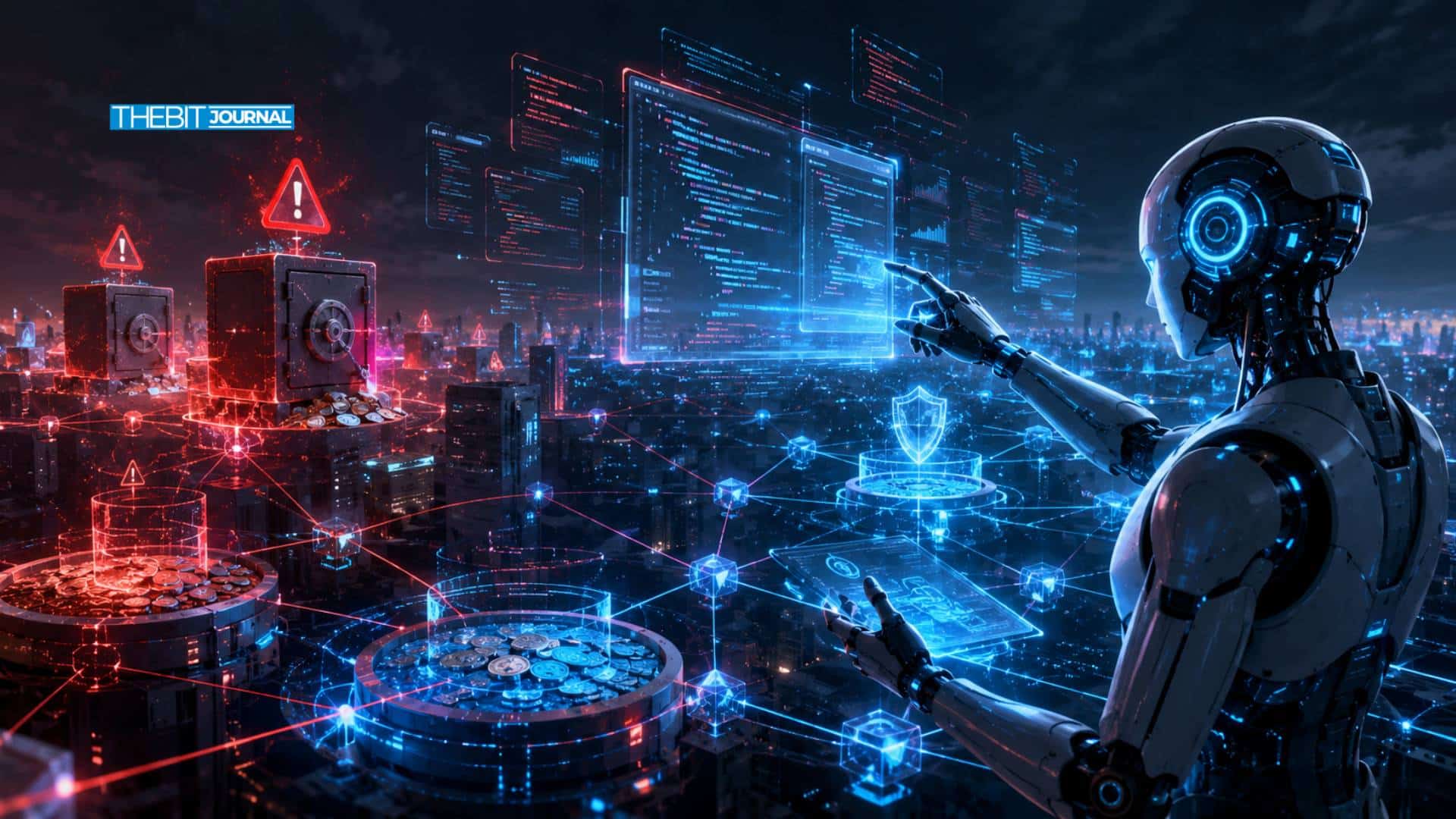
AI DeFi security is now becoming a serious market indicator, not just a developer concern. Investors once looked mostly at TVL, yield, token price, liquidity, and audit badges. Those signs still matter, but they no longer tell the whole picture. A protocol can have deep liquidity and a strong brand, yet still carry hidden risks if its admin keys, bridges, or monitoring systems are weak.
This is why the latest warning hit a nerve. AI coding agents may not make every DeFi platform unsafe overnight, but they can reduce the cost of finding bugs. That changes the economics of hacking. In the old model, attackers needed deep technical skill, time, and patience. In the new model, AI tools can help map contract logic, inspect integrations, and flag weak design choices faster than a manual review.
For users, that means AI DeFi security should sit beside yield and liquidity when judging a platform. High returns mean little if one missed flaw can drain a pool.
Why AI Agents Make Smart Contract Risk Harder
Smart contracts are public by design as that transparency is one of DeFi’s strengths, since anyone can inspect the rules. Yet the same openness gives attackers a clean window into protocol logic. AI agents can study that public code, compare it with known exploit patterns, and help identify where an attack might begin.
This does not mean AI can instantly break every contract. That would be an exaggeration. The more realistic risk is sharper and more practical: AI lowers the barrier to entry. If a tool can point an attacker toward a weak oracle setup, poor access control, or risky upgrade function, the attacker starts the race halfway down the track.
That is the key shift in AI DeFi security. The danger is not only that attacks become smarter. It is that more people can attempt them.
The Numbers Behind the DeFi Fear
The timing matters. DeFi has already been under pressure from hacks, weaker risk appetite, and falling liquidity. Total value locked dropping from roughly $172 billion to $148 billion shows that capital has become more cautious. At the same time, more than $1.1 billion in exploit losses over the past year shows that security failures are not isolated events.
April was especially painful, with $635 million reportedly lost across 28 hacks. Those numbers matter because TVL is more than a vanity metric. It reflects how much capital users are willing to place inside smart contracts. When TVL falls for weeks, it often signals lower confidence, weaker liquidity, and tighter conditions for lending, borrowing, and trading.
For crypto markets, this can spill over. DeFi liquidity supports token swaps, leverage, stablecoin movement, yield markets, and on-chain trading. When confidence drops, activity slows. That can reduce volume, widen spreads, and make volatile assets even harder to trade cleanly.
Not Every DeFi Loss Comes From Bad Code
The debate has another side. Several industry leaders argue that many large losses are not caused by flaws in audited smart contracts. Instead, attackers often target the human and operational layer: stolen private keys, social engineering, bridge spoofing, weak permissions, and poor internal controls.
That distinction is important for AI DeFi security. A protocol may pass a code audit and still fail if one privileged wallet is compromised. Think of it like a bank vault with a strong steel door but a careless guard holding the master key. The vault may be well built, yet the system is still exposed.
This is where investors need a broader checklist. They should examine audits, but also ask how the protocol manages keys, limits admin power, monitors abnormal flows, handles emergency pauses, and caps exposure during stress.
Why Static Audits Are No Longer Enough
Traditional audits remain useful, but they are snapshots. They review code at a point in time. DeFi, however, is a moving machine. Protocols upgrade contracts, add assets, connect bridges, adjust parameters, and integrate with other platforms. Each change can create a new weak spot.
That is why AI DeFi security is shifting toward continuous defense. Protocols need live monitoring, transaction simulation, runtime protection, and circuit breakers that can slow suspicious activity before funds leave the system. These tools are not perfect, but they can shrink the damage when something goes wrong.
The best model may not be “no failure ever.” That is unrealistic in open finance. The better goal is controlled failure, where one compromised key, bad setting, or missed bug cannot wipe out an entire liquidity pool.
Key Indicators Investors Should Watch
For crypto users, the strongest indicators now include TVL stability, exploit history, audit depth, bug bounty size, liquidity concentration, oracle design, admin key controls, bridge exposure, and incident response speed. A high TVL protocol with poor monitoring may carry more risk than a smaller platform with tighter controls.
AI DeFi security also affects token value. If a protocol is seen as unsafe, users may withdraw liquidity, revenue can fall, and governance tokens may lose demand. On the other hand, platforms that prove strong defense systems may earn a trust premium as AI-driven threats grow.
Conclusion
AI agents have not made the entire $148 billion DeFi sector unsafe, but they have raised the standard for what “safe” should mean. The market is moving past simple audit badges and into a phase where live defense, operational controls, and faster response systems matter just as much as smart contract design. For users, the lesson is simple but not comfortable: yield should never be judged without risk, and AI DeFi security is now part of that risk.
Frequently Asked Questions
Is all DeFi unsafe because of AI agents?
No. AI agents increase the speed and scale of vulnerability discovery, but strong protocols with good audits, monitoring, risk controls, and key management can still reduce risk.
Why does TVL matter in this issue?
TVL shows how much capital is locked in DeFi protocols. A fall from $172 billion to $148 billion suggests weaker confidence, lower liquidity, or broader market stress.
Can audits stop AI-assisted attacks?
Audits help, but they are not enough alone. Protocols also need live monitoring, transaction simulation, circuit breakers, and strict operational controls.
What should investors check before using DeFi?
They should review audit history, exploit record, admin key setup, oracle design, bridge risk, bug bounty programs, liquidity depth, and emergency response systems.
Glossary of Key Terms
DeFi
DeFi means decentralized finance, a group of blockchain-based apps used for lending, trading, borrowing, and earning yield without traditional banks.
TVL
TVL means total value locked. It measures how much crypto value is deposited inside DeFi protocols.
Smart Contract
A smart contract is blockchain code that runs financial rules automatically when certain conditions are met.
Circuit Breaker
A circuit breaker is a safety tool that can pause or limit protocol activity during suspicious or risky conditions.
Oracle
An oracle brings outside data, such as asset prices, into blockchain applications so smart contracts can act on real-world information.
Source
Disclaimer: This article is for educational and informational purposes only. It is not financial, investment, legal, or security advice. Crypto assets and DeFi protocols carry high risk, and readers should do independent research before making any decision.