




The US tokenized securities market is moving into an important stage as the Securities and Exchange Commission shows faster support for blockchain-based settlement, while the broader $68 trillion stock market still runs on old systems.
The growing difference between traditional financial networks and digital blockchain systems is now a major focus for policymakers. The decisions made in the coming period could change how US financial markets operate.
What Does the US Tokenized Securities Market Actually Mean?
The US tokenized securities market means turning regular financial assets like stocks, bonds, and funds into digital versions that run on blockchain networks. These digital assets are meant to closely match real-world investments and help speed up settlements, automate rules, and allow ownership to be managed through smart technology.
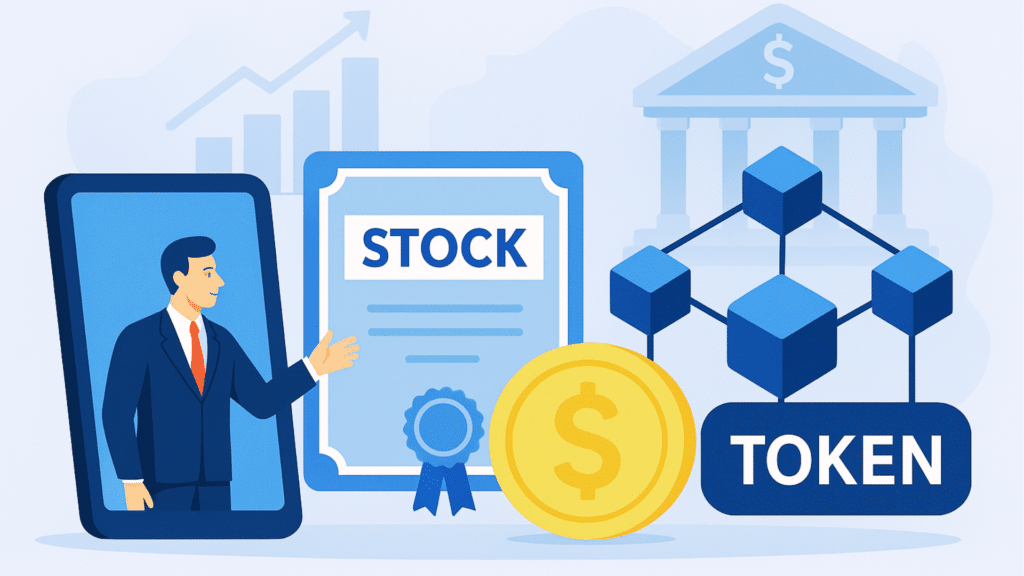
Right now, this market is still at a very early stage. The total value of the US stock market is around $68 trillion. However, only about $670 million of that amount is currently tokenized on the blockchain. This large difference shows just how early the shift still is, even though regulators are showing more interest.
Tokenization does not change what securities are. It changes how they move. Instead of passing through many middlemen and taking days to settle, trades and ownership transfers can happen directly on digital networks, often much faster.
Why Has a $68 Trillion Gap Become a Policy Priority Now?
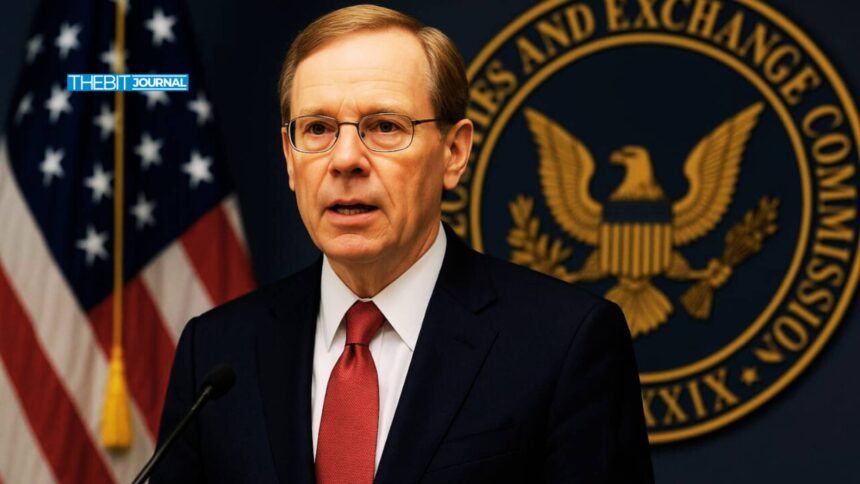
The focus grew stronger after SEC Chair Paul Atkins said that tokenization could become a key part of US markets within the next couple of years. This was one of the clearest signs so far that the regulator now views blockchain settlement as a major system upgrade rather than a small experiment.
The size of the US stock market, valued at about $68 trillion, shows how big the opportunity is. Compared to that, the $670 million currently tokenized looks very small. Still, policymakers see this small portion as the starting point of a much larger change.
Bitwise CIO Matt Hougan drew attention to the sharp difference between the size of the wider market and what has been tokenized so far, calling it a clear sign that this shift is still at a very early stage. From his standpoint, the real transformation has barely begun.
At the same time, regulators are feeling the pressure from abroad. In several countries, tokenized systems are already being used in live markets rather than test environments. That progress is pushing US authorities to move faster, while making sure they do not weaken the foundation of the world’s largest financial market.
How Is the SEC Rethinking Its Role in the US Tokenized Securities Market?
The regulator’s stance has clearly evolved. The US tokenized securities market is now being treated as part of the regulated financial system rather than something operating on the edges overseas.
Atkins has openly said the SEC has not always kept pace with financial innovation and has, at times, stood in the way of changes that later proved to be lasting. That attitude is now shifting. Several crypto-related investigations have been dropped. Industry discussions with regulators have started again.
Commissioner Hester Peirce has also indicated that the agency is now taking a faster, more practical, and more flexible approach. One of the most important developments underway is the SEC’s work on a token classification framework.
It is being built around the Howey test but adjusted to reflect how blockchain networks grow, spread control, and eventually operate without a central issuer. The aim is to clearly define which digital assets fall under SEC oversight and which do not. This policy shift is also tied to where tokenized trading takes place.
The collapse of FTX in 2022 stood in sharp contrast to the continued operation of LedgerX under CFTC supervision. For US officials, the message was straightforward. When digital markets operate under proper oversight onshore, customer assets can be protected.
What Are the Regulatory Bottlenecks Slowing the Transition?
Even with growing momentum, challenges remain within the US tokenized securities market. Commissioner Caroline Crenshaw has raised concerns that some tokenized equities marketed as wrapped securities may not fully represent the same economic rights, liquidity levels, or legal protections as the traditional assets they claim to track.
She has cautioned that these products are not always true one-to-one equivalents. This creates the risk that investors may assume they are buying the same thing when important differences still exist. Because of this, regulators may need to introduce new rules to close those gaps.
These issues came into focus during a recent SEC Investor Advisory Committee meeting. Representatives from Citadel Securities, Coinbase, and other firms openly disagreed on how tokenization should operate alongside decentralized finance.
Citadel pushed for strict oversight, arguing that every intermediary involved in tokenized trading, including decentralized protocols, should be clearly identified and fall under existing exchange and broker-dealer rules.
Coinbase took the opposite view, warning that applying those same obligations to decentralized systems could create practical problems and even new risks by forcing protocols into custody-related roles.
The debate highlights two very different visions for the future. One follows the traditional financial model with defined intermediaries. The other is built around non-custodial, code-driven infrastructure.
The SEC is now faced with deciding whether these two approaches can run side by side or whether tokenized securities will need a stricter, more uniform regulatory structure.
Can Today’s Infrastructure Handle Tokenized Scale?
One of the main pressure points in the US tokenized securities market is still basic operating capacity. Nasdaq handles around 2,920 trades every second and moves about $463 billion in value each day. Public blockchains, for now, cannot consistently match that kind of speed or reliability, even though they offer clear advantages in post-trade processing.
Bringing a meaningful portion of US securities onto blockchain systems would require major upgrades across the entire market structure. Clearinghouses, custodians, broker-dealers, and digital-asset platforms would all need to adapt.
This goes far beyond a simple software update. It would mean rebuilding core systems across the industry. Market watchers say Atkins’ recent comments signal that regulation is no longer the biggest obstacle. Attention is now shifting to how quickly firms can actually put the necessary systems in place.
Technical capacity, risk controls, and compliance tools all need to be aligned with the settlement models regulators are preparing for. If the pace of change picks up, firms will need infrastructure that can handle digital issuance, on-chain reconciliation, and regulatory reporting at full market scale.
What Do On-Chain Asset Figures Reveal About Adoption?
Beyond equities, activity in on-chain markets is already picking up pace.
Recent data shows that real-world assets held on public blockchains have reached about $35.8 billion in total value. That amount is roughly twice what it was at the end of 2024. While this is still small compared to the traditional financial system, the pace of growth is drawing attention.
Most of this activity is centered on treasury-backed products, cash-like instruments, and lower-risk credit assets. Analysts say this reflects a cautious approach by regulated institutions, which appear to be starting with assets that carry less volatility and clearer legal footing.
For the US tokenized securities market, this trend provides early evidence that blockchain-based versions of traditional assets can gain acceptance once rules and operations are clearly defined. The open question now is whether equities and other higher-risk assets will move at the same pace.
How Does Global Competition Shape the US Strategy?
Global competition is adding fresh urgency to the debate over the US tokenized securities market. Singapore and Hong Kong have already rolled out several tokenized bond offerings, digital fund products, and bank-led blockchain settlement systems.
These are no longer trial projects. They are operating within regulated frameworks and are being actively used by large financial institutions. US regulators know that if domestic rules remain unclear, more tokenization activity could shift overseas, especially as synthetic and wrapped products continue to face legal uncertainty.
Atkins has positioned the current policy shift as a move to strengthen leadership at home rather than allow innovation to migrate to foreign financial centers. This competitive pressure is also sharpening the focus on Nasdaq’s pending rule change request.
The exchange has proposed leaving front-end trading unchanged while introducing tokenization at the post-trade stage through the Depository Trust & Clearing Corporation. The SEC is expected to issue a decision this month, and that outcome is likely to influence how other exchanges shape their own tokenization plans.
Conclusion
The US tokenized securities market is now balancing between big ambitions and hard infrastructure limits. The scale of the challenge is clear from the numbers alone. The US equity market stands near $68 trillion. Only about $670 million of that is currently tokenized.
At the same time, on-chain real-world assets have climbed to about $35.8 billion and continue to grow. Add to that a regulatory leadership that now sees blockchain settlement as a near-term structural shift rather than a distant idea, and the direction of travel is becoming harder to ignore.
Whether the United States can narrow this gap will depend on several factors moving forward together. Legal clarity must improve. Traditional finance and decentralized systems must find a workable way to connect. And the technical backbone of the market will need major upgrades to handle digital settlement at scale.
If regulators succeed in building clear and compliant pathways, the tokenized share of US markets could grow quickly from today’s small base over the next few years. But if uncertainty drags on, capital and innovation are likely to keep flowing toward regions that already have functioning frameworks in place.
Glossary
Tokenized Securities: Digital versions of stocks, bonds, or funds on a blockchain.
Wrapped Securities: Tokenized assets that may not fully match the real securities.
Howey Test: SEC’s test to decide if an asset is a security.
Custodian: A company that safely holds financial assets for investors.
TradFi: The usual financial system with banks, brokers, and exchanges.
Real-Time Settlement: Instant completion of transactions without multiple middlemen.
Frequently Asked Questions About US Tokenized Securities Market
1. How much of the US stock market is tokenized?
Right now, only about $670 million of the $68 trillion US stock market is tokenized.
2. Why is the US tokenized securities market important now?
It matters because SEC Chair Atkins said tokenization could soon become a key part of US markets.
3. What is the SEC doing about tokenized securities?
The SEC is setting up rules and a classification system to decide which digital assets it will supervise.
4. What are the main challenges for tokenized securities?
Some tokenized securities may not fully match real-world assets, which can create risks for investors.
5. How are regulators responding to global competition?
Regulators want the US to move faster because other countries are already using tokenized systems in real markets.
Sources