
This article was first published on The Bit Journal.
Decentralized perpetual exchange Aster announced an ambitious roadmap for the first half of 2026, focusing on the release of its own Layer-1 blockchain -Aster Chain, and expansion of its ecosystem with new trading tools, real-world asset (RWA) support, staking, governance and fiat on- and off-ramps.
Internal tests are scheduled for late 2025 and the mainnet is being targeted on Q1 2026.
What’s in Aster’s 2026 Roadmap
Aster’s roadmap, for 2026, weaves its developmental achievements based on three “core engines: infrastructure, token utility and ecosystem/community.
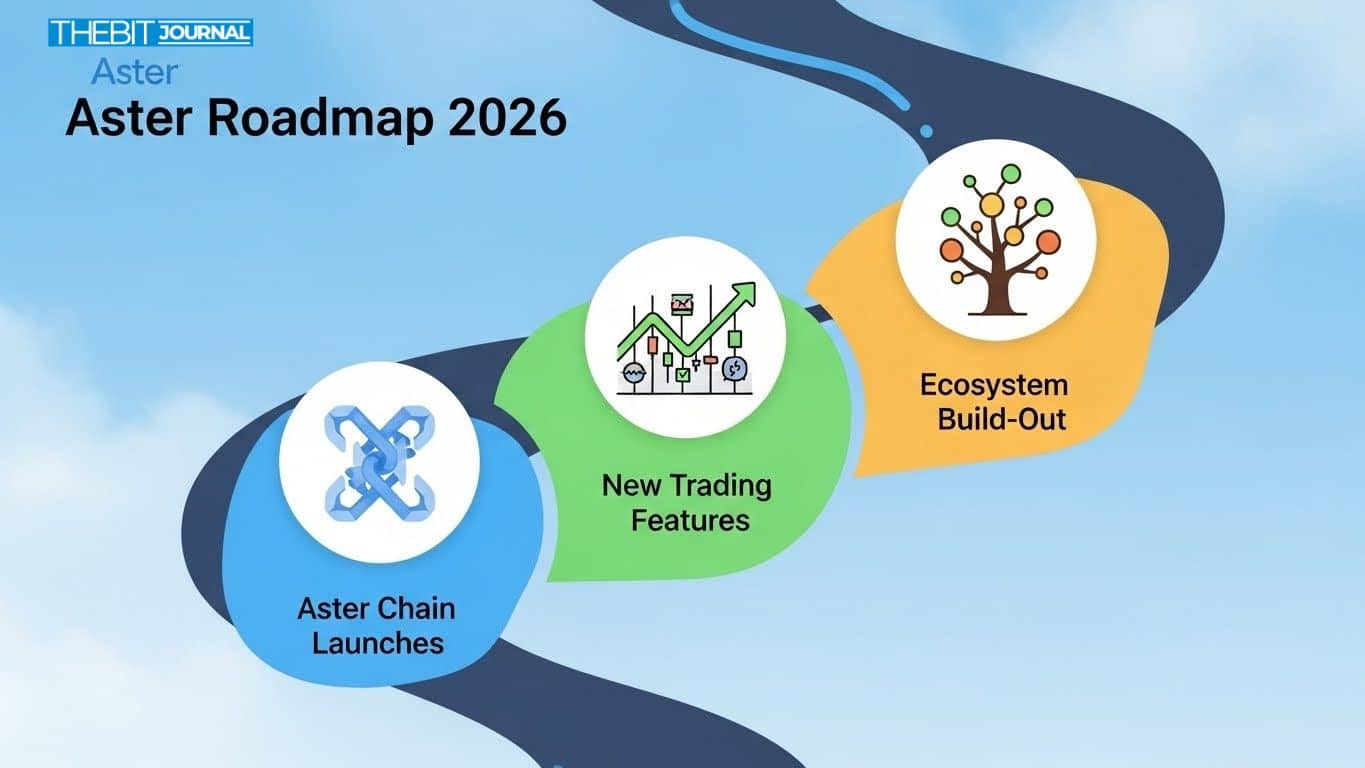
For infrastructure, Aster plans to to launch Aster Chain (Layer-1 blockchain) in Q1 2026; release “Aster Code,” a developer toolkit; implement fiat on-ramps and off-ramps with third-party partners, allowing users to deposit and withdraw traditional currency.
These will be released in December 2025, along with other short-term upgrades: Shield Mode for privacy-preserving high-leverage trading, TWAP (Time-Weighted Average Price) order type to manage large orders with minimal slippage, and a RWA (Real-World Asset) perpetual markets upgrade to support a more general set of stock and asset contracts.
Under token utility and ecosystem, the roadmap envisions native token staking along with on-chain governance in Q2 2026, letting followers see top traders trade in real time.
So in sum, Aster’s vision is to grow beyond exchange to full DeFi ecosystem with trading, blockchain, staking, dApps and fiat access.
What Aster Chain Might Transform
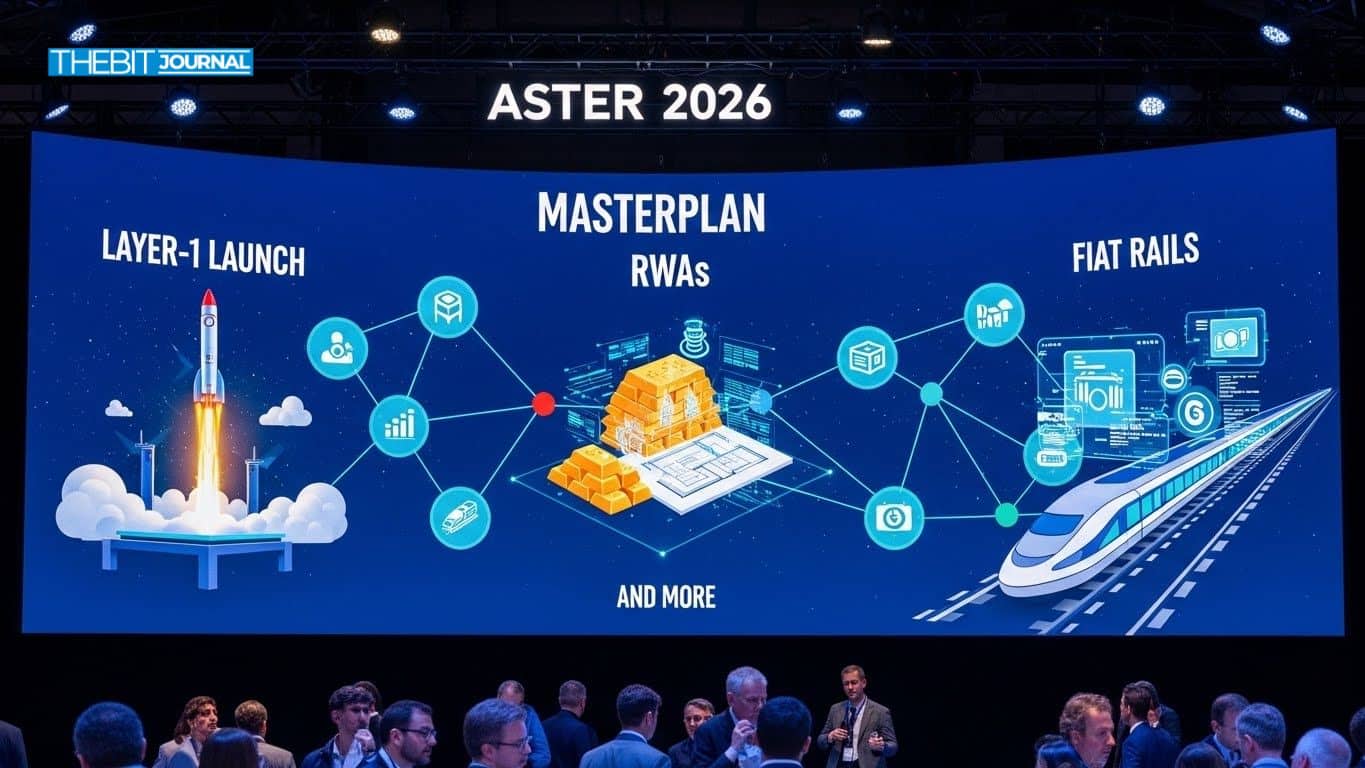
Aster’s intention to roll out its own Layer-1 chain is so critical because it seeks to replicate a centralized-exchange (CEX) like trading experience on decentralized, on-chain infrastructure by coupling self-custody, privacy features, and blockchain transparency with order book logic and high-speed execution.
The inclusion of a developer toolkit (Aster Code) hints at an attempt to court third-party builders and potentially create new apps, bots or trading tools on top of Aster Chain. That could expand the use case beyond perpetual derivatives to decentralized apps, DeFi products or asset tokenization.
The RWA upgrades and fiat rails also signal a larger aspiration to bridge traditional finance (stocks, real world assets, on/off ramps) with DeFi which may court traders, institutions or any users who want regulated exposure in tandem with blockchain benefits.
Furthermore, shield mode (privacy trading) and order types like TWAP/Strategy orders can appeal to professional traders and high frequency traders, which possibly can bring more trading volume, liquidity, market depth to Aster.
Lastly, staking and governance offer long-term incentives for token holders, creating a community that is incentivized toward the success of the network beyond just short-term speculative trading.
Aster’s 2025-2026 Timeline
From official roadmap documents, here’s an abridged timeline of what Aster intends to release and when:
Early December 2025 – Shield Mode (private high leverage trades) and TWAP strategy orders launched.
Mid December 2025 – Real-World Asset (RWA) upgrade to expand stock perpetual markets and liquidity for stock-related contracts.
End of 2025 – The open testnet release of Aster Chain for the community to test and early access provided.
2026 Q1 – Aster Chain mainnet launch, release of Aster Code (toolkit for developers), fiat on- and off-ramps activated.
Q2 2026 – ASTER token staking, on-chain governance, and “Smart-Money” trader-follow tool based development launch.
This staged rollout indicates that Aster is focusing on gradual improvements, community testing, and infrastructure before injecting ecosystem-level features, a move that could minimize technical risk and enhance user stability.
Community and Market Reaction
Since the release of the roadmap, reactions in the community have varied from excitement to guarded optimism. ASTER price saw a spike over the period that the market absorbed the Layer-1 launch plan.
Some members of the community say the roadmap entails a full ecosystem play, adding that Aster is advancing from being just a perpetual exchange to a DeFi network with multiple features. Others are telling investors to tread carefully for execution risk and the many moving parts.
Institutional watchers and trading-platform reports also point to the upgrades, listing an added privacy-trading feature, enhanced order types and deeper real-world asset support as significant differences from many of the perp-DEXes already in existence.
All in all, while the optimism is healthy, many are pointing out that adoption of actual users doing real volume and staying stable on the chain will determine whether Aster’s grand roadmap can live up to it.
Conclusion
Aster’s 2026 roadmap is ambitious and envisions its own Layer-1 blockchain while introducing privacy-enabled high-leverage trading, populating the real-world asset markets, deploying fiat rails, and developing a full-service ecosystem that would include staking, governance and developer tools.
Should that be executed correctly, Aster could evolve from a niche perpetual exchange into a core DeFi platform, offering the benefits of traditional trading combined with blockchain transparency, flexibility and decentralization.
Glossary
Layer-1 (L1) - a foundational blockchain network (e.g., Ethereum, BNB Chain) on which transactions and smart contracts are run directly. Aster chain will be Aster’s native L1.
Testnet - A simulation version of a blockchain that developers and users can interact with without creating any real financial losses. The Aster Chain testnet is expected for December 2025.
Shield Mode – A private trading mode with a focus on privacy that enables high leverage trades against public on-chain data leakage.
TWAP (Time-Weighted Average Price) – An order type that is helpful when a trader wants values divided up over time, reducing the market impact or slippage.
Real-World Assets (RWA) – Traditional financial assets (such as shares of stocks etc.) represented on-chain as marketable tokens or perpetual contracts.
On-chain Governance - A mechanism by which token holders can directly vote on protocol updates, or changes with their token holdings.
Frequently Asked Questions About Aster 2026 Roadmap
What is Aster Chain?
Aster Chain is Aster’s Layer-1 blockchain to be launched on the mainnet Q1 2026. It will be built to serve high-volume trading, privacy features and developer integrations.
When does the Aster Chain Testnet go live?
The testnet is scheduled to release in December 2025 as per the roadmap.
What are some new features that will be released before the chain?
Aster will launch Shield Mode (private trading), TWAP order types and improvements for its Real-World Asset perpetual markets.
Will fiat deposits and withdrawals be available?
Yes. Aster will integrate fiat slip ways with third-party partners in Q1 2026.
Is governance and staking available for ASTER token holders?
The project plans to launch staking and on-chain governance by which holders can vote for protocol decisions and will earn rewards.
References
Bitget
ChainCatcher
asterdex
TMGM
KuCoin
Crypto Briefing
Coinjournal