





A major change to Uniswap’s revenue model is reshaping the conversation around decentralized finance. The Uniswap protocol fee is drawing mixed reactions after its latest expansion across Robinhood Chain and supported Uniswap V4 deployments. While many UNI holders see the move as a step toward long-term sustainability, several liquidity providers argue it could reduce trading fee revenue and make competing platforms more attractive.
According to the source, the latest fee switch went live on July 27 after a governance proposal introduced roughly three weeks earlier. Although Uniswap introduced its protocol fee framework last year, the latest rollout expands the fee switch across Robinhood Chain and additional Uniswap V4 deployments. The update has sparked debate over whether the protocol can strengthen its own revenue without weakening incentives for liquidity providers.
Why the Uniswap Protocol Fee Matters
The Uniswap protocol fee changes how trading fees are distributed. Since Uniswap launched, liquidity providers have collected nearly all trading fees while the protocol itself earned very little revenue despite processing billions of dollars in trading volume.
Under the updated model, part of the trading fee revenue is redirected to the protocol. That revenue is used to buy UNI tokens from the open market before permanently removing them from circulation through token burns. Supporters believe this creates a stronger and more sustainable economic model for the protocol.
Analysts estimate that liquidity providers on Uniswap V2 and V3 could see up to a 25% reduction in trading fee revenue. Some Uniswap V4 pools could experience cuts of as much as 33%, making this one of the platform’s most significant economic changes.
| Uniswap Version | Estimated LP Fee Reduction |
|---|---|
| V2 | Up to 25% |
| V3 | Up to 25% |
| V4 | Up to 33% |
Liquidity Providers Warn of Lower Returns
Several Uniswap liquidity providers questioned whether the Uniswap protocol fee can remain competitive. Developer and liquidity provider Guil Lambert said the fee switch “structurally can’t work,” explaining that liquidity providers now pay between 10% and 25% of their trading fee revenue to the protocol.
Lambert added that while he plans to continue providing liquidity, the new structure could make Uniswap V4 less competitive than rival decentralized exchanges, encouraging liquidity providers to look for better yields elsewhere.
Crypto analyst KoolKrypto shared a similar view. He argued that many Uniswap liquidity pools were already only marginally profitable before the fee switch. Lower trading fee revenue could make providing liquidity unattractive across many trading pairs. He also noted that although Robinhood Chain’s successful launch gave Uniswap a short-term boost, it does not solve what he sees as weakening incentives for liquidity providers.
Competitors Move Quickly to Attract Liquidity
The criticism quickly created an opportunity for competitors. Aerodrome Finance contributor Alexander Cutler publicly encouraged dissatisfied Uniswap liquidity providers to move their capital to Aerodrome. The invitation is significant because Aerodrome competes directly with Uniswap for liquidity on Base, making any migration of liquidity providers valuable for the platform.
Liquidity providers are the foundation of every decentralized exchange because they supply the assets traders use to complete swaps. If enough providers leave, liquidity can decline, spreads may widen, slippage can increase, and trading activity could slow. Those conditions would make competing platforms with stronger incentives increasingly attractive.
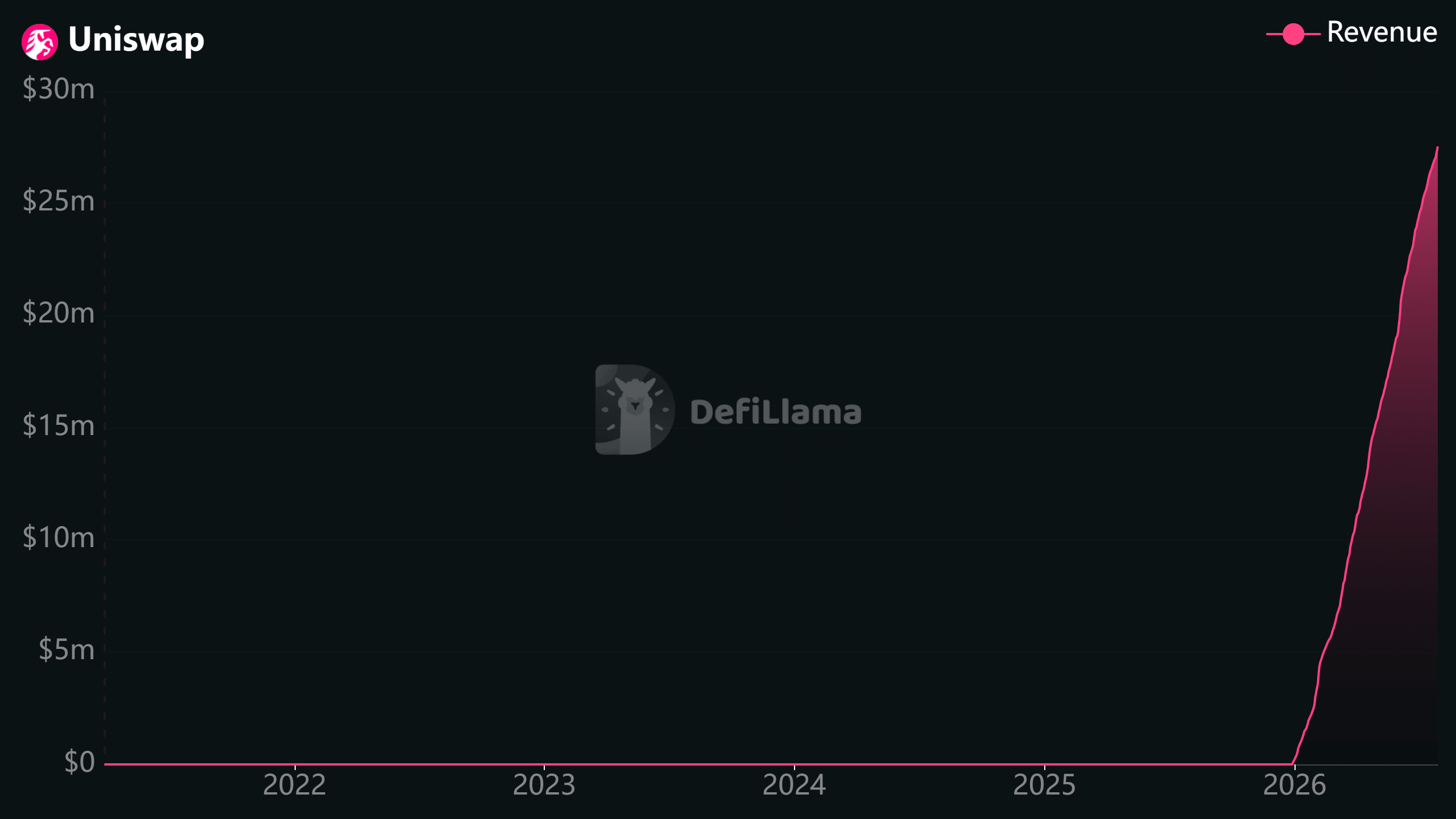
Supporters of the Uniswap protocol fee argue that the change was necessary. Available protocol data indicates that Uniswap has generated nearly $6 billion in trading fees since 2020 while collecting only about $27 million in protocol revenue, as most trading fees were distributed to liquidity providers. That imbalance convinced many UNI holders that the protocol should capture part of the value it creates instead of directing nearly all trading fees to liquidity providers.
Although liquidity providers collectively earned billions of dollars in trading fees since Uniswap launched, critics argue that many individual pools remained only marginally profitable because of market conditions. As a result, additional fee reductions have become a greater concern for many liquidity providers.
In simple terms, every dollar redirected to protocol revenue is a dollar that no longer goes to liquidity providers, creating a direct trade-off between strengthening UNI’s token economics and preserving LP incentives.
Governance Approval Highlights the Divide
Despite criticism from several prominent community members, the Uniswap protocol fee proposal received overwhelming governance support. Around 97% of governance participants voted in favor, while only 2.7% voted against it.
Apart from Guil Lambert and a small group of critics who argued the fee switch would make Uniswap V4 less competitive, most liquidity providers did not publicly oppose the proposal before the vote. Although several liquidity providers criticized the proposal publicly, governance participants overwhelmingly approved it, showing that many UNI holders viewed protocol revenue as a higher priority than preserving the previous fee distribution model.
Conclusion
The Uniswap protocol fee represents one of the most important changes to the protocol’s economic model since its launch. By redirecting a portion of trading fee revenue toward protocol income, UNI buybacks, and token burns, Uniswap aims to build a more sustainable future for the ecosystem. At the same time, the policy reduces trading fee revenue for liquidity providers, raising concerns about future participation and competition from rival decentralized exchanges.
For now, governance support suggests confidence in the protocol’s long-term strategy. However, whether critics are right that lower trading fee revenue will make Uniswap V4 less competitive or encourage liquidity providers to migrate elsewhere remains to be seen. The coming months will determine whether the new fee model successfully balances protocol growth with healthy liquidity across the platform.
Glossary of Key Terms
Uniswap Protocol Fee: A share of trading fees redirected to the Uniswap protocol.
Liquidity Provider (LP): A user who supplies crypto assets to liquidity pools and earns trading fees.
UNI Buyback and Burn: Using protocol revenue to buy and permanently remove UNI tokens from circulation.
Robinhood Chain: A blockchain where Uniswap recently expanded its fee switch.
Governance Proposal: A community vote that determines changes to the Uniswap protocol.
FAQs About Uniswap Protocol Fee
Why are liquidity providers criticizing the fee switch?
They say it reduces their trading fee revenue and makes providing liquidity less profitable.
How much could LPs lose?
Uniswap V2 and V3 LPs could lose up to 25% of trading fee revenue, while some V4 pools could see cuts of up to 33%.
Why was the proposal approved?
Supporters believe protocol revenue will strengthen UNI through buybacks and token burns.
Could competitors benefit?
Yes. If liquidity providers move to rival platforms, exchanges like Aerodrome could attract more liquidity.
Sources/References