






AVAX staking is entering a new phase as major crypto exchanges race to simplify passive income products for everyday investors. This time, Kraken has expanded its Avalanche offerings with new staking models designed to remove the technical barriers that often discourage users from participating in blockchain validation.
According to the source, Kraken introduced bonded, flexible, and auto-earn staking services for eligible Avalanche holders across several global regions. The exchange will also manage validator infrastructure internally, allowing users to earn rewards without handling complex node operations themselves.
AVAX Staking Becomes Easier for Everyday Crypto Holders
The latest rollout allows users to access AVAX staking directly through Kraken’s custodial infrastructure instead of operating validators independently on-chain. That matters because validator setup often requires technical knowledge, wallet management, uptime monitoring, and security maintenance.
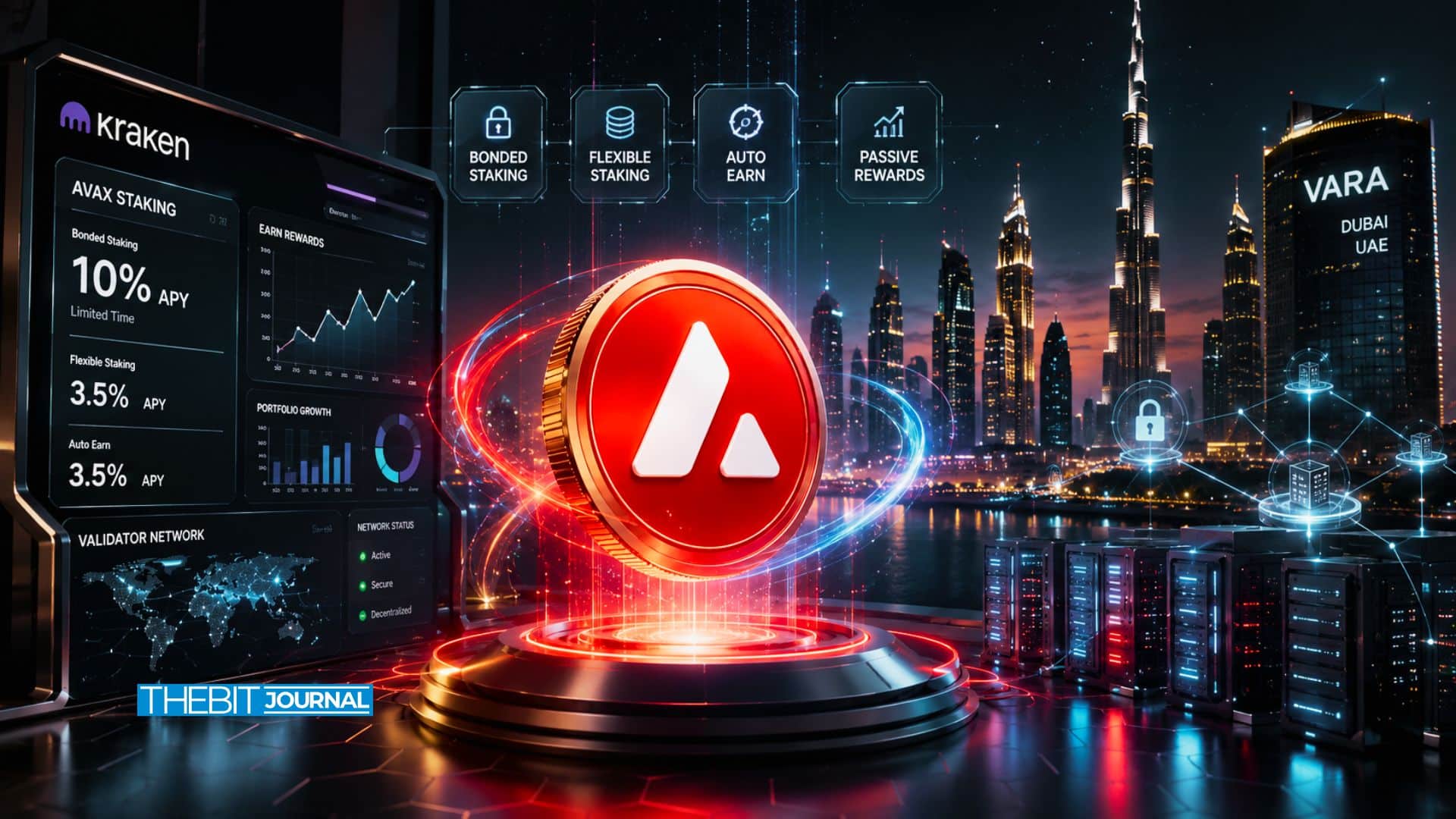
Kraken revealed that Bonded Staking currently offers promotional rewards of up to 10% APY before later adjusting to nearly 7%. Meanwhile, Auto Earn and Flexible Staking provide up to 3.5% APY with automatic reward compounding.
However, Kraken clarified that Flexible Staking only allocates a portion of user assets to active staking. As a result, customers can earn rewards on up to 50% of their chosen allocation rather than their entire balance. That detail may influence real yield expectations for some investors exploring AVAX staking opportunities.
The company also did not disclose minimum staking requirements, lock-up periods, or withdrawal waiting times for the different staking options. Those details remain important for users comparing long-term staking strategies.
Kraken and Avalanche Deepen Ties as Adoption Race Intensifies
The expansion strengthens collaboration between Kraken and Ava Labs, the company behind Avalanche. Ava Labs executive John Nahas explained through Avalanche that easier participation could increase network security and encourage broader ecosystem adoption.
Kraken executive John Zettler also noted in a recent company announcement that staking AVAX previously required technical expertise beyond the reach of many retail users. He explained that Kraken now handles validator operations and reward distribution internally, giving customers flexibility in how they earn.
The Avalanche blockchain uses a proof-of-stake structure where token holders help validate transactions and secure the network. Because of that model, AVAX staking plays a direct role in blockchain stability and decentralization.
Dubai Approval Reveals Kraken’s Larger Global Strategy
Beyond staking, Kraken is quietly expanding its international regulatory footprint. The company’s parent firm, Payward, recently secured preliminary approval from Dubai’s Virtual Assets Regulatory Authority to operate broker-dealer services, manage investments, and offer regulated crypto products in the UAE.
The approval gives Kraken room to expand spot trading, margin trading, OTC services, staking products, and institutional offerings through Kraken Prime. UAE customers may also gain access to crypto transfers using Krak alongside Kraken’s global liquidity network connected to US, European, and Asia-Pacific markets.
This development adds regulatory credibility to Kraken’s broader business strategy while strengthening its position in crypto-friendly regions seeking institutional blockchain adoption.
Why AVAX Staking Reflects a Bigger Market Shift
The rise of custodial staking services signals a major change across the crypto sector. Instead of managing validators independently, many investors now prefer simplified exchange-based systems that reduce technical friction.
That shift could help AVAX staking attract long-term holders searching for passive crypto income during uncertain market conditions. Recent market data continues to place Avalanche among the top proof-of-stake blockchain ecosystems by overall market value and network activity.
At the same time, some industry observers argue centralized staking increases exchange influence over decentralized networks. Still, convenience continues driving adoption as platforms compete to attract users with easier earning tools.
Conclusion
The latest Kraken expansion shows how quickly crypto exchanges are evolving into full-service financial platforms. AVAX staking is no longer limited to blockchain developers or advanced traders comfortable with validator management and technical setups.
Instead, simplified staking models now allow more users to participate in blockchain security while earning passive rewards. As Avalanche adoption grows and regulatory clarity improves in regions like Dubai, exchanges such as Kraken may play an even larger role in shaping the future of digital finance.
Glossary of Key Terms
AVAX staking: Locking Avalanche tokens to support blockchain operations and earn rewards.
Validator: A network participant responsible for verifying blockchain transactions.
APY: Annual Percentage Yield earned through staking or investments.
Custodial staking: A staking method managed by a third-party platform or exchange.
OTC trading: Direct crypto trading between parties outside traditional exchange order books.
FAQs About AVAX Staking
What is AVAX staking?
AVAX staking allows users to lock Avalanche tokens and earn rewards while helping secure the blockchain network.
What APY does Kraken offer for AVAX staking?
Kraken offers up to 10% APY for bonded staking and up to 3.5% APY for flexible and auto-earn options.
Does Kraken manage validators for users?
Yes. Kraken handles validator operations, reward distribution, and staking infrastructure internally.
Is AVAX staking available worldwide?
No. Some regions, including New York and Maine, remain restricted because of regulatory requirements.
Sources/References