






Bitcoin price traded near a critical level as traders weighed strong inflows against rising sell pressure. The market showed signs of fresh interest from funds and stablecoin holders.
But short-term traders kept taking profits on each rally. That selling slowed the latest advance and left Bitcoin below a major resistance zone.
According to recent data, over 48,000 BTC in profit moved on exchanges in a single day. That was the highest daily total so far this year.
That transfer indicated that a significant number of holders wished to secure profits rather than waiting for a larger breakout. This has played out a number of times in recent weeks. Each advance has faced quick selling.
The Bitcoin price is now placed near an area of possible upcoming move. A clean break above resistance is needed for bulls to regain control. If not, the market may remain stuck in a narrow range or drift lower.
Profit-Taking Slows the Bitcoin Price Rally
Short-term holders have become the main source of pressure. They are selling into strength and cutting off momentum. This has made the current rally less convincing than some earlier recoveries.
Analyst Darkfost said a large wave of profitable coins hit exchanges in a single day. That level of realized profit often shows rising caution. Traders appear willing to take quick gains while uncertainty remains high.
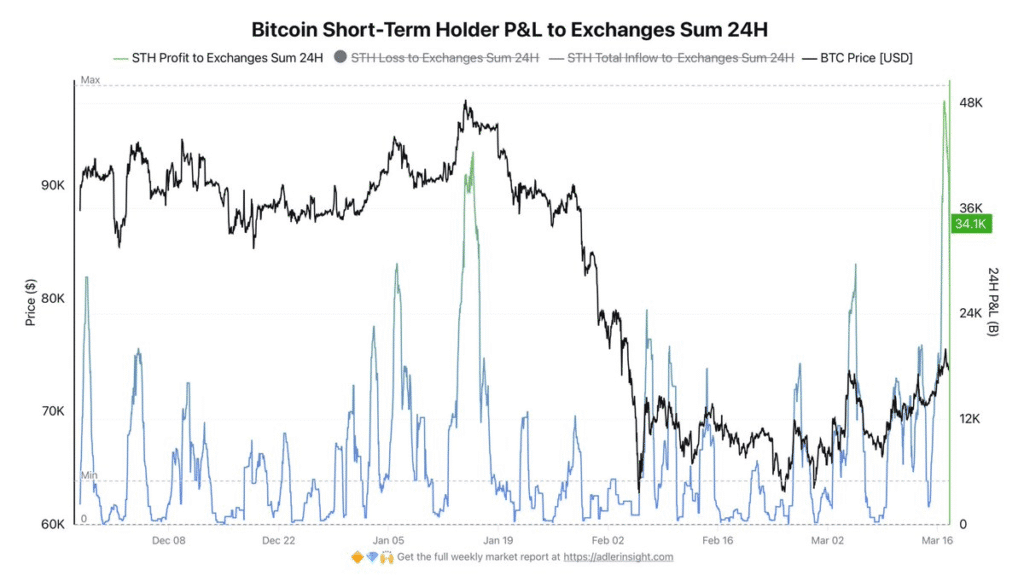
This behavior matters because it limits upside as a rally needs strong conviction to keep moving. Right now, many market participants still prefer to de-risk.
Resistance Near $84K Stays in Focus
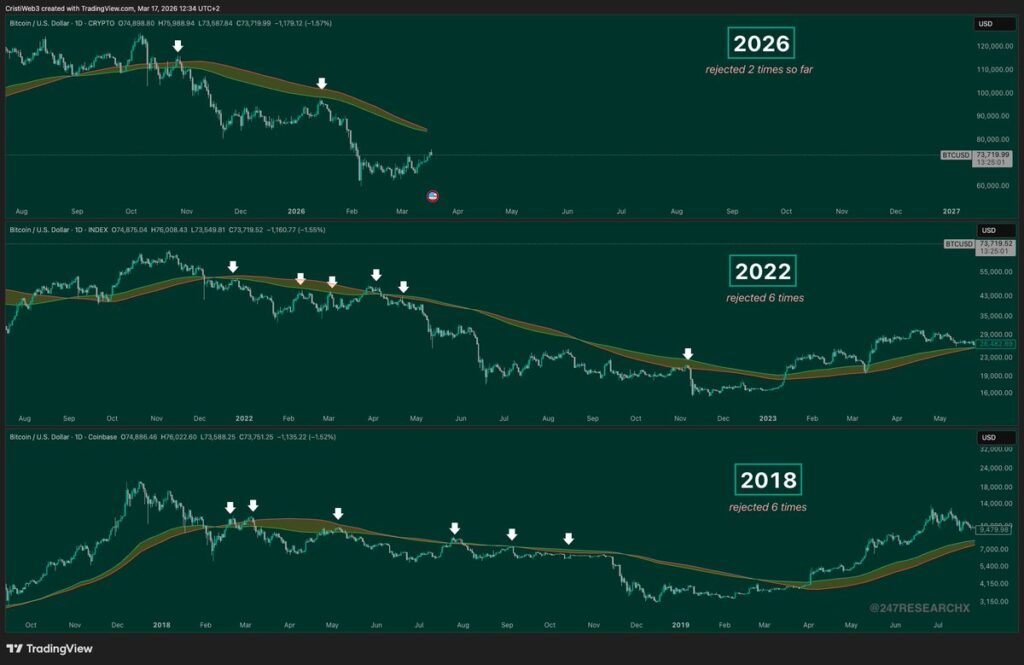
The market is now watching the area near $84,000 as that level has become a major barrier for Bitcoin in the short term. It also lines up with the Bull Market Support Band, a widely followed technical zone.
In strong cycles, this band often works as support as in weak phases, it turns into resistance. That happened in both 2018 and 2022. In those periods, Bitcoin failed to reclaim the band and later moved lower.
The Bitcoin price has already faced rejection twice near this level. A third test could be decisive. A break above it may improve sentiment fast. Another rejection may encourage more sellers.
Fresh Inflows Support the Market
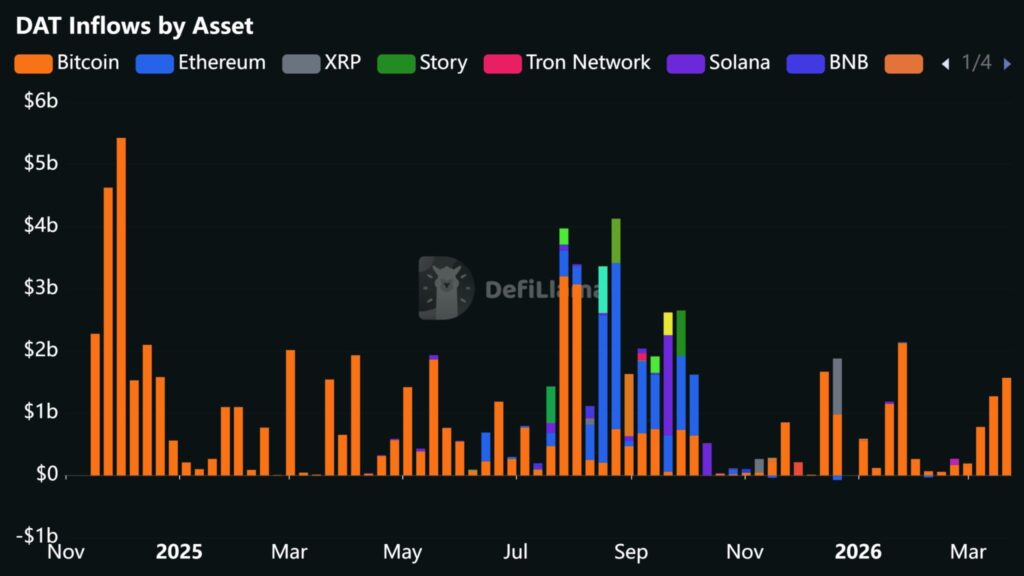
Even with profit-taking, new money is still entering crypto. Bitcoin ETF flows have turned positive again after earlier outflows. Stablecoin activity has also increased. That usually signals rising buying power on the sidelines.
DeFi inflows have improved as well. Together, these trends suggest that capital is returning to digital assets. This does not guarantee an immediate breakout. But it does show that demand has not disappeared.
That support is important. It helps offset selling from short-term traders. It also gives the market a stronger base if sentiment improves.
Liquidity Builds Below the Surface
More liquidity is sitting in the system than price action suggests. Stablecoin balances are rising, which means investors may be waiting for a clearer signal before entering. This often happens during uncertain phases.
The Bitcoin price has not yet fully responded to that liquidity. That gap shows the market is still cautious. Buyers are present, but they are not chasing the market aggressively.
If resistance breaks, that sidelined capital could move fast. If not, it may stay parked and keep volatility contained.
Fed Decision Adds to Market Caution
Macro conditions are also shaping risk appetite. On March 18, the Federal Reserve kept its benchmark rate unchanged at 3.50% to 3.75%. The decision signaled that rate cuts may come later than some investors hoped.
The vote was 11-1. Governor Stephen Miran backed an immediate 25-basis-point cut. Still, the broader message remained cautious. Fed projections now point to a slower easing path over the next few years.
Higher-for-longer rates often weigh on risk assets. They reduce the appeal of speculative trades and tighten financial conditions. That backdrop can limit the speed of any crypto rally.
Inflation Outlook Clouds the Picture
The Fed also lifted its inflation forecasts. It now expects both headline and core PCE for 2026 at 2.7%. Those figures were higher than the December outlook.
| Month | Min. Price | Avg. Price | Max. Price | Change |
|---|---|---|---|---|
| Mar 2026 | $ 71,799 | $ 78,347 | $ 81,049 | 14.77% |
| Apr 2026 | $ 73,096 | $ 74,346 | $ 75,970 | 7.58% |
| May 2026 | $ 73,917 | $ 74,535 | $ 75,260 | 6.57% |
| Jun 2026 | $ 75,984 | $ 84,351 | $ 91,782 | 29.97% |
| Jul 2026 | $ 90,381 | $ 91,250 | $ 93,179 | 31.95% |
| Aug 2026 | $ 88,347 | $ 90,149 | $ 90,631 | 28.34% |
| Sep 2026 | $ 85,758 | $ 87,900 | $ 88,863 | 25.84% |
| Oct 2026 | $ 77,303 | $ 83,816 | $ 87,544 | 23.97% |
| Nov 2026 | $ 75,177 | $ 76,460 | $ 77,304 | 9.47% |
| Dec 2026 | $ 76,586 | $ 77,652 | $ 78,351 | 10.95% |
Chair Jerome Powell said inflation should still ease, but more slowly than expected. He also said tariffs are adding about 0.5 to 0.75 percentage points to core PCE, which is running near 3%.
That matters for crypto because sticky inflation can delay rate cuts. It can also keep traders defensive. The Bitcoin price may therefore stay sensitive to each new inflation report and policy signal.
Market Sentiment Remains Mixed
The current setup reflects a split market. On one side, inflows into ETFs, DeFi, and stablecoins show returning confidence. On the other, short-term holders keep selling into every move higher.
This push and pull has kept Bitcoin in check. The trend has not broken down, but it has not turned fully bullish either. Traders are waiting for a stronger signal before taking larger positions.
Conclusion
Despite demand rising, bitcoin is still firmly between demand and profit-taking. New liquidity is flowing into the market, yet resistance around $84,000 remains intact. Marco uncertainty is another layer of pressure as short-term holders cash out.
The next move will likely be contingent on whether buyers step in to soak up that selling and push above resistance. If they do, momentum could soon be looking better. If they don’t, the market could remain choppy and cautious in coming days.
Appendix Glossary of Key Terms
Short-term holders: Investors who typically liquidate Bitcoin within a shorter time period.
Profit taking: The act of selling an asset (after having made gains) to lock in return.
Exchanges inflows: Bitcoin sent to exchanges, which can indicate potential selling.
Resistance level: A price area where upward movement could stall (or reverse).
Bull market support band: a technical indicator for tracking trend strength
ETF inflows: Fresh capital flowing into Bitcoin ETF.
Stablecoin liquidity: Cash tied to crypto and available for sale
Fed policy Central bank decisions that affect borrowing costs and market outlook.
Frequently Asked Questions Bitcoin Price
1- Why is Bitcoin facing resistance near $84,000?
That area is a key technical zone. It has rejected price twice already and may act as a ceiling again.
2- What does profit-taking mean in this market?
It means traders are selling coins after gains. That selling slows rallies and weakens momentum.
3- Are ETF flows helping support Bitcoin price?
Yes. Recent ETF inflows suggest fresh institutional demand is returning to the market.
4- Why does the Fed matter for crypto?
Interest rates affect risk appetite. Higher rates can reduce demand for volatile assets like crypto.
References