






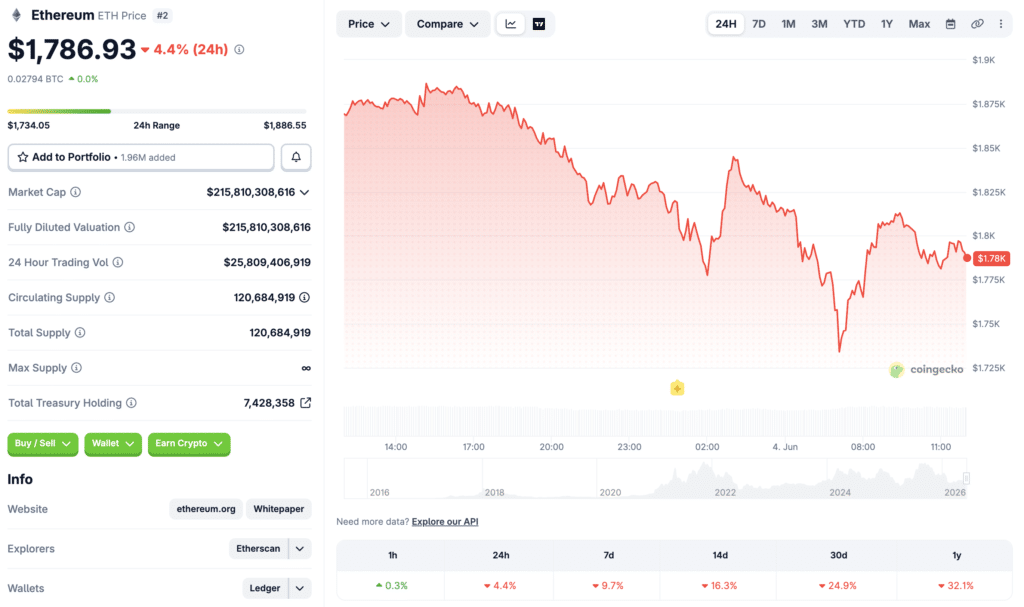
BitMine Ethereum Treasury is in the spotlight right now because Ethereum is under market pressure again. As of now, ETH is trading at $1,791.64, a drop of 4.17% from yesterday. The daily trading volume is way up at over $27.8 billion. Even with this downturn, institutions wanting Ethereum exposure are growing. The BitMine strategy fits in as companies look more and more to digital assets as long-term reserves. More firms are adopting Ethereum in their treasuries, which shows increasing trust in blockchain finance systems.
BitMine Ethereum Treasury Launches 9.5% Preferred Stock Offering
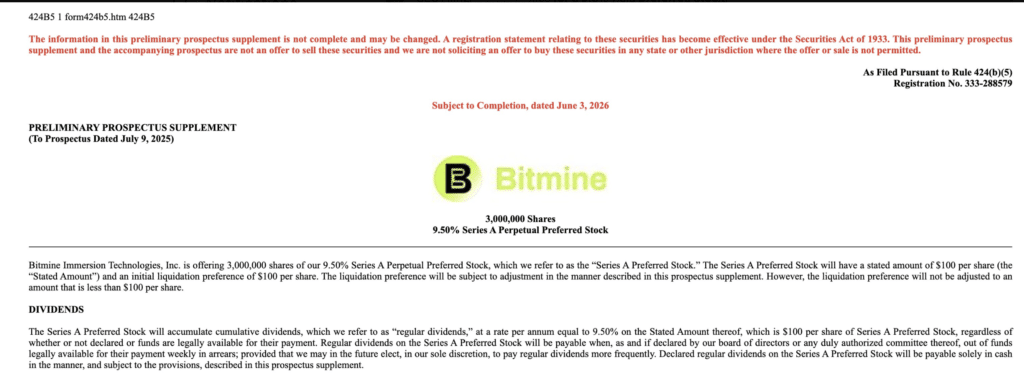
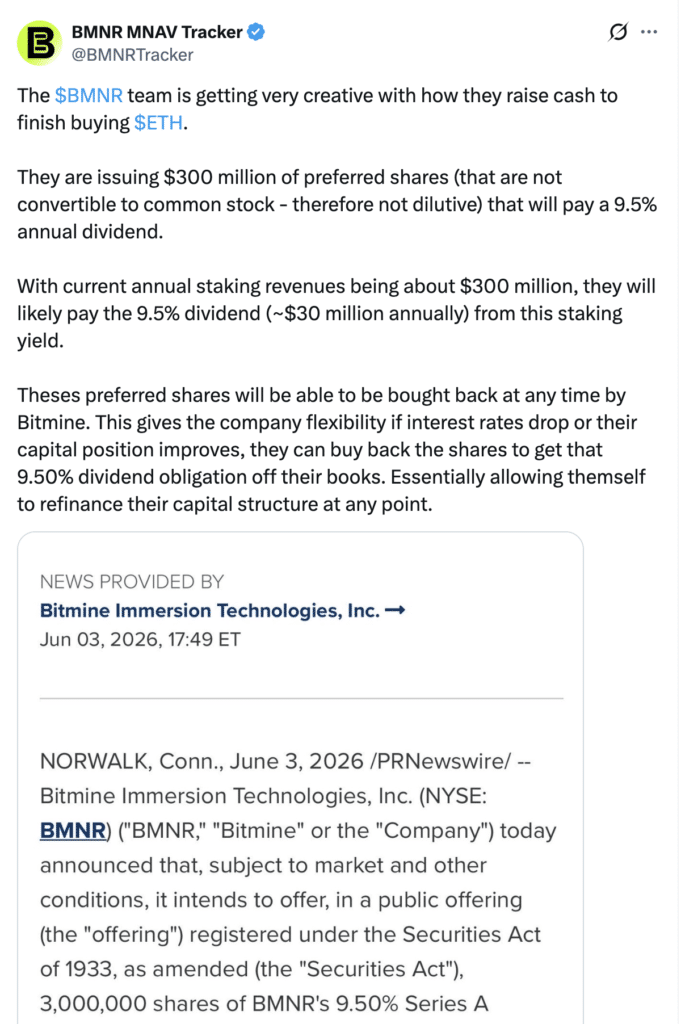
The BitMine Ethereum Treasury launched a 9.5% Series A perpetual preferred stock offering, aiming to raise up to $300 million. They’ll issue 3 million shares at $100 each. This lets them raise capital without immediately decreasing the stake of common shareholders. Unlike traditional debt financing, these preferred shares offer flexibility along with major funding sources. This move solidifies their standing as a top Ethereum treasury firm with a focus on long-term growth.

How BitMine Plans to Raise $300 Million for Ethereum
BitMine wants to gather funds to expand their Ethereum operations. They plan to do this through a preferred stock offering, which will help them get the $300 million needed. Instead of getting loans from banks, they’re tapping into capital markets. This move lets them buy more Ethereum, build better staking infrastructure, and meet other needs. Plus, it keeps their options open financially. analysts think this is a smart way to grow quickly and efficiently.
Why BitMine Adopts MicroStrategy Model for Ethereum Treasury
BitMine adopting MicroStrategy’s model for its Ethereum treasury is a hot topic. MicroStrategy gained fame by leveraging capital markets to amass Bitcoin on a large scale. Following suit, BitMine is doing something similar but with Ethereum instead. This lets them boost their exposure to digital assets without needing to depend solely on their own cash flow. It shows a growing trend of companies looking to MicroStrategy’s playbook for managing their Ethereum treasuries.
BitMine ETH Holdings Face Significant Market Pressure
The BitMine Ethereum Treasury currently controls more than 5.3 million ETH, representing roughly 4.5% of Ethereum’s circulating supply. These massive BitMine ETH holdings place the company among the largest corporate Ethereum reserves in the world. However, the company has faced substantial unrealized losses due to declining ETH prices. Many purchases occurred when Ethereum traded near $3,700 to $4,000. As a result, market volatility has generated billions of dollars in paper losses, creating ongoing debate about the sustainability of large-scale Ethereum accumulation.
Why BitMine Is Building an Ethereum Treasury
Investors continue asking why BitMine is building an Ethereum treasury despite significant short-term losses. Management believes Ethereum remains one of the most valuable blockchain ecosystems supporting decentralized finance, tokenization, stablecoins, and smart contracts. The BitMine Ethereum Treasury is designed around a long-term investment horizon rather than short-term market movements. Supporters argue that future institutional adoption could substantially increase demand for ETH. If that scenario unfolds, current volatility may eventually be viewed as a temporary challenge rather than a structural weakness.
MAVAN Staking Infrastructure and Ethereum Staking Yield
A key advantage of Ethereum compared with Bitcoin is the ability to generate income through staking. The BitMine Ethereum Treasury is expanding its validator operations through MAVAN, the Made in America Validator Network. This infrastructure supports institutional-grade staking while generating Ethereum staking yield from existing holdings. Reports indicate that millions of ETH are already staked through company-controlled systems. The resulting yield can help offset operational expenses and potentially support preferred stock dividend obligations. This feature differentiates BitMine from many traditional treasury strategies.
Can Ethereum Treasury Companies Replicate MicroStrategy Success?
The market continues debating whether Ethereum treasury companies can replicate MicroStrategy success. Supporters argue Ethereum provides additional benefits because staking creates recurring revenue streams unavailable in Bitcoin treasury models. Critics, however, point to price volatility and uncertain market cycles. The BitMine Ethereum Treasury represents one of the largest real-world tests of this concept. If Ethereum appreciates over the coming years while staking rewards remain attractive, the model could encourage widespread corporate adoption of Ethereum treasury strategies across public markets.
Risks Facing the BitMine Ethereum Treasury Strategy
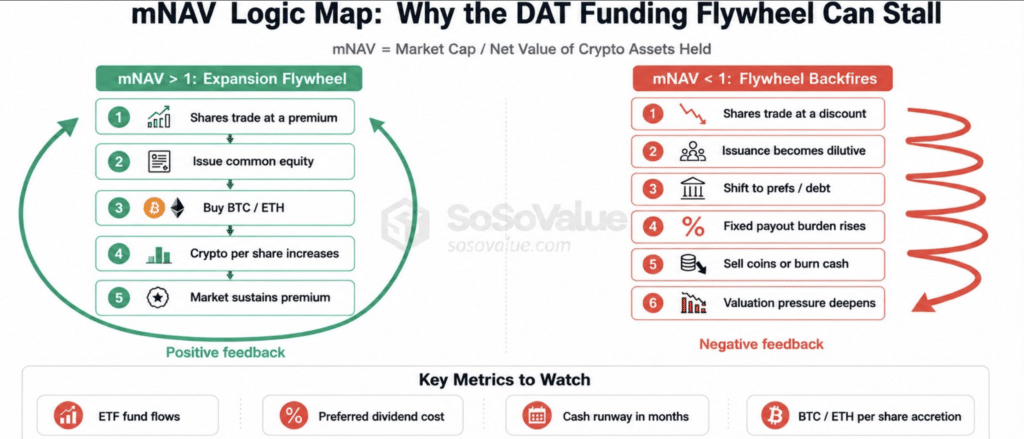
Every treasury strategy carries risk, and the BitMine Ethereum Treasury is no exception. Ethereum price declines could deepen unrealized losses and reduce investor confidence. Dividend obligations tied to the preferred stock structure create additional financial commitments. Furthermore, regulatory developments, market liquidity conditions, and staking economics could influence future performance. While the company maintains confidence in long-term Ethereum appreciation, investors must carefully evaluate both the opportunities and risks associated with large-scale digital asset treasury management and corporate crypto financing.
What This Means for Corporate Ethereum Reserves
The latest financing initiative demonstrates how digital assets are becoming increasingly integrated into corporate balance sheets. The BitMine Ethereum Treasury highlights a shift away from viewing cryptocurrencies solely as speculative investments. Instead, companies are beginning to treat ETH as a strategic reserve asset. This evolution could accelerate ETH treasury adoption among publicly traded firms seeking alternative growth opportunities. As regulatory clarity improves and institutional participation expands, corporate Ethereum reserves may become a more common feature within modern treasury management frameworks.
Future Outlook for Ethereum Treasury Adoption
The broader outlook for Ethereum treasury adoption remains closely tied to institutional demand, regulatory progress, and blockchain innovation. The BitMine Ethereum Treasury may serve as an early blueprint for future public companies exploring digital asset reserves. If the preferred stock model proves successful, similar financing structures could emerge across the industry. Growing acceptance of tokenized assets, decentralized finance, and staking-based income models may further support adoption. As a result, BitMine’s strategy could influence how corporations approach treasury management for years to come.
Conclusion
The BitMine Ethereum Treasury is making one of the boldest bets in the digital asset industry. By launching a 9.5% preferred stock offering, adopting a MicroStrategy-inspired funding strategy, and expanding staking operations through MAVAN, the company is positioning itself as a leader in Ethereum corporate treasury innovation. While risks remain significant, the strategy reflects growing institutional confidence in Ethereum’s long-term value. Investors should closely monitor ETH performance, staking yields, and capital market activity as this ambitious treasury model continues to evolve.
Appendix: Glossary of Key Terms
Ethereum Treasury Company refers to a publicly listed entity that holds Ethereum as a primary reserve asset on its balance sheet.
BitMine Preferred Stock represents a fixed-income equity instrument designed to raise capital without immediate dilution.
MicroStrategy Ethereum Model describes a capital strategy where equity and debt instruments fund large-scale crypto accumulation.
Ethereum Staking Yield refers to returns generated by validating transactions on the Ethereum network.
Corporate Ethereum Reserves describe ETH holdings maintained by institutions for long-term strategic exposure.
Frequently Asked Questions About BitMine Ethereum Treasury
What is BitMine Ethereum Treasury strategy?
It is a corporate approach focused on accumulating Ethereum as a primary reserve asset using equity financing and staking revenue generation.
Why is BitMine issuing preferred stock?
The BitMine Series A preferred stock allows capital raising without immediate dilution while funding additional Ethereum purchases.
How does this compare to MicroStrategy?
The structure mirrors the MicroStrategy Ethereum model, leveraging capital markets to expand crypto holdings strategically.
What risks are associated with this model?
Risks include ETH price volatility, unrealized losses, and dividend obligations tied to preferred stock structures.
References