






A crypto ETF has entered the deepest layer of regulated finance, and Wall Street still has not fully caught up. Brazil’s stock exchange B3 has now moved a crypto ETF into guaranteed derivatives infrastructure, signaling that crypto markets are evolving from speculative investments into the machinery that powers institutional finance.
According to the source, B3 registered the first guaranteed OTC flexible option tied to Hashdex’s HASH11 fund in a trade between Inter and XP. The milestone mattered because B3’s clearinghouse acted as the central counterparty, or CCP, placing crypto ETF exposure inside the same plumbing used for clearing, settlement, margining, and counterparty risk management. That is exactly the infrastructure Wall Street firms want regulators in Washington to open to tokenized collateral.
Why B3’s Clearing Infrastructure Changes the Crypto ETF Debate
The CCP structure sits at the center of this story. A CCP guarantees trades if one side fails, reducing counterparty risk and strengthening trust between institutions. In traditional finance, that plumbing supports derivatives markets worth trillions of dollars every day.
By integrating a crypto ETF into that framework, B3 effectively treated crypto-linked exposure like institutional-grade financial infrastructure instead of speculative retail trading. That shift marks a major turning point for digital assets.
The distinction between HASH11 and tokenized collateral is equally important. HASH11 served as the underlying asset of the OTC flexible option. Meanwhile, firms like BlackRock are pushing regulators to allow tokenized money market funds and stablecoins to function as tokenized collateral inside derivatives systems.
One structure creates exposure through a crypto ETF. The other uses tokenized collateral for margin and settlement purposes inside risk-management plumbing.
Brazil Built the Financial Rails Before Others Finished Debating Them
Brazil’s rise did not happen overnight. The country steadily built infrastructure layers that now operate together as a connected financial ecosystem.
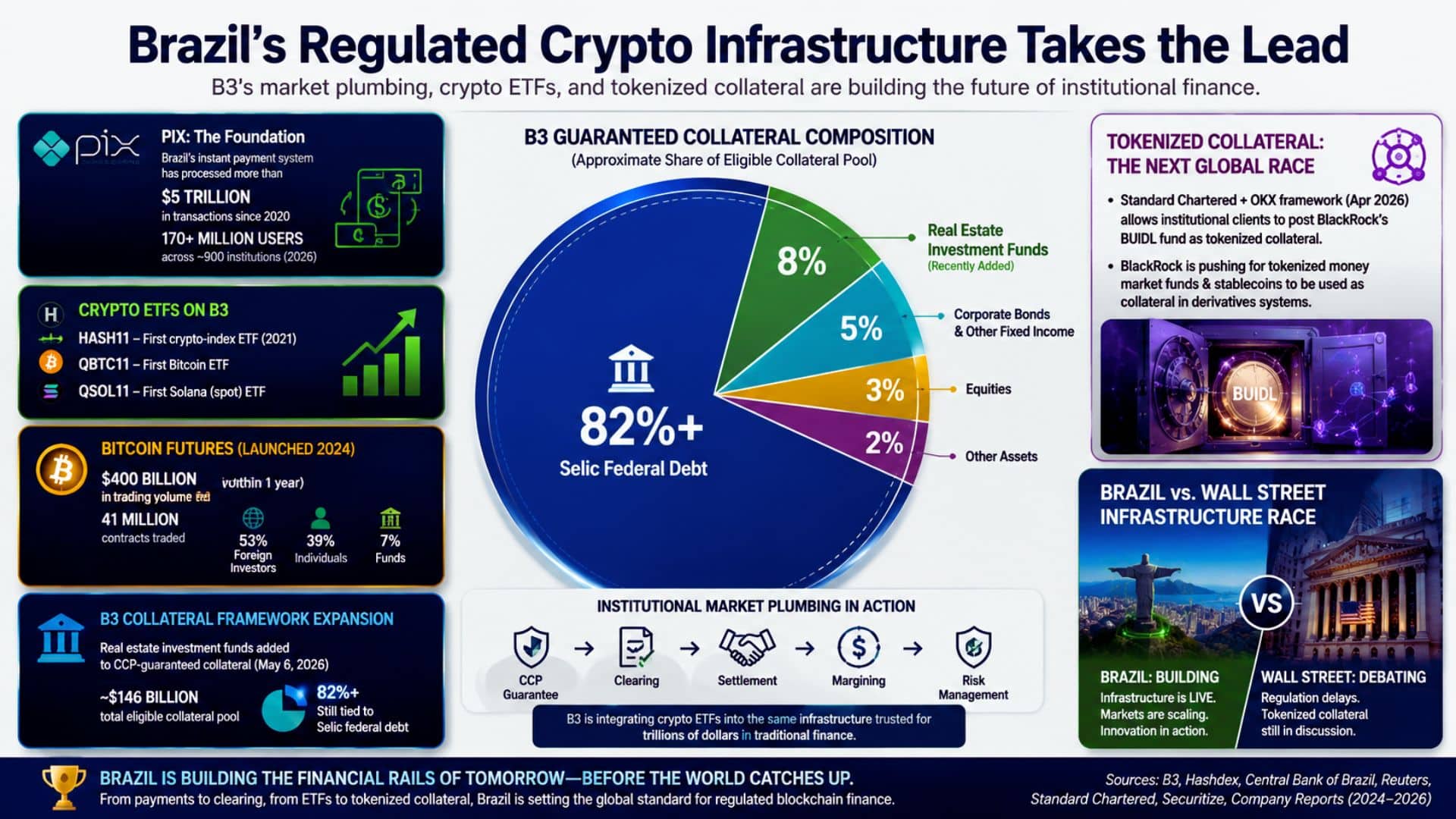
The process started with Pix in 2020. Brazil’s instant payment system later processed more than $5 trillion and became more widely used than cash or debit cards. By 2026, Pix reached over 170 million users across nearly 900 institutions.
The next layer involved the crypto ETF market. HASH11 launched in 2021 as Brazil’s first crypto-index ETF. Soon after, QBTC11 became B3’s first Bitcoin-focused ETF, while QSOL11 entered the market as a spot Solana product.
Bitcoin futures arrived in 2024 and further strengthened the exchange’s infrastructure plumbing. Within one year, B3’s Bitcoin futures market generated nearly $400 billion in volume and processed 41 million contracts. Foreign investors represented 53% of participation, individuals accounted for 39%, and funds represented 7%.
Those figures showed that institutional appetite for regulated crypto exposure already existed at scale.
Tokenized Collateral Is Becoming the Next Global Infrastructure Race
The global race around tokenized collateral is accelerating quickly. In April 2026, Standard Chartered created a framework allowing institutional OKX clients to post BlackRock’s BUIDL fund as tokenized collateral while the bank retained custody.
That offshore structure matters because it demonstrates how institutional crypto systems are developing faster outside the United States. While Washington continues debating regulations, offshore markets are already building parallel infrastructure for settlement, custody, and collateral management.
B3 is moving in the same direction. On May 6, the exchange added real estate investment funds to its CCP-guaranteed collateral framework, expanding the eligible collateral pool to roughly $146 billion. Still, more than 82% remains tied to Selic federal debt, showing that conservative assets still dominate institutional risk systems.
The HASH11 flexible option also reflects growing sophistication in derivatives plumbing. Institutions can customize maturity, strike price, quantity, premium, barriers, and limiters. That level of flexibility signals that the crypto ETF market is evolving into a mature institutional environment.
How Far Could Brazil’s Infrastructure Plumbing Extend?
The bull case suggests Brazil could become the global reference model for regulated blockchain finance. If crypto-linked OTC notional reaches 1% to 5% of B3’s guaranteed flexible-options market within the next 12 to 24 months, analysts may view the HASH11 trade as the start of a scalable institutional segment.
The base case suggests adoption grows steadily but remains concentrated among institutions. The bear case points to liquidity and volatility concerns limiting broader acceptance of tokenized collateral inside core risk systems. A black-swan scenario could involve tighter regulations or higher haircuts slowing crypto’s expansion into financial plumbing.

Conclusion
Brazil now appears closer to Wall Street’s future than Wall Street itself. The country already operates a connected infrastructure stack combining Pix payments, CCP clearing systems, Bitcoin futures, and the crypto ETF market inside regulated settlement plumbing.
The next chapter of crypto adoption will likely revolve around infrastructure instead of hype. Clearing systems, collateral rails, and institutional risk management are becoming the real battleground. While Washington continues debating tokenized collateral, Brazil is already building the pipes, testing the pressure, and expanding the financial plumbing beneath modern crypto markets.
Glossary of Key Terms
Crypto ETF: An exchange-traded fund offering exposure to cryptocurrencies or blockchain-linked assets.
Tokenized Collateral: Blockchain-based digital assets used as collateral in trading and settlement systems.
CCP: A central counterparty that guarantees financial trades and reduces counterparty risk.
HASH11: Brazil’s crypto-index ETF managed by Hashdex and listed on B3.
OTC Flexible Option: A customizable derivatives contract negotiated privately between institutions.
FAQs About Crypto ETF
Why is B3’s crypto ETF trade important?
It placed crypto-linked exposure inside institutional clearing and settlement infrastructure.
What makes tokenized collateral valuable?
It may improve liquidity, settlement speed, and operational efficiency in financial markets.
Why are offshore markets advancing faster?
Offshore jurisdictions face fewer regulatory delays than U.S. financial markets.
What risks could slow adoption?
Volatility, liquidity pressure, and stricter collateral rules remain major concerns.
Sources/References