



Core Scientific mining operations are expected to wind down by year-end as the company shifts toward high-density colocation for artificial intelligence and high-performance computing customers. Management said on November 5 that it expects the wind-down to finish in Q4 2026. Colocation revenue reached $215.4 million in Q3, compared with $12.3 million from self-mining.
The exit is not complete. Management expects Core Scientific to enter 2027 as a colocation provider. The shift involves reallocating power and facility space from mining to data center capacity under customer agreements.
Key Takeaways
- Management expects the Bitcoin mining wind-down to finish in Q4 2026.
- Q3 colocation revenue was $215.4 million, nearly 60% above the prior quarter.
- Core Scientific was billing for 485 MW of colocation capacity at September 30.
- Commissioning and delivery of contracted capacity remain milestones to track.
Core Scientific mining exit: what happened
Chief Executive Officer Adam Sullivan and Chief Financial Officer Jim Nygaard gave the expected year-end timing on the Q3 earnings call. Sullivan said the company expected to complete its exit from Bitcoin mining by year-end; Nygaard said it expected to complete the wind-down during the fourth quarter. These are management forecasts, not confirmation that mining has ended.
Core Scientific reported total Q3 revenue of $232.9 million. Its November 5 results release put colocation revenue at $215.4 million. The quarterly filing listed $12.3 million from self-mining and $5.2 million from hosted mining. Self-mining revenue fell from $57.4 million in Q3 2025, while Bitcoin mined declined 66% year over year, according to the filing.
The company was billing for 485 MW of colocation capacity at September 30, up 90 MW during the quarter. Core Scientific said that capacity represented more than $700 million in average annualized colocation GAAP revenue. This is an annualized figure based on capacity being billed, not revenue already earned over a full year.
Bitcoin Magazine reported a $7.5 million gross loss from self-mining and $128.4 million in colocation gross profit, a 60% margin. Adjusted EBITDA was $133.6 million, with a 57% margin, the outlet reported. Those figures describe the quarter ended September 30.
Background and context for the Core Scientific mining pivot
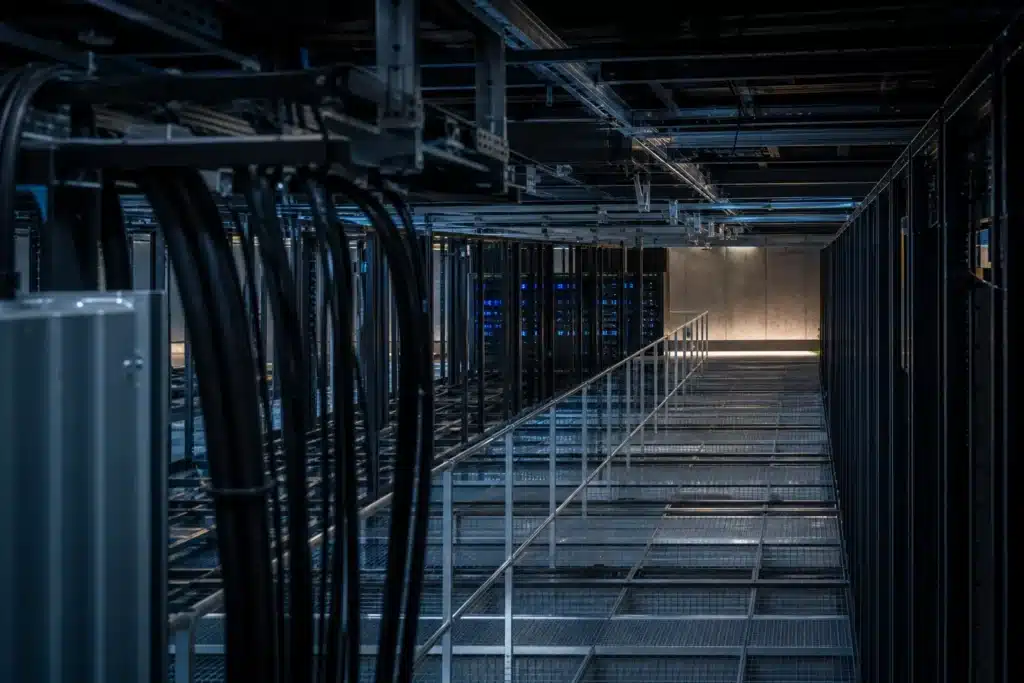
Core Scientific has been reallocating power and floor space from mining to data center customers. Sullivan said nearly 50% fewer miners were online at September-end than at year-end 2025. The filing shows colocation accounted for 84% of total revenue in the first nine months of 2026, compared with 14% in the same period of 2025.
The company has also outlined contracted capacity beyond what it was billing at quarter-end. Bitcoin Magazine reported a 590 MW agreement with CoreWeave, with roughly 100 MW still in commissioning. Sullivan said the remaining capacity was expected to begin recognizing revenue over the following months. A separate AMD-backed agreement covers 530 MW across five campuses. Initial delivery is targeted for the first half of 2027, with full delivery by the end of 2028.
Management estimates that the combined 1.1 GW portfolio could generate $1.8 billion in average annual run-rate revenue and $1.6 billion in net operating income once delivered and billing. These are forward-looking estimates, conditional on delivery and billing. Core Scientific announced the AMD partnership in July. In August, it completed its approximately $444 million cash acquisition of Polaris DS, securing about 440 MW of grid-connected power in Oklahoma.
The transition has included recorded costs. Core Scientific’s filing showed $266.5 million in mining-related property and equipment impairments for the first nine months of 2026. Bitcoin Magazine reported a $41.9 million contract termination loss in Q2 related to ending a mining-chip supply agreement. At Q3-end, the company reported about $1.7 billion in liquidity, including roughly $800 million in cash.
The planned Core Scientific mining exit would shift the company away from Bitcoin production and toward colocation services. Its reported results and announced plans show the transition is underway, while the remaining mining wind-down and delivery of contracted capacity are not yet complete.
Company figures and filings
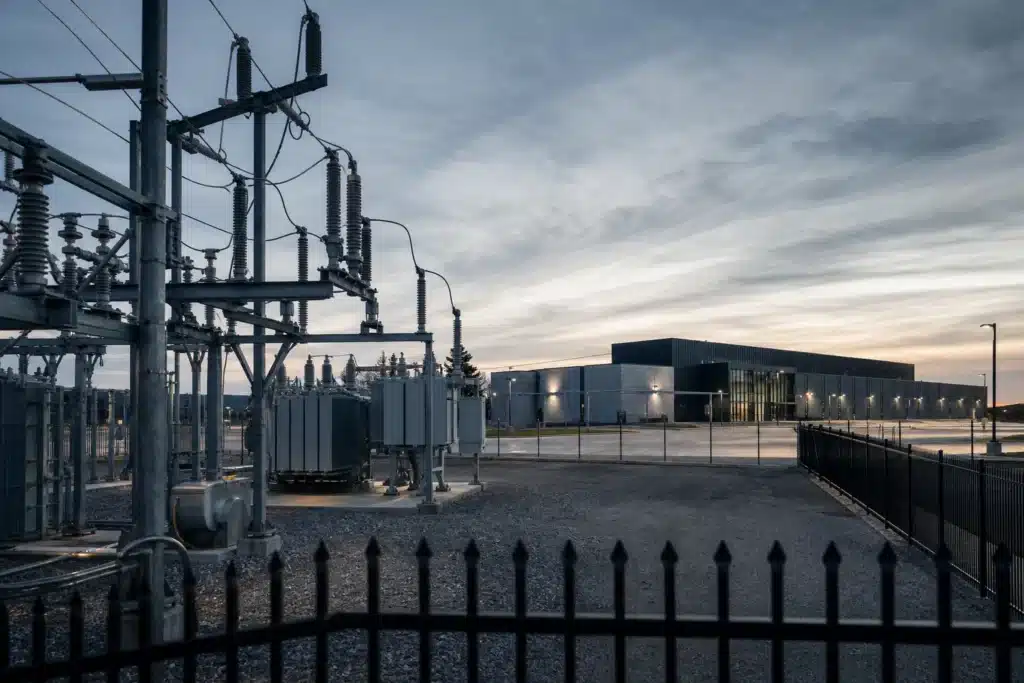
Core Scientific’s Q3 results release reports colocation revenue and billed capacity. Its quarterly SEC filing details revenue and the shift in the company’s revenue mix. The filing also reports the mining-related impairments for the first nine months of 2026.
What to watch next
The first milestone is whether the mining wind-down finishes on schedule. Q4 results can show how much mining revenue remains and whether the company enters 2027 without mining in its reported results, as Sullivan and Nygaard expect.
Commissioning of the remaining CoreWeave capacity and initial delivery under the AMD agreement are also milestones. Core Scientific said construction for its second colocation agreement was underway across five campuses. The company’s statements set out delivery targets, but do not establish that the capacity has already been delivered or is billing.
Financing is another part of the expansion plan. In August, Core Scientific announced $600 million in committed senior secured credit facilities: a $100 million revolving facility and a $500 million letter-of-credit facility. The company said the facilities were expected to release about $300 million of restricted cash.
FAQ
When will the Core Scientific mining exit be complete?
On the November 5, 2026 earnings call, management said it expected to complete the wind-down during Q4 2026. That was a forecast, not a completed event.
How much colocation revenue did Core Scientific report?
Core Scientific reported $215.4 million in Q3 2026 colocation revenue, nearly 60% more than in the prior quarter. It was billing for 485 MW of colocation capacity as of September 30.
Will Core Scientific stop operating data centers?
No. The announced plan is to exit Bitcoin mining, not data center operations. Management expects the company to enter 2027 as a high-density colocation provider for AI and high-performance computing workloads.
Sources
- November 5, 2026 – 10-Q: Quarterly report [Sections 13 or 15(d)] (investors.corescientific.com)
- Core Scientific to quit Bitcoin mining by year-end as AI business surges (Cointelegraph)
- Core Scientific (CORZ) to Exit Bitcoin Mining by Year-End as Colocation Hits $215 Million (Bitcoin Magazine)
This article is for informational purposes only and does not constitute financial or investment advice. Cryptocurrencies are highly volatile; always do your own research before investing.