






Last updated on November 06, 2025
This Article Was First Published on The Bit Journal.
The term crypto liquidation dominated headlines as more than $1.6 billion in leveraged positions were wiped out across major exchanges.
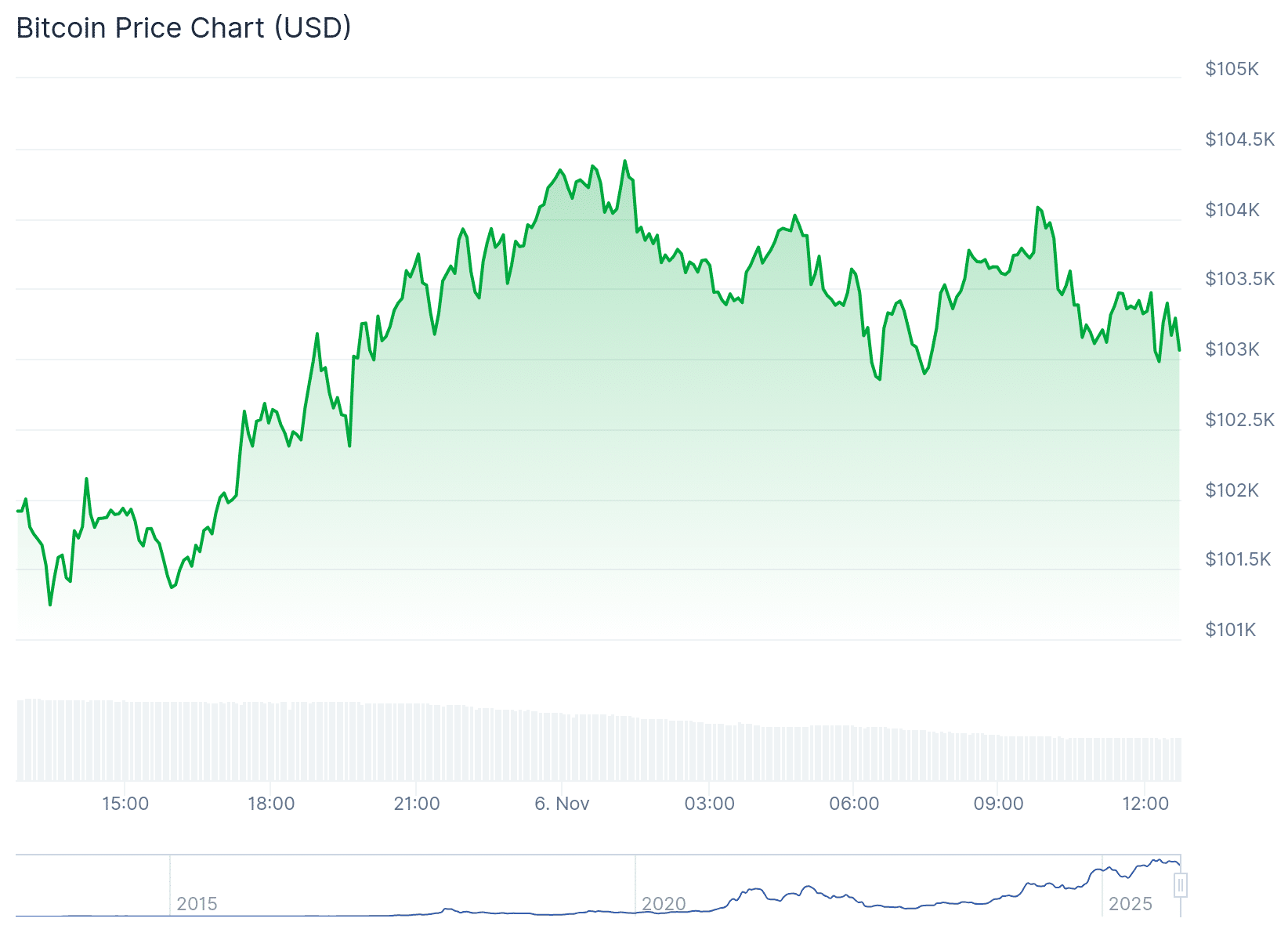
According to the source, this mass sell-off reflects elevated risk and sudden market shifts. The latest price of Bitcoin stood around $103,033 USD. Traders and observers were jolted by how swiftly the market turned.
What Triggered the Wave of Crypto Liquidation
The spike in crypto liquidation was mainly due to three reasons: high leverage, large price drops, and low liquidity. As Bitcoin began to decline from the $100,000 mark, long positions were closed massively. According to reports, liquidation of more than $1.6 billion in long trades occurred in just a day.
Live-monitor dashboards illustrate clusters of forced exits.
Key figures
| Metric | Approximate Value |
|---|---|
| Total liquidations | ~$1.6 billion in 24 hours |
| Bitcoin current price | ~$103,033 USD |
| Bitcoin market cap | ~$2.06 trillion USD |
| Price drop for major altcoins | ~6 %–10 % in sharpest phase |
The crypto liquidation event highlights how leveraged long positions were squeezed when market support melted away, triggering a chain reaction of automated closures.
Why Traders Should Care
Such a significant spike in crypto liquidations matters because it signals more than just individual losses. Forced selling can knock prices lower, trigger additional stops, and shift sentiment almost overnight. One analyst described it as a “leverage flush” rather than the end of the trend.
For active traders, key takeaways include:
- Size and leverage matter more than the bet itself.
- Collateral buffers and stop-losses must be set to account for sudden moves.
- Watching open interest, funding rates, and liquidation heat maps gives early warning.
- The market moved fast, so those who treated risk as an afterthought found themselves vulnerable.
What’s Next After the Crypto Liquidation
In the wake of a major crypto liquidation, three things will determine the short-term trajectory:
- Will open interest and funding rates shrink, signaling a reset of leveraged flow?
- Can Bitcoin hold above key support near $100,000, and will altcoins stabilize?
- How will macroeconomic factors, such as interest rate expectations and regulation, influence crypto sentiment?
- If leverage drains and liquidity rebuilds, markets may calm. But if new risks emerge, another rush of crypto liquidations could be ahead.
Conclusion
The recent spike in crypto liquidations, wiping out over $1.6 billion in a single day, serves as a sharp reminder of how quickly markets can turn. Traders who assumed the trend would carry on unchallenged got a rude wake-up call.
As volatility settles, risk-aware positioning, strong capital management, and respect for support levels matter more than ever. Those who treat exposure like a secondary concern may find themselves caught off guard next time.
Glossary of Key Terms
- Leverage: Borrowing funds to increase exposure; it works both ways.
- Liquidation: Forced closing of a leveraged position when margin falls short; central to crypto liquidation.
- Open Interest: Total value of outstanding derivative contracts.
- Funding Rate: Periodic fee paid between long and short sides on perpetual futures.
- Margin Call: Demand for additional collateral when a position moves against you.
FAQs About Crypto Liquidation
What is crypto liquidation?
Crypto liquidation occurs when a leveraged position is forcibly closed because collateral falls below the required level, triggering a forced sale of the underlying asset.
How did recent crypto liquidation reach $1.6 billion?
High leverage, sudden price drops, and weak liquidity combined to force long traders out of their positions, resulting in total liquidations exceeding $1.6 billion.
Does this mean crypto is collapsing?
Not necessarily. A large crypto liquidation shows stress and a risk reset, but it does not, by itself, signal a structural collapse of the market.
How can traders avoid being liquidated?
By using moderate leverage, keeping sufficient collateral, implementing stop-losses, and monitoring exposure and liquidation clusters.