






This article was first published on The Bit Journal.
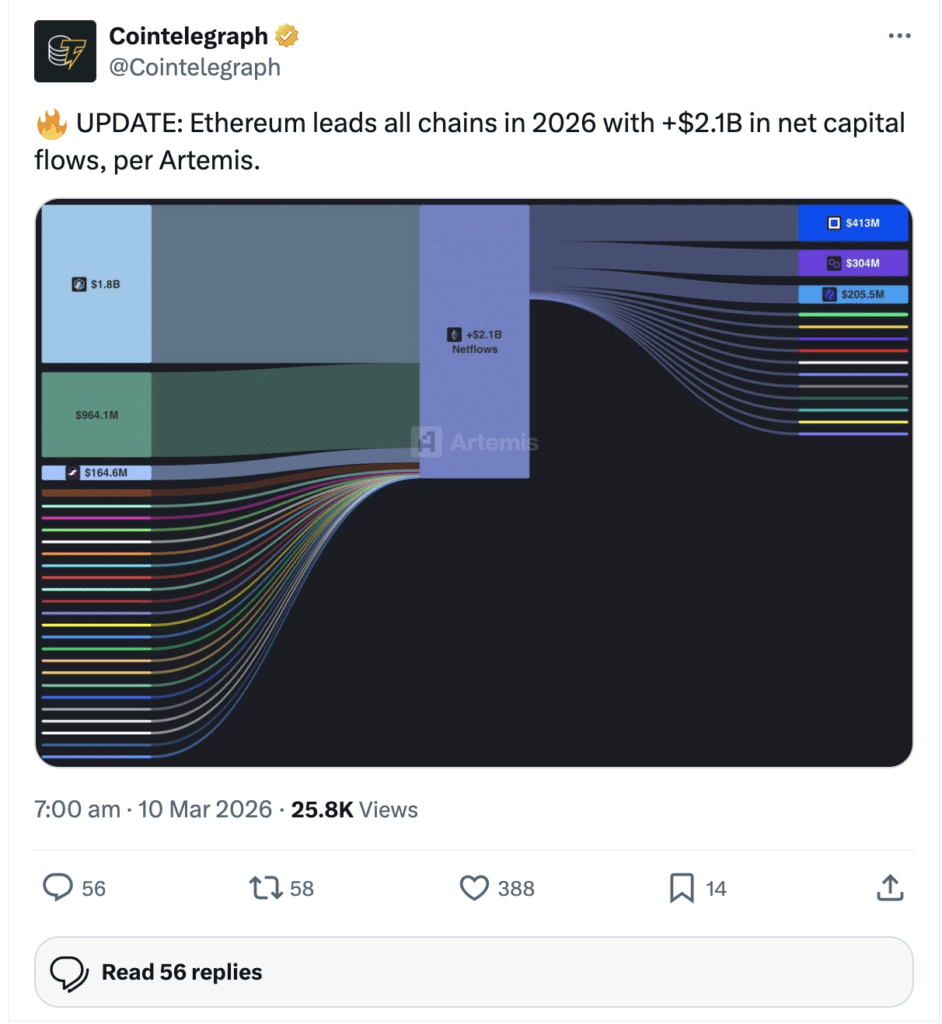
Ethereum capital inflows 2026 have reached a significant milestone, hitting approximately $2.1B and propelling ETH to emerge as the top asset in crypto markets. These figures highlight unprecedented Ethereum institutional inflows and indicate a bullish trend in Ethereum market demand 2026 that many analysts did not anticipate at the start of the year.
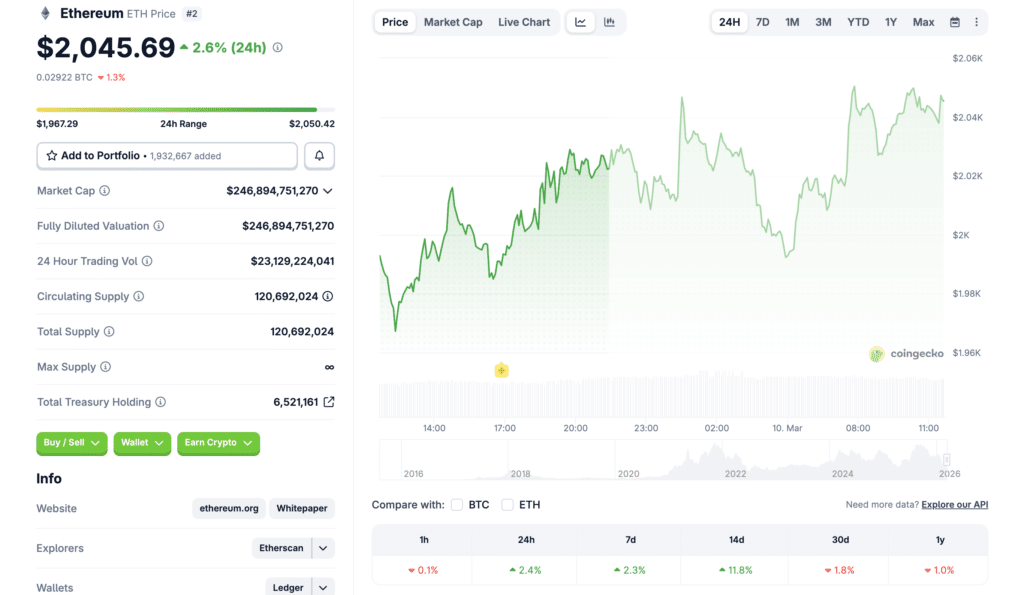
With the current live Ethereum price trading near ~$2,046.43 USD, backed by a market cap of about $246.99B and a circulating supply of roughly 120.69M ETH coins, the scene is set for a deep dive into how institutional and capital trends are shaping the digital asset landscape.
Rising Institutional Support and the Surge in Ethereum Capital Inflows
One of the most intriguing developments in Ethereum capital inflows has been the noticeable uptick in Ethereum institutional demand this year. Traditional financial players are shifting portions of their portfolios into ETH‑related products, contributing to robust Ethereum $2.1B capital inflows so far. This trend is partially driven by record accumulation in staking protocols and strategic buys by large entities that recognize Ethereum’s utility and long‑term value.
Institutional signals like these commonly indicate confidence in on‑chain fundamentals and growth prospects. In practical terms, larger players are drawn to Ethereum not just as a volatile trading asset but as a strategic hold in diversified digital portfolios, boosting Ethereum investment inflows beyond what retail traders alone could achieve.
What Makes Ethereum Attractive Despite Market Headwinds
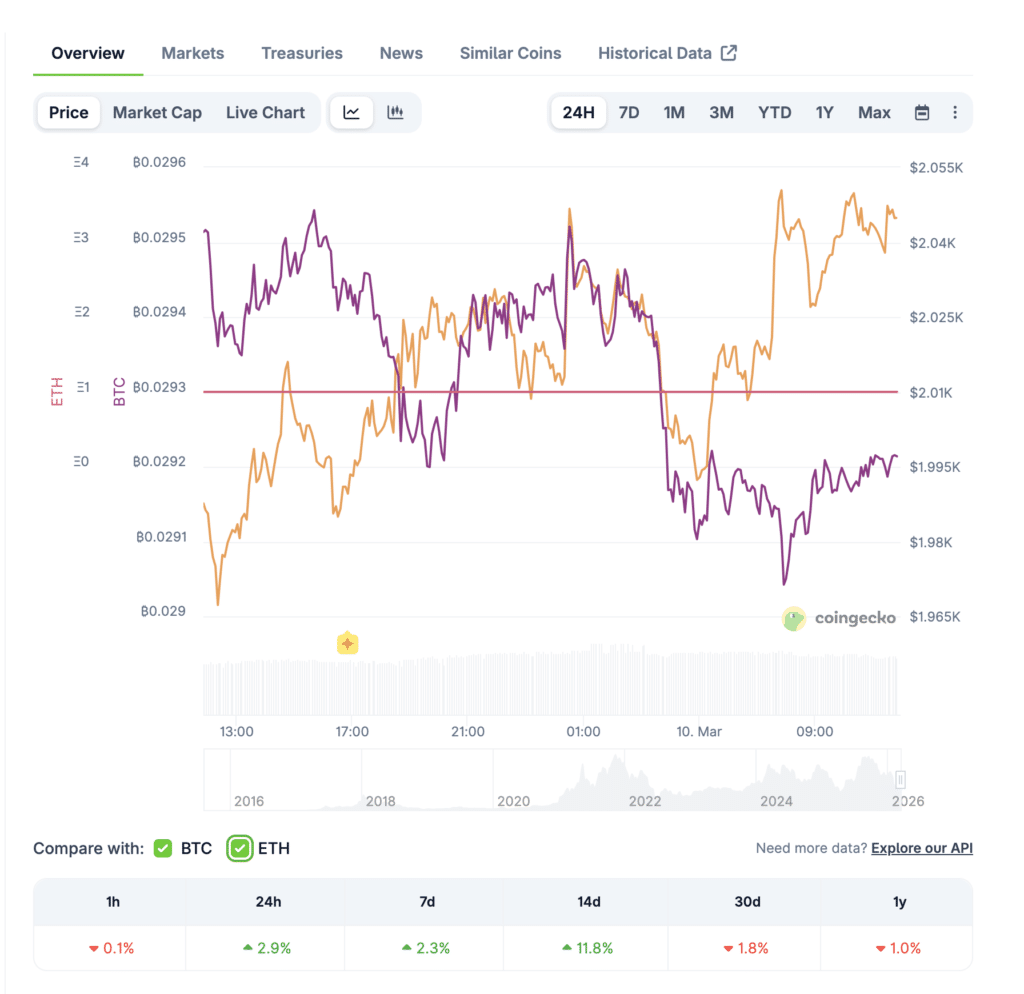
Despite occasional pullbacks in price and short‑term turbulence, Ethereum’s underlying fundamentals have kept Ethereum market demand 2026 resilient. Even as prices fluctuate around $2,000, protocols built on Ethereum continue to record high usage, solidifying ETH’s position as the backbone of decentralized finance (DeFi) and smart contract ecosystems.
The ongoing Ethereum investment trend 2026 is notable for how capital has rotated from speculative short‑term plays into more structural positions tied to long‑term utility. This shift in demand has helped ETH solidify its status as a top digital asset, even when broader crypto sentiment wavers. With such demand dynamics, Ethereum capital inflows appear less driven by momentum traders and more by strategic institutional entries.
Comparative Insight: Ethereum vs. Other Major Assets
When set against other leading cryptocurrencies, Ethereum’s capital flows tell an interesting story. While Bitcoin remains dominant in raw market cap terms, typically attracting headline capital movements, the sheer velocity and concentration of Ethereum institutional inflows are now rivaling patterns seen in BTC markets. The fact that Ethereum tops crypto with $2.1B capital inflows this year highlights a substantial shift in capital allocation preferences among large investors.
This is supported by on‑chain analytics showing differentiated capital behavior compared with other major assets. In contrast to markets where retail hype often precedes institutional buy‑in, ETH is witnessing the reverse: institutional interest now acting as a leading indicator of long‑term confidence. These shifts distinguish Ethereum’s demand curve from most other digital assets.
Bullish Sentiment and Long‑Term Implications
Many market watchers interpret Ethereum capital inflows as a signal of bullish sentiment that goes beyond mere price speculation. Ethereum inflows signal bullish sentiment because they showcase sustained backing by deep‑pocketed investors who are less likely to liquidate positions quickly. This sentiment is further bolstered by projects and ecosystem initiatives building atop Ethereum’s infrastructure, from decentralized finance (DeFi) instruments to layer‑2 scaling solutions and tokenized real‑world assets.
As such, ETH’s role extends beyond pure currency speculation; it’s increasingly seen as a foundational blockchain asset with real utility and capital stickiness. That perception is critical because capital that flows in with intent to hold often acts as a stabilizing force in volatile markets.
Potential Risks and Market Variables to Watch
Even amid strong Ethereum institutional inflows, it’s vital to consider counter‑currents within the broader market. Price volatility, regulatory developments, and macroeconomic indicators continue to influence how capital moves across the crypto ecosystem. Periods of ETF outflows or bearish sentiment in broader markets could temporarily slow Ethereum market demand 2026, while regulatory headwinds might affect institutional participation.
However, the narrative of ETH’s capital influx paints a broader picture of structural adoption over speculative frenzy. Smart investors often look past short‑term noise to evaluate long‑term network effects and real yield‑generating mechanisms like staking rewards and decentralized application growth.
Looking Ahead: What This Means for Investors
The fact that Ethereum tops crypto with $2.1B capital inflows this year gives market participants a strong signal on where capital and conviction lie. For analysts, this trend suggests that Ethereum isn’t just holding ground; it’s redefining its role as a leading infrastructure asset in digital finance.
With Ethereum $2.1B capital inflows continuing to shape narrative headlines, ETH’s market positioning could attract even greater participation from large funds and institutional players in the future. Traders and longer‑term investors alike should track on‑chain metrics, institutional wallet flows, and staking activity as they gauge future price trajectories and demand cycles.
Conclusion
In 2026, Ethereum capital inflows hitting $2.1B and the corresponding surge in Ethereum institutional demand reinforce the narrative that ETH is increasingly viewed as a core asset in modern crypto portfolios. This migration of capital isn’t random; it underscores a deeper confidence in Ethereum’s technological roadmap, network utility, and long‑term financial relevance.
Investors tracking Ethereum market demand 2026 should focus not just on price swings but on underlying capital flow patterns, institutional positioning, and ecosystem adoption metrics. With the industry watching closely, this trend could set the tone for how digital assets are valued and integrated into mainstream finance.
Frequently Asked Questions About Ethereum Capital Inflows
What drives Ethereum capital inflows?
Institutional interest, staking opportunities, utility growth, and macro sentiment all contribute.
Why is $2.1B significant?
It highlights strong institutional demand relative to previous periods.
Does capital inflow affect price?
Yes, inflows can reduce circulating supply and support price stability.
Appendix: Glossary of Key Terms
Ethereum Capital Inflows: Funds entering Ether (ETH) positions, typically tracked via investment products, ETFs, or institutional buys.
Ethereum Institutional Inflows: Large‑scale capital movements into ETH led by institutional investors.
Ethereum Market Demand 2026: The level of demand for Ethereum assets and utility in the year 2026.
ETH Capital Inflow News: Reports covering capital entering the Ethereum ecosystem.
Long‑Tail Keywords: Search phrases like why Ethereum is attracting institutional capital that capture specific search intent.
References
Disclaimer:
Cryptocurrency markets are highly volatile as prices and figures are accurate as of the time of writing but may change rapidly. Readers should conduct independent research before investing.