













Polkadot is weighing a major step toward financial independence within its ecosystem, as a proposal to introduce a native Polkadot stablecoin backed exclusively by DOT tokens is already drawing strong early support from the community.
Bryan Chen introduces new Polkadot stablecoin
Bryan Chen, the co-founder and chief technology officer of Polkadot-based decentralized finance (DeFi) hub Acala, announced the initiative on Sunday. Chen described an upcoming algorithmic Polkadot stablecoin, which would be emitted as pUSD, and would be fully backed by DOT.
The proposed Polkadot stablecoin system would be based on the Honzon protocol by Acala, which is a decentralized stablecoin and collateralized debt position (CDP) system. The plan will help the company become less dependent on centralized solutions such as the USDT of Tether and the USDC of Circle, which are currently leading the market in stablecoins.
DOT-Backed Stablecoin Gains Increasing Community Support
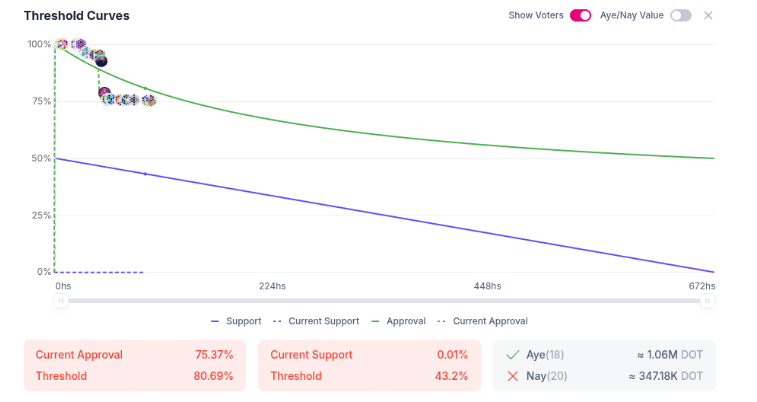
The voting on the proposal has already involved a high level of participation. As of the time of writing, the plan has over three-quarters of cast votes in its favor, and over 5.6 million DOT is equivalent to more than 1.4 million tokens priced at an average of approximately 3.90 apiece, which are already in hand. The vote continues within the next 24 days, and there is still ample time to get additional community involvement before a final vote.
In case it passes, the Polkadot stablecoin (pUSD) would be an overcollateralized debt instrument, backed by DOT. The design will also feature a savings module, which will allow the user to lock their stablecoins and receive an interest in the form of stability fees, further providing strong incentives to hold and utilize the token.
Also read: Polkadot to $50 by 2026? What Experts Say About Polkadot Price Potential
Polkadot Ecosystem Needs Native Stablecoin Solution
According to Chen, the Polkadot stablecoin would serve a very urgent demand in the growing Polkadot ecosystem. The proposal was to have a native DOT-based stablecoin since people needed it and without it we would bleed benefits, liquidity and or security the proposal argued, on the dangers of further dependence on outside assets.
The algorithmic stablecoins are designed to match the price of the fiat currencies without relying on centralized reserves under the management of third parties. Rather, they store digital assets onchain and run by smart contracts, and have economic incentives coded into the system to keep the peg.
Risks Surround Algorithmic Stablecoin Market Expansion

It is a risky sector, however. In 2022, the algorithmic stablecoin, TerraUSD (UST) of Terra collapsed, which was a stark reminder of the possible risks. The incident led to the explosion of the Terra ecosystem, and the dwindling investor trust in algorithmic models.
Nevertheless, regardless of such drawbacks, the category has not lost interest as the idea of greater decentralization is promoted and the new Polkadot stablecoin use case emerges.
The point in support of algorithmic stablecoins is decentralization because they facilitate permissionless systems with restricted outside control. Ki Young Ju, the chief executive of analytics firm CryptoQuant, cautioned earlier this year that such innovations would open the door to so-called dark stablecoins instruments that are not subject to regulatory compliance and enforcement of sanctions.
Also read: Polkadot Price Analysis 2025: Will DOT Break $14 Resistance?
Conclusion
Based on the latest research, the proposed Polkadot stablecoin could significantly strengthen the network’s ecosystem by reducing reliance on centralized assets while enhancing liquidity and security. Regardless of the concern related to the algorithmic models, the high ratings in the initial voting suggest the increasing confidence that one of the pillars of Polkadot in the future will be a stablecoin supported by DOT.
For more expert reviews and crypto insights, visit our dedicated platform for the latest news and predictions.

Follow us on Twitter and LinkedIn, and join our Telegram channel to be instantly informed about breaking news!
Summary
Polkadot is considering launching its own algorithmic stablecoin, pUSD, fully backed by DOT tokens. The stablecoin proposed by the Acala co-founder Bryan Chen would work under the Honzon protocol and strive to decrease the dependence on USDT and USDC. The plan currently has more than 75 percent of the vote in its favor and is pledged up to $5.6 million in DOT. Although the algorithms come with risks following the demise of TerraUSD, robust community support shows Polkadot driving towards increased decentralization, ecosystem autonomy.
Glossary of Key Terms
Polkadot Stablecoin (pUSD)
Proposed native stablecoin backed by DOT, aiming for ecosystem independence.
DOT Token
Polkadot’s native cryptocurrency, used for governance and collateral.
Acala
Polkadot-based DeFi hub developing the Honzon protocol.
Bryan Chen
Acala co-founder and CTO who proposed pUSD.
Honzon Protocol
Acala’s system for decentralized stablecoins and CDPs.
Algorithmic Stablecoin
Peg maintained via smart contracts and incentives.
USDT (Tether)
Centralized stablecoin backed by company reserves.
USDC (Circle)
Centralized stablecoin issued by Circle.
Decentralization
System without centralized control or oversight.
Frequently Asked Questions about Polkadot Stablecoin
1: What is Polkadot’s pUSD stablecoin?
It’s an algorithmic stablecoin backed only by DOT tokens.
2: How will pUSD stay stable?
Through Acala’s Honzon protocol and overcollateralized debt positions.
3: Why launch a Polkadot stablecoin?
To reduce reliance on USDT, USDC, and boost ecosystem liquidity.
4: What risks do algorithmic stablecoins face?
They risk peg failures, like TerraUSD, despite being overcollateralized.