












This article was first published on The Bit Journal.
Ethereum liquidity is tightening at a pace the market has not seen in years, pushing analysts to warn that the network is entering a delicate, high-risk transition. The trigger is BitMine’s aggressive $5 billion staking move, an event now described as Ethereum’s most extensive unintended stress test to date.
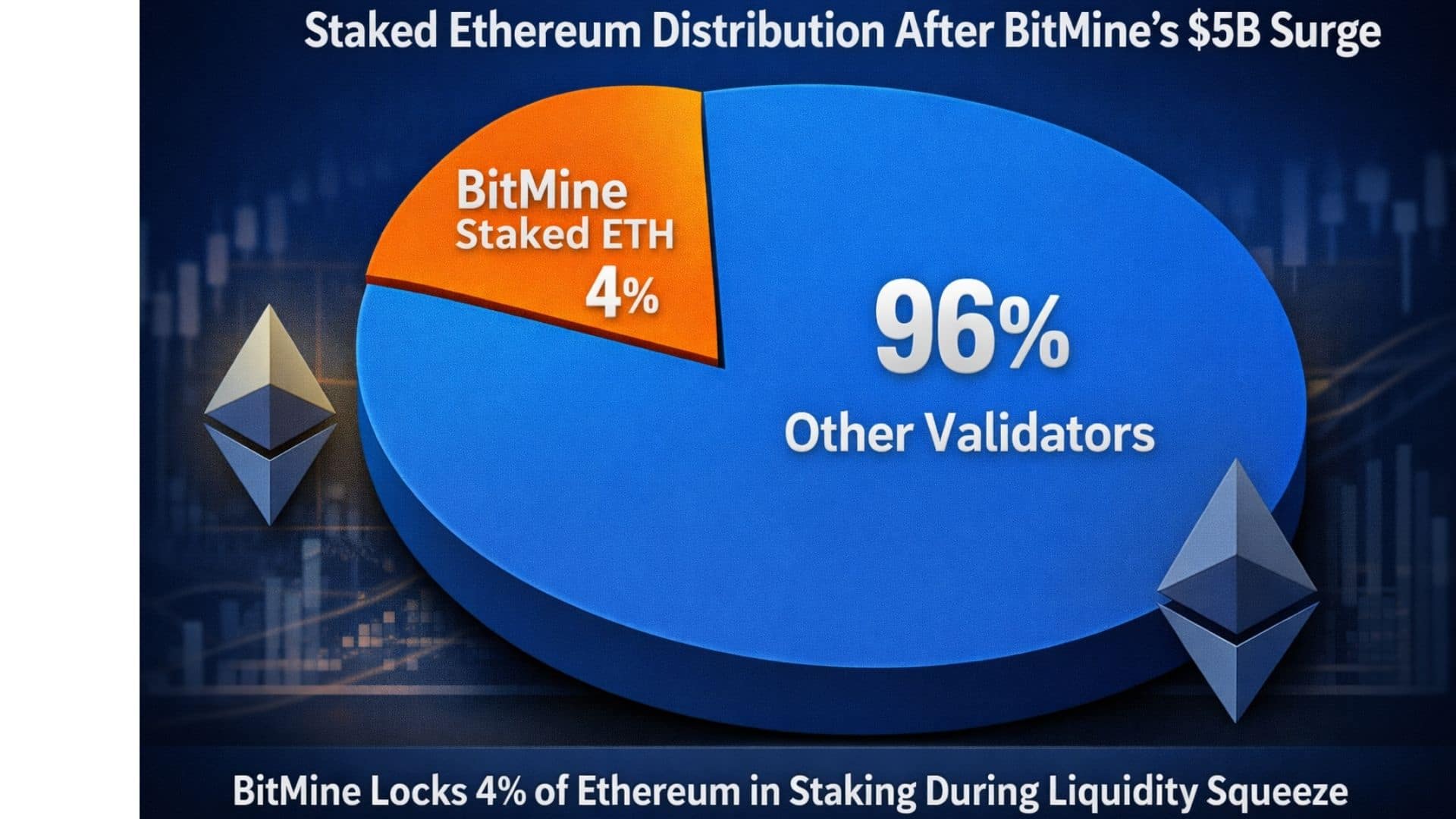
According to the source, BitMine deposited 1.53 million ETH into the Beacon Chain, pushing total staked holdings above 36 million ETH and locking nearly 30% of Ethereum’s circulating supply.
This comes shortly after a sharp market correction that exposed a “$4B time bomb” in leveraged positions, raising fresh questions about short-term liquidity resilience.
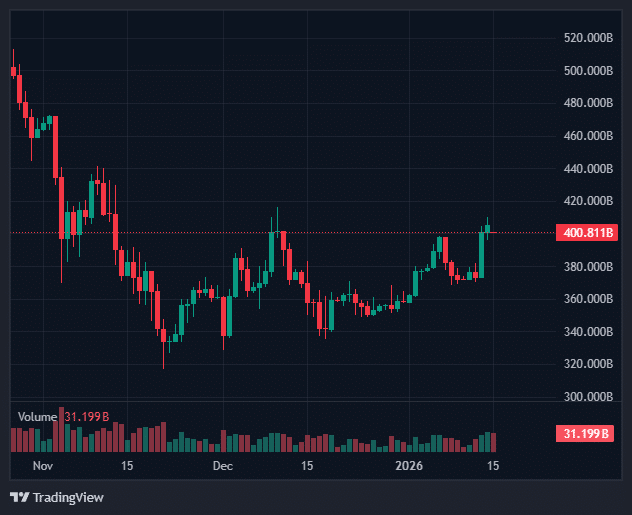
Corporate Staking Turns Into a $5B Liquidity Shock.
Ethereum liquidity is being reshaped by the validator queue, which now exceeds 2.3 million ETH and has wait times of nearly 40 days, a level not seen since 2023. This congestion reduces the asset’s “effective float,” removing supply that normally cushions volatility.
BitMine’s move also introduces reflexivity. If markets rise, corporate treasuries expand staking; if markets fall, they may be forced into synchronized unwinds. Forced liquidations during the 2025 crash showed how quickly corporate ETH can become a systemic liability.
Analyst Marcus Hale notes:
“When $5B enters staking at once, the risk isn’t just liquidity, it’s how quickly that liquidity becomes one-way during market stress.”
Yield War Ignites as ETFs Fight for Stakers
A new battle is emerging: a staking-driven ETF yield war. Grayscale and other issuers have begun distributing staking rewards as cash payouts, transforming Ethereum yields into corporate-grade income streams.
This competition alters Ethereum liquidity by pulling more institutional capital into staking, accelerating APR compression. As yields fall below attractive fiat benchmarks, marginal stakers may seek riskier channels, further tightening liquidity in the short term.
Key drivers shaping this shift include:
- ETF cash payouts: Investors now expect real yield, not just price exposure.
- Yield dilution: More staking means less APR per ETH, weakening passive returns.
- Corporate bidding pressure: Treasury desks increasingly treat ETH as a productive asset.
Each factor deepens the supply contraction feeding the current liquidity squeeze.
Modeling the Three Outcomes: From $7,500 Bull Case to $1,800 Bear Case
Crypto market researchers outline three scenarios that capture the stakes of this new environment, each closely tied to Ethereum liquidity and staking momentum.
Base Case: “Sticky Stake Equilibrium” ($4,800)
Validator congestion slows, stakers hold positions, and Ethereum trades at a modest liquidity premium. Staking remains strong but stabilizes.
Bull Case: “Corporate Collateralization Wave” ($7,500)
ETH becomes a preferred treasury asset across firms. Stablecoins, tokenized treasuries, and settlement demand accelerate network value.
Bear Case: “Treasury Unwind Shock” ($1,800)
Corporate stresses, regulatory pressure, or balance-sheet losses trigger coordinated withdrawals. Liquidity thins, volatility spikes, and prices reprice sharply.
A Bank of Italy study adds a warning: a network-wide “security-yield spiral” could freeze capital if prices fall while large validators remain highly concentrated.
Conclusion
The coming year will test whether Ethereum liquidity can withstand the dual forces of corporate staking and institutional yield competition. As Ethereum becomes both a settlement layer and a treasury asset, the network’s next phase will be shaped not just by developers, but by the financial behavior of billion-dollar stakeholders.
Glossary of Key Terms
Liquidity: The ease of trading an asset without heavy price changes.
Staking: Locking ETH to support network validation and earn rewards.
Validator Queue: A line of pending validators waiting to activate.
APR: Annual return earned through staking rewards.
FAQs About Ethereum Liquidity
Why is Ethereum liquidity tightening?
Large staking inflows removed a significant share of ETH from active circulation.
What caused the long validator queue?
Heavy demand from institutions created congestion in the activation system.
How does staking affect price?
It lowers circulating supply, which shapes market behavior and volatility.
Can corporate staking create risks?
Yes. It brings operational, compliance, and liquidity challenges.
Sources / References