



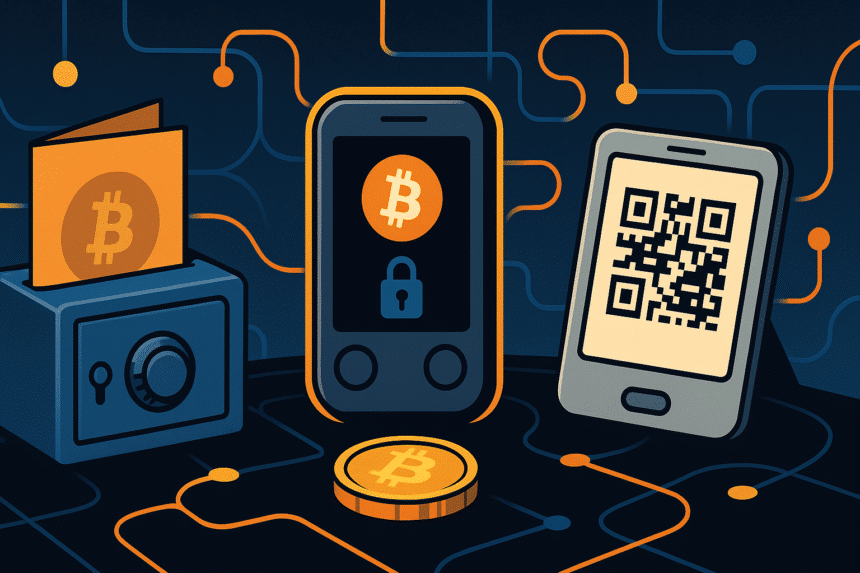

When digital money became popular, people started to worry about how to keep it safe. Several people got a lesson that crypto online storage is not safe. Hackers are able to steal it, websites are shut down, and accounts occasionally disappear altogether. Thus, individuals began seeking offline storage methods for crypto. That is how the notion of cold storage was born. Cold storage entails storing crypto keys offline. It is more controlling and less risky. One thing has remained the same, even in the case of market change. The person who possesses the private keys has control over the crypto. Hardware wallets are devices that ensure that cold storage becomes simple and secure. They are miniature gadgets that ensure that the keys are not stolen.
These wallets were improved with time. They included improved chips, secure backups, and even mobile applications. From paper wallets to the current hardware wallets, crypto storage has changed significantly. Nevertheless, this is aimed at safeguarding what is owned by the user.
What Is Cold Storage and How It Works
Cold storage is a simple idea. It refers to digital storage outside the internet. In the case of offline storage of the private keys, hackers cannot access them. This approach has formed the basis of ensuring crypto safety.
In the olden days, individuals utilized simple items such as a paper wallet. They also printed the keys of a safe on paper. It was successful a few times, but they were easy to lose or destroy. Then there were hardware wallets, gadgets that served nothing but to store crypto safely.
To have a better idea of cold storage, it is better to see what the difference is between this and hot wallets. Hot wallets are linked to the internet. They are not as secure and are easier to use. Cold wallets are offline and require more care to be accessed.
| Feature | Hot Wallet | Cold Wallet |
| Internet Connection | Always online | Offline |
| Security Level | Lower | Higher |
| Ease of Use | Quick and simple | Slower but safer |
| Common Types | Mobile, Web, Desktop Wallets | Hardware, Paper, Air-Gapped Devices |
Cold storage works by isolating private keys from the internet. When someone sends crypto to a cold wallet, it is recorded on the blockchain, but the private key never leaves the device. That means no one can move the funds without physically using that wallet. This method gave people peace of mind. It is slower but reliable. Even after years of new tech, cold storage remains the gold standard for long-term holding.
Early Days of Crypto Storage: From Paper Wallets to USB Devices
Back when Bitcoin started around 2009, there were no special wallets. People just stored private keys as text on their computers. Some printed them out on paper, creating what is called a “paper wallet.” It was free, offline, and seemed smart at first.
But paper wallets had problems. Paper can get wet, burn, or fade. If someone found it, they could steal everything. Some users lost all their Bitcoin just because they misplaced one piece of paper. So, crypto holders started using USB drives and offline computers. That worked better, but it was still risky. Viruses could copy keys once the USB is connected to an online computer. The table below shows how crypto storage slowly improved in the early years:
| Year | Storage Type | Main Advantage | Main Problem |
| 2010–2012 | Paper Wallets | Cheap, offline | Easy to lose or damage |
| 2013–2014 | Encrypted USBs | Portable | Malware risk |
| 2015 | Early Hardware Wallets | Safer and easier to use | Expensive, limited options |
These years were a time of learning. Crypto users were building their own safety habits. Mistakes were common, and there were no guides. Each failure made the next version better. It was a time of trial and error that built the path for the hardware wallets we use today.
Birth of Hardware Wallets: The First Real Cold Storage Devices
By 2014, the crypto world needed something safer and easier than paper or USB wallets. That is when hardware wallets were born. Trezor and Ledger were two of the first companies to build them. These small devices store private keys inside secure chips and only sign transactions inside the device.
The user could connect the wallet to a computer or phone, but the keys never left the device. Even if the computer had a virus, the crypto stayed safe. This idea changed everything. Cold storage was no longer just for tech experts; it was for everyone.
| Wallet Model | Launch Year | Main Feature | Price at Launch |
| Trezor One | 2014 | First hardware wallet | $99 |
| Ledger Nano S | 2016 | Compact design and multi-coin support | $79 |
The first hardware wallets were simple but reliable. They had small screens and two buttons to confirm transactions. It felt like using a small safe instead of trusting a website. People could now store Bitcoin, Ethereum, and later other coins safely offline.
One reason these wallets worked well was their focus on isolation. Every transaction needed physical approval. Even if hackers saw what was happening online, they could not sign or move the funds. This design started the age of secure cold storage that we still depend on today.
The Role of Security Chips and Seed Phrases
As hardware wallets got popular, they needed more protection inside. So, developers added security chips, also called secure elements. These chips act like a mini vault. They store private keys in a hidden area that even the main processor cannot touch. This made it almost impossible to extract keys, even if someone had the wallet in their hands.
Along with that came another big feature, seed phrases. A seed phrase is a group of 12 or 24 words that can restore a wallet if it is lost or broken. It changed how backup systems worked. Instead of saving files or remembering keys, users could write down a simple list of words. The length of a seed phrase affects how hard it is to guess or hack. Here is a quick look:
| Seed Phrase Length | Security Level | Chances of Guessing (Approx.) |
| 12 words | Good | 1 in 2¹²⁸ |
| 18 words | Strong | 1 in 2¹⁹² |
| 24 words | Very Strong | 1 in 2²⁵⁶ |
These security updates made hardware wallets much stronger. Even if one were stolen, it would still be safe without the PIN and the recovery phrase. Some models even added passphrases, extra words to protect backups further. These two innovations, secure chips and seed phrases, pushed crypto safety to a new level. They made cold storage not just offline but also tamper-proof. It was no longer enough to steal a device; attackers needed physical access, passwords, and time. That raised the bar for security in the whole crypto world.
Modern Hardware Wallets: Design, Mobile Apps, and Connectivity
Hardware wallets ceased being little boxes over the years. They turned into contemporary, interconnected, and more usable. The initial models were low in screen size, and the buttons were difficult to press. Today, the majority of wallets resemble mini-phones or other smart devices. They come with color touch screens, Bluetooth, and mobile apps.
The latest gadgets, such as Ledger Nano X, Trezor Model T, SafePal S1, and Keystone Pro, allow their users to access coins on their phones. That simplified the storage of crypto to be used on a daily basis and yet safe. Bluetooth connections imply that individuals can be able to safely sign transactions without the need to plug in to computers. Nevertheless, the personal keys remain out of the device.
| Wallet Model | Connectivity | Supported Assets | Approx. Price (USD) |
| Ledger Nano X | Bluetooth, USB-C | 5500+ | $149 |
| Trezor Model T | USB-C | 1800+ | $179 |
| SafePal S1 | QR Code | 1000+ | $50 |
| Keystone Pro | Air-gapped, QR | 5000+ | $169 |
These wallets started looking like smart devices because that made them more accessible. They work with mobile apps, so transactions can be approved with a few taps. While convenience improved, the security foundation stayed strong.
However, critics say that adding wireless connections can create small risks. Bluetooth, if not encrypted properly, can leak data. Because of that, many experts still prefer fully air-gapped wallets that never connect in any way. But for everyday users, the mix of usability and safety in modern wallets is a major win.
Open-Source vs Closed-Source Hardware Wallets
One of the big debates about hardware wallets is the debate on whether it has to be open or closed-source. It could be considered technical, yet it is not hard. Open-source refers to the fact that the software code of the wallet is open. It can be viewed by anyone, examined, or proposed to fix it. Closed-source implies that the corporation maintains the secrecy of it, and it is only viewed and modified by the company staff.
Open-source wallets are more transparent. The code can be inspected by developers and security specialists so that they can discover the flaws. It is the model of projects such as Trezor and Keystone, as it fosters trust. People are aware that there are no backdoors. Closed-source wallets, such as Ledger, on the other hand, employ their own firmware. They justify that it assists in the protection of their trade secrets and avoiding the possibility of hackers studying their systems too carefully.
| Type | Transparency | Security Model | Example Wallets |
| Open-Source | Full | Community-reviewed | Trezor, Keystone |
| Closed-Source | Limited | Proprietary chip design | Ledger, SafePal |
At the end of the day, both types are safe if users follow good practices. But for many in the crypto space, open-source represents the true spirit of decentralization. It is about trust through verification, not just promises.
Air-Gapped Wallets and the Next Generation of Cold Storage
Air-gapped wallets are referred to as the future of cold storage. Air-gapped refers to the fact that the device is not connected to the internet, Bluetooth, Wi-Fi, or even USB. It remains totally isolated, similar to an island. The transactions occur within the phone application and on the device screen through scanning QR codes.
This thought can be described as plodding, yet it is extremely safe. It is impossible to gain access to something that is not connected to the internet. The hardware wallet never communicates directly, even in the case of a computer being infected. The use of cameras, as opposed to cables, is in air-gapped wallets. In a case of sending crypto, the whole data of the transaction is in the form of a QR code on a phone, which is scanned by the wallet, signed, and presents another QR to confirm. Examples of popular air-gapped wallets are Keystone Pro and Ellipal Titan. They have powerful metal designs, touch screens, and complete isolation. These wallets gained popularity among long-term holders and institutions.
| Wallet Model | Connection Type | Key Strength | Main Advantage |
| Keystone Pro | QR-based | EAL5+ Secure Chip | Fully air-gapped, open-source |
| Ellipal Titan | QR-based | Secure Enclave | Mobile-friendly design |
Air-gapped systems reduce every online threat. The only risks left are physical theft or forgetting the recovery phrase. Some newer models even use self-destructing memory if someone tries to break inside. It wipes the data automatically.
This level of protection shows how far cold storage has come. From paper wallets lying in drawers to metal devices with encrypted chips and tamper-proof shells, crypto safety has evolved fast. Air-gapped wallets are now setting the new bar for how secure self-custody should be.
Institutional Cold Storage: Custody Solutions for Big Investors
When Bitcoin became valuable, large investors and crypto funds needed special protection for billions of dollars worth of coins. That started the rise of institutional cold storage. These are not small wallets; they are vault systems with advanced security rules, backup plans, and strict access control.
Companies like Coinbase, Binance, and Gemini use cold storage vaults to protect user funds. Most of their crypto assets, sometimes 90% or more, stay offline. Only a small portion remains in “hot” wallets for withdrawals. Cold storage for institutions means multiple keys stored in different places, often in separate countries. It prevents single points of failure.
One popular method used in institutions is multi-signature (multi-sig). It requires more than one private key to move the funds. So, even if one key is compromised, the attacker cannot access the assets.
| Custody Provider | Cold Storage Use (%) | Security Feature | Notable Tech |
| Coinbase Custody | 95% | Multi-Sig + Physical Vaults | YubiHSM + Insurance |
| Gemini Custody | 90% | Segregated Wallets | SOC 2 Certified |
| Binance Custody | 98% | Key Sharding | Geo-Distributed HSMs |
Institutional cold storage is now a separate industry. These companies have to meet regulations, audits, and compliance rules. They use hardware security modules (HSMs), large, certified machines that protect keys at a higher standard than regular wallets.
This kind of storage keeps the global crypto economy stable. If an exchange fails, the cold storage part often saves the users’ assets. The system proves that offline safety is not just for individuals anymore; it is the backbone of crypto’s trust layer.
The Future of Hardware Wallets and Cold Storage
Cold storage never stops changing because of the emergence of new risks. The hardware wallets are already beginning to appear smarter in the next generation. Rather than simply storing keys, they will rely on items such as biometrics, encrypted chips, and even AI to identify suspicious activity.
The next generation of wallets might be provided with fingerprint or facial recognition to avoid unauthorised use. Others already have mobile authentication layers like banking apps. Biometric seed recovery is another trend, in which the user is able to restore a wallet with an encrypted scan of the face or voice, along with a passphrase.
Smart contract wallets, in which cold storage is linked with blockchain automation, are also of interest. To illustrate, in the instance of the loss of one key, an on-chain access to another trusted wallet can be restored. This would ensure that recovery would be safer and quicker without sacrificing privacy.
| Future Feature | What It Does | Expected Benefit |
| Biometric Unlocking | Uses fingerprints or facial data | Easier access without PINs |
| AI Threat Detection | Detects unusual signing behavior | Stops attacks early |
| Smart Contract Recovery | Automates backup and restore | Reduces risk of losing funds |
| Decentralized Identity (DID) Integration | Links wallets to verified digital IDs | Adds extra layer of trust |
Between 2025 and 2030, experts expect wallets to merge with decentralized identity systems. It means people will use the same hardware device to store both crypto and personal verification keys. That could open the door for secure logins, government services, and even voting systems using blockchain.
What began as a simple idea, keeping coins safe from hackers, is now turning into a complete digital security ecosystem. Cold storage is not just about protection anymore; it is about control and independence.
Common Myths About Cold Storage
Even after more than ten years of crypto use, there are still many myths about cold storage. Some of them come from confusion, while others are repeated without facts. These myths can cause people to make mistakes or even lose their coins. One common myth is that cold wallets can never fail. This is not true. Even though cold wallets are offline, they can still break, get lost, or stop working if not handled properly. Physical damage, bad storage conditions, or lost seed phrases can all lead to permanent loss. Cold wallets protect from hackers, not from human error.
Another myth says paper wallets are the safest method. While paper wallets were popular early on, they are no longer the best option. Paper fades, ink smudges, and moisture can destroy them. Also, most people forget that creating or printing a paper wallet using an online device can still expose the private key. Some also believe that keeping coins on an exchange is just as safe as using a hardware wallet. This is false. Exchanges are online, and even the biggest ones can be hacked or freeze accounts. Cold storage gives direct control of the assets, while exchanges hold coins in their own wallets.
Another myth is that hardware wallets are only for the rich. Today, good models start from under $50. They cost less than losing even a small crypto investment. The truth is, cold storage is not just for whales. It is for anyone who wants peace of mind. These misunderstandings keep people from protecting their assets properly. Cold storage has risks, but it removes most of the dangers that come from the internet.
How to Choose a Safe Hardware Wallet in 2025
The market for hardware wallets keeps growing, and it can be hard to know which one to buy. Some wallets look fancy but do not have proper security chips. Others claim to be “cold” but connect through weak wireless links. A safe choice depends on a few key points: brand trust, certification, and ease of use.
The best hardware wallets in 2025 usually come with Common Criteria (CC) certifications. This means the chips inside were tested for tamper resistance. Certification levels like EAL5+ or EAL6 show high protection against attacks.
| Wallet Model | Certification Level | Open/Closed Source | Price Range (USD) |
| Trezor Model T | None (Open Source) | Open | $179 |
| Ledger Nano X | CC EAL5+ | Closed | $149 |
| Keystone Pro | CC EAL5+ | Open | $169 |
| Ellipal Titan | CC EAL5+ | Closed | $139 |
Before picking a wallet, it is also good to check how backups work. A wallet that supports seed phrases and passphrases gives more recovery safety. Some even offer metal seed plates for fireproof backups. Firmware updates are another important point. Wallets that receive regular updates stay safer because developers fix bugs and improve security.
Buy only from official websites or authorized dealers. Many fake wallets look identical to real ones but come with preloaded malware. Checking packaging seals and firmware verification screens is always wise.
In 2025, most new wallets will also support multi-coin storage and NFT management. Still, security should always matter more than fancy features. Cold storage exists to keep coins safe, not to look stylish or connect with everything. Choosing the right wallet is like choosing a vault. It should feel strong, last long, and never surprise the owner with hidden risks. The safest wallets are those that balance usability and offline protection without unnecessary complexity.
Conclusion: The Journey Toward Safer Self-Custody
Cold storage started as a simple trick. Just keep private keys away from the internet, and hackers cannot reach them. But over time, it turned into an entire science of crypto safety. Paper wallets became USB wallets, then advanced devices with secure chips and air-gapped systems. Today, hardware wallets protect billions of dollars in digital value. They combine design, encryption, and simplicity in one pocket-sized tool. The evolution shows how the crypto world learned from its mistakes. Each hack, each lost wallet, pushed developers to build stronger protection.
The story of cold storage is really a story about independence. When people use their own wallets, they do not depend on banks or exchanges. It is full ownership in digital form. And as technology moves forward, the balance between security and comfort keeps improving. Future wallets will use AI, biometrics, and decentralized identity, but the goal will remain the same: to protect private keys. Whether for individuals or institutions, cold storage will always be the final line of defense against theft and failure.
The evolution of hardware wallets and cold storage reminds the crypto community of one thing: security is not a one-time choice. It is a journey. From paper to secure chips, from single keys to AI-based recovery, this journey continues toward a future where holding digital assets is both easy and completely safe.
Frequently Asked Questions About the Evolution of Hardware Wallets
What is a hardware wallet used for?
A hardware wallet is a physical device that stores crypto private keys offline. It helps protect assets from online hacks, viruses, or phishing attacks by keeping the keys disconnected from the internet.
How is cold storage different from a hot wallet?
Cold storage keeps keys offline and safe from hackers, while a hot wallet is connected to the internet for quick access. Cold storage is better for long-term saving, and hot wallets are better for daily transactions.
Can a hardware wallet be hacked?
It is very rare, but not impossible. Hardware wallets can only be hacked if someone has physical access and the PIN or seed phrase. When used properly, they are considered the safest way to store crypto.
What happens if a hardware wallet is lost?
If the wallet is lost, funds can still be recovered using the seed phrase written during setup. As long as the seed phrase is safe, the assets are safe too.
Glossary
Cold Storage:
A method of keeping cryptocurrency offline to prevent online attacks. Usually done using paper wallets, hardware devices, or air-gapped systems.
Hot Wallet:
An online wallet connected to the internet for quick access to crypto but more exposed to hacking.
Private Key:
A secret code that gives ownership of cryptocurrency. Whoever has the private key can access and move the funds.
Seed Phrase:
A set of 12 or 24 random words used to restore a wallet if lost or damaged.
Hardware Wallet:
A physical device that stores private keys offline, protecting them from online theft.
Secure Element (SE):
A special chip used in hardware wallets to store keys safely inside a protected area.
Air-Gapped Wallet:
A wallet that never connects to the internet or any network, using QR codes to transfer data instead.
Multi-Signature (Multi-Sig):
A feature requiring more than one key to confirm a crypto transaction, increasing security.
Firmware:
Software that controls the hardware wallet’s functions, updated to improve performance and fix issues.
Custody Solution:
A secure service used by institutions to store large amounts of crypto, often including physical vaults and insurance coverage.
Summary
Cold storage is one of the strongest defenses in crypto security. It began with simple paper wallets and evolved into advanced hardware devices with secure chips and mobile apps. The goal has always been the same: keeping private keys safe and offline. Over time, innovations like seed phrases, security elements, and air-gapped designs made storing crypto more reliable.
Modern wallets like Ledger, Trezor, and Keystone now combine safety with usability, while institutions use large-scale custody systems to protect billions in assets. The future of cold storage is moving toward biometrics, AI monitoring, and smart recovery systems. From the early days of USB drives to today’s high-tech vaults, hardware wallets have shaped how digital assets are protected. They represent the evolution of trust and independence in the world of decentralized finance.