


Last updated: November 22, 2026
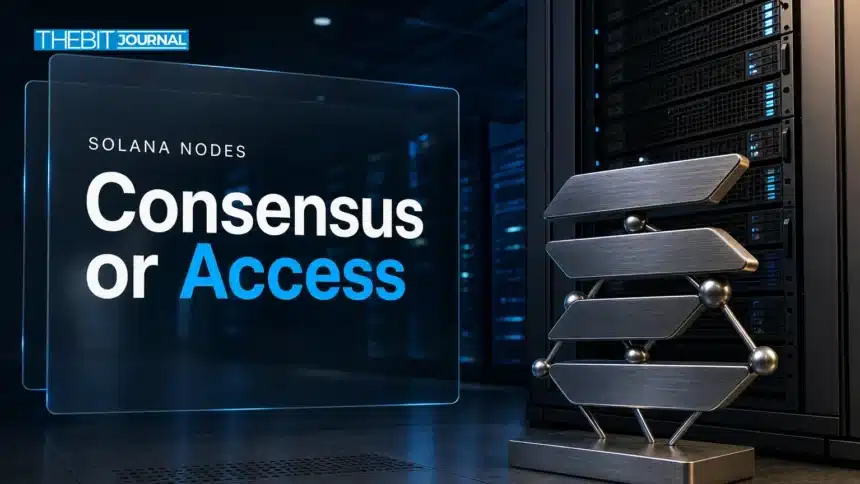
Solana validator vs RPC node describes two different roles: validators help the network reach consensus, while RPC nodes provide wallets and applications with network data and transaction services. Their hardware, costs and potential rewards differ.
Key Takeaways
- Consensus validators vote on blocks and can earn inflation rewards, but pay vote transaction fees.
- RPC nodes serve requests such as reading network state, simulating transactions and sending transactions. They typically don’t vote.
- Solana’s hardware recommendations differ by role, and account-indexing RPC setups need more memory.
- Public RPC endpoints have limits and aren’t intended for production applications.
Solana validator vs RPC node: What each one does
A validator participates in Solana’s consensus process by voting on blocks and helping the cluster agree on the ledger’s state. Solana’s operator documentation says consensus validators can earn inflation rewards, but also pay vote transaction fees.
An RPC node answers requests from software. Solana’s RPC documentation lists tasks such as reading network state, sending transactions, simulating execution and subscribing to live updates. For example, a wallet can use an RPC service to request account information or submit a transaction to the network.
What does Solana validator vs RPC node mean for users?
For users, an RPC endpoint is usually the point of contact. A validator’s less visible role is participating in the network’s decision-making, rather than serving application data. The word “node” can refer to either machine, so its job is the important distinction.
Solana defines the confirmed commitment level as a block voted on by more than two-thirds of active stake. Applications can request that confirmation level, but the RPC provider itself isn’t the consensus authority.
How requests and consensus differ
The clearest difference in Solana validator vs RPC node is voting. Consensus validators vote as part of the cluster. RPC nodes typically don’t vote and therefore don’t receive protocol voting rewards, according to Solana’s operator documentation. Instead, they serve data and request traffic.
Solana’s RPC interface supports both subscriptions and one-off requests. Applications can subscribe to updates or simulate transactions before sending them. Operators may need to scale capacity as request volume grows, the documentation says.
Shared public infrastructure has limits. Solana’s cluster documentation lists mainnet public RPC limits of 100 requests per 10 seconds per IP, 40 concurrent connections per IP and 100 MB of data per 30 seconds. Solana says these endpoints aren’t intended for production applications. Teams with reliability needs must weigh their own infrastructure or a commercial provider against the related cost and availability trade-offs.
Hardware and operating requirements
Solana’s published recommendations show that the roles aren’t interchangeable. The guidance lists 12 CPU cores and 24 threads, plus 256 GB of RAM, for a validator. For an RPC node, it recommends at least 16 cores and 32 threads, and 512 GB of RAM when using an account index. These are recommendations, not guarantees for every workload.
RPC capacity depends on its use. An account index can increase memory needs, while high request volume may call for more capacity. Validators must budget for consensus software and vote fees. The choice is about operational fit, not simply a different node label.
For an overview of node roles on another network, see our guide to Bitcoin full nodes and light nodes. Solana’s published hardware guidance sets out recommendations for both roles.
Rewards, fees and current Solana details
Validators can earn inflation rewards and also pay vote transaction fees. Solana’s operator documentation estimates those fees at approximately 1.0 SOL per day, with fees that can reach 1.1 SOL per day. Because the cost is denominated in SOL, its fiat value changes with the token price.
Solana activated Alpenglow consensus on mainnet on October 21, 2026, at approximately 13:36 UTC, with a stated target of about 150-millisecond finality. Solana’s BLS public key and Validator Admission Ticket documentation says validators need a registered BLS public key and at least 0.8 SOL above the vote account’s rent-exempt minimum for the fee charged each epoch after activation.
As a dated snapshot, Solana’s validator page displayed 661 mainnet voting validators and a Nakamoto coefficient of 18 on November 22, 2026. These figures describe the network on that date, not a permanent count. RPC nodes typically don’t receive protocol voting rewards; commercial revenue depends on the service offered.
Which role fits a project?
An RPC service suits applications that fetch data, submit transactions or receive updates. Planning depends on request volume, uptime needs, data requirements and whether shared endpoint limits are acceptable. The distinction also matters to infrastructure teams deciding between serving requests and participating in consensus.
Validators are for operators prepared to participate in consensus and manage its technical requirements and costs, including voting and fees. Neither role guarantees income. Operating expenses, SOL price changes and technical demands all affect the economics. For another network’s validator responsibilities, see our explainer on Starknet validator delegation.
Solana Foundation Delegation Program criteria add requirements for eligible validators. Starting May 1, 2026, the stated rules require a data-center concentration limit of 15% or less and an ASN or hosting-provider concentration limit below 25%. These criteria apply to that program, not automatically to every validator.

Frequently Asked Questions
Can an RPC node earn Solana staking rewards?
Not through consensus voting in the typical setup described by Solana’s operator documentation. RPC nodes typically don’t vote and therefore don’t receive protocol voting rewards. A commercial RPC service may earn revenue through a separate business model.
Is a Solana validator the same as an RPC node?
No. Validators participate in consensus by voting on blocks. RPC nodes primarily serve requests, such as reading network data or sending transactions.
Can I use Solana’s public RPC endpoint for a production app?
Solana says its public mainnet RPC endpoints aren’t intended for production applications. Their request, connection and data caps may not meet an application’s needs.
Which needs more hardware, a validator or an RPC node?
Solana’s published recommendations list higher CPU and memory figures for RPC nodes, especially when an account index is used. Actual needs depend on workload and configuration.
Sources
- Solana Validator Requirements (edge.docs.solanalabs.com)
- Solana price and market data (CoinGecko)
- Elon Musk’s Grok AI Predicts ETH Vs SOL For 2027: Who Wins? (CryptoNews)
This article is for informational purposes only and does not constitute financial or investment advice. Cryptocurrencies are highly volatile; always do your own research before investing.