




The internet has gone through many changes over the last three decades. In the early days, it was mostly about reading information. Websites were simple, and interaction was limited. Later, social media platforms changed how people communicated, shared content, and built communities online. Today, another major change is taking place. This change is driven by Web3 and the metaverse.
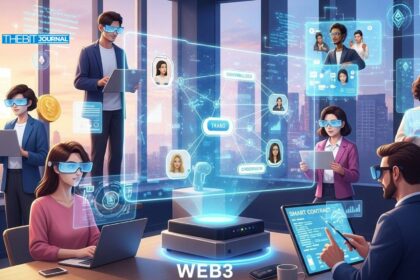
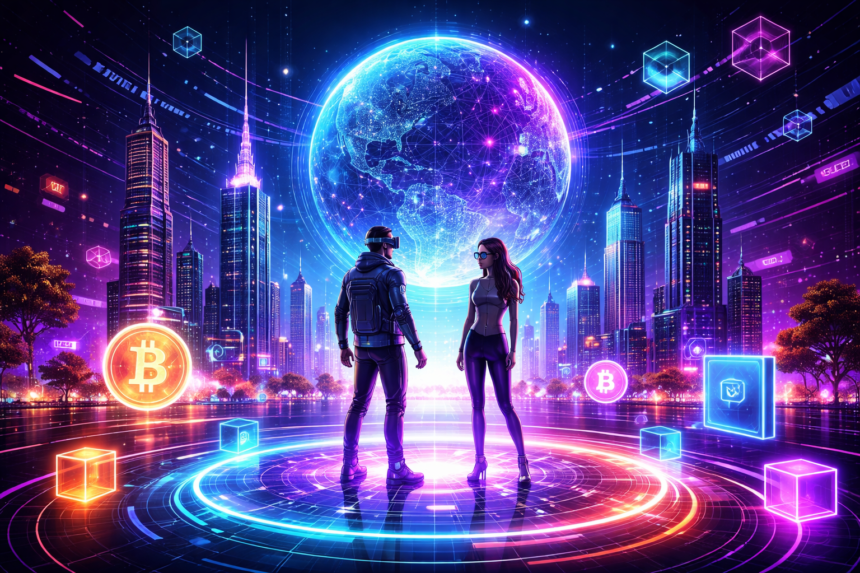
Web3 is all about decentralization, the ownership of digital assets, and the use of blockchain technology. On the other hand, the metaverse is about engaging and vivid online worlds where people can communicate and transact through avatars and virtual territories. The fusion of these two concepts brings forth a new model that is nothing short of powerful for the digital lifestyle of the future. This overlap is not limited to gaming or fun only. It has impacts on almost every field like finance, work, education, commerce, and even identity.
Understanding Web3 in Simple Terms
Web3 is often described as the next generation of the internet. Blockchain technology that data can be stored across the entire network of computers instead of just one single server published. This arrangement lessens the dependence on huge companies and at the same time raises the level of transparency. The users of Web3 can have complete control over their digital assets as it were none of the platforms managing their assets.
Digital ownership is one of the central concepts of Web3. Company policies govern game items, social media profiles, and digital downloads in existing digital marketplaces. Access rights might be restricted, or even completely revoked, at any time. On the contrary, Web3 offers a solution to this insecurity by enabling the minting of crypto assets that are kept in private wallets. These wallets are contiguous with blockchains that serve as a proof of possession without the intervention of any external entity.
Another key characteristic of Web3 is trust via the code. Smart contracts are essentially self-executing programs that run as soon as the pre-set conditions are met. Looking at the necessity of human validation or intermediaries, they shrink the latter quite a lot. This leads to the development of systems that are relatively more transparent and predictable. Therefore, Web3 technology is frequently associated with open finance, digital identity, and decentralized apps.
What Web3 Means for the Internet
Web3 represents a shift in how control is distributed online. Instead of a few companies owning platforms and user data, Web3 promotes shared networks where rules are enforced by code. This model allows people to interact, trade, and create without relying on centralized authorities.
This transition also transforms the method of value transfer on the internet. Direct actions between tokens can cover payments, rewards, and access. Money, voting power, or privileges can all be symbolized by these tokens. Since blockchains are borderless, Web3 can work internationally with less limitation.
Gradually, Web3 could undermine the monopolistic power of major digital platforms. The technology will allow lesser developers and communities to set up services that are freely available and operable across the board. An internet that is more adaptable and universal comes into being.
Key Technologies Behind Web3
The Web3 ecosystem is built on the combination of several core technologies. Blockchain is the main actor and it serves as a secure public ledger where all transactions are recorded. The cryptographic techniques are those that safeguard the information and user profiles. The usage of smart contracts means that payments, transfer of ownership and other processes will be automatically controlled. And lastly, users can have their assets kept in digital wallets and take part in the interaction with applications.
These are the technologies that have been built to function without a central authority. A considerable number of Web3 applications that have been already developed are able to live as long as the network exists. This is the reason why they are not prone to censorship or being shut down. Although the obstacles of a technical nature are still in place, the aforementioned technologies are slowly but surely creating a new digital infrastructure.
What Is the Metaverse and Why It Matters
The term “metaverse” denotes the digital environment shared by different users where interactions happen instantly. Three-dimensional models most commonly portray users’ avatars, and the surroundings are very similar to the real world. The entry to the metaverse can be done through desktops, laptops, smartphones, or VR headsets.
The user, on the contrary, experiences a whole new world with non-stop and immersive experiences with the metaphorical comparison of the internet to websites. The spaces do not cease to exist even after users have logged out. These virtual worlds can support all kinds of activities, such as meetings, events, shopping, and entertainment.
The metaverse can be considered a game-changer since it completely transforms internet user perception. Users will no longer be mere passive viewers of the content who just scroll through it; they will become the active ones in the digital domains. This, in turn, opens up new forms of social interaction and digital presence.
How the Metaverse Works Today
The metaverse quite literally presents itself today in primitive forms across various gaming platforms and virtual worlds. Among the popular examples are the virtual games, the online social spaces, and the simulation environments. Such platforms allow their users to create avatars, discover different environments, and communicate with other individuals.
The use of virtual reality and augmented reality tools for these experiences enhances the whole situation considerably. It is true that they are not mandatory, but they do make the whole interaction come across as even more real. Furthermore, several platforms give the creators the opportunity to design their own custom spaces and digital items.
Even though the current metaverse platforms are still quite limited, they are the ones that have already started to show how the digital environments that are so immersive might become an everyday thing.
Why Companies Are Investing in the Metaverse
The large tech giants view the metaverse as the next big thing in computing. Virtual offices bring together the remote workers in the same space. Digital shops make innovating selling methods available. Virtual events eliminate in-person limitations and costs.
Some market research reports predict that the total worth of the metaverse market all over the world will surpass 800 billion dollars at least by the year 2030. The rising trend will be of entertainment, business use, and digital trade primarily. Together with the tech advancements, the companies from various sectors are doing to discover the possibilities of virtual environments in the operation of their business.
Why Web3 and the Metaverse Are Coming Together
The metaverse creates digital spaces, but Web3 provides ownership and economic systems for those spaces. Without Web3, most metaverse platforms remain controlled by companies. Web3 introduces decentralization, allowing users to own assets and participate in governance.
Such a fusion makes it possible for virtual realms to operate as open economies. Users are allowed to make transactions of digital goods in any way of their preference: buying, selling, and trading. The ownership is logged on blockchains instead of the company databases. This fosters trust and mobility through the different platforms.
Digital Ownership Inside Virtual Worlds
Web3 enables true ownership of virtual items. Assets such as avatars, clothing, tools, and land can be represented as tokens. These tokens can be stored in wallets and transferred between users without permission from a platform owner.
This ownership model allows assets to retain value outside a single game or world. Items may be traded on open marketplaces. This gives users more control and flexibility.
Decentralization and Open Virtual Economies
The community rather than the corporation can rule the decentralized metaverse platforms at least to some extent. Tokens support the voting systems through which decision-making can take place. This setup creates a win-win situation for both the developers and the users regarding their incentives.
Moreover, open economies make it possible for the artists to be rewarded immediately for their creations. Without any middlemen, the artists, designers, and developers can trade their digital products directly to the consumers. Thus, the practice of sustainable digital ecosystems is further encouraged.
How Blockchain Powers the Metaverse Economy
Blockchain technology acts as the foundation for Web3 based metaverse economies. It ensures transparency, security, and trust across transactions. Every action is recorded on a public ledger.
| Feature | Traditional Digital Assets | Web3 Based Assets |
| Ownership | Platform controlled | User controlled |
| Transferability | Limited | Open |
| Transparency | Low | High |
| Resale Rights | Restricted | Allowed |
| Persistence | Platform dependent | Blockchain based |
Crypto Payments in Virtual Worlds
Cryptocurrencies allow fast digital payments inside virtual spaces. They enable users to buy assets, access services, and reward creators. Transactions can happen globally without traditional banking systems.
This payment model supports microtransactions and cross border commerce. It also reduces fees and delays.
Smart Contracts and Automated Transactions
In the metaverse, smart contracts serve as the primary means of automating economic transactions. Rental agreements, royalties, and access rights, for example, can all be managed automatically through smart contracts. As a result, there is a decrease in the occurrence of fraud and an increase in the efficiency of operations.
NFTs and Virtual Assets in the Metaverse
Non fungible tokens represent unique digital assets. They are widely used to represent virtual items and land. NFTs prove authenticity and ownership.
What NFTs Represent in Virtual Spaces
NFTs can represent art, identity, and property. In the metaverse, they allow assets to be portable and tradable. This creates long term value.
Real World Value of Virtual Assets
In 2021 alone, NFT sales exceeded 24 billion dollars. Virtual land sales reached billions across platforms. These numbers show growing economic significance.
Challenges at the Intersection of Web3 and the Metaverse
Despite potential, challenges remain. Technical limits affect performance. Security risks exist. Regulation is still unclear.
| Challenge | Description |
| Scalability | Network congestion |
| Security | Wallet theft |
| Regulation | Legal uncertainty |
| Access | High hardware cost |
Addressing these issues is critical for long term adoption.
Final Thoughts on the Intersection of Web3 and the Metaverse
The commingling of Web3 and the metaverse has been a gigantic change in the digital world. They not only draw the lines but also set the standards for ownership, interaction, and value in cyberspace. Solutions to these challenges are still being worked on, but the pace of progress, and hence the revolution, keeps growing.
As technology develops further and people accept it more and more, these systems could turn into the images of the future consistently found in everyday life. The next generation of the internet is being created at present, and it is more immersive, decentralized, and user-centric than ever before.
Frequently Asked Questions
What is the intersection of Web3 and the metaverse
The connection of Web3 and the metaverse can be viewed as the application of a decentralized blockchain technology to the creation of a virtual reality. Web3 offers digital power, trustworthy transactions, and a degree of control that is not dominated by any one party while the metaverse offers digital spaces where users can come together. The two technologies combined can lead to the creation of open and accessible digital realms where individuals have the right to their properties and are actively engaged in virtual economies.
Why is Web3 important for the metaverse
Web3 is a primary factor because it allows the realization of an absolute virtual ownership and a diffusion of power in the online world. In the absence of Web3, the majority of the metaverse existing today would still be under corporate control. Users can now have the freedom to own, sell, and keep their virtual land and digital items without relying on any one blockchain. This in return gives rise to more trust and freedom in the digital world.
How do NFTs work in the metaverse
NFTs represent unique digital assets inside virtual environments. They can represent items such as avatars, clothing, artwork, and virtual property. NFTs prove ownership through blockchain records and allow assets to be transferred or sold without platform restrictions.
Can Web3 and the metaverse be used outside gaming
Yes, the use of Web3 and the metaverse extends beyond gaming. Industries such as education, real estate, healthcare, fashion, and remote work are exploring virtual classrooms, digital offices, virtual stores, and immersive training environments powered by blockchain technology.
Summary
The crossing of Web3 and the metaverse not only signifies a new way of the internet being built, but also a change in its usage. Decentralization, blockchain tech, and digital property rights come along with Web3. The metaverse opens up with the concept of totally immersive virtual worlds where people are represented by avatars and engage in group activities. The combination of these two concepts produces a digital ecosystem which caters to ownership, open economies, and worldwide participation.
This interaction helps the virtual worlds to escape from the dark platforms. Using blockchain, the buying and selling of virtual land, avatars, and collectibles is unhindered thus, the trustworthiness of digital assets is being maintained. The use of smart contracts minimizes the need for central companies and therefore, maintains the trust, visibility, and flexibility in the virtual world.
There are still some difficulties such as scalability, security, and regulation that need to be overcome but that has not stopped the innovators from keeping on to move ahead. Gradually, as the technology gets better and better, Web3 and the metaverse will be more accessible and practical. Eventually, this interplay will likely create a new digital era that is characterized by the internet’s next era, reshape digital commerce, work, education, and online identity among other things.