




In 2025, the non-fungible token market feels very different from the wild early days. The headlines are quieter, but activity on chain is deeper and broader. Digital artists, game studios, luxury brands, musicians, sports leagues, and independent creators now treat NFT(Non Fungible Token) rails as part of their normal release playbook rather than a one time experiment.
At the center of this shift sit the top NFT platforms. They connect creators to global liquidity, set the tone for royalties and curation, and determine how safely assets move between wallets. These venues also act like live sentiment indicators for the wider crypto market, because changes in NFT flows often move in step with network usage, token prices, and overall risk appetite.
Why NFT marketplaces matter in 2025
For serious crypto investors, NFT marketplaces have become as important as spot exchanges were in earlier cycles. The top NFT platforms now operate as multi-purpose trading venues with real-time price feeds, analytics dashboards, multi-chain support, and links into lending and staking protocols. They stand alongside centralized and decentralized exchanges as core pieces of market infrastructure.
This matters because NFTs turn abstract stories about web3 into visible behavior. When unique buyers, transaction counts, and trading volume start to rise across major venues, it usually signals growing confidence in the underlying networks. Analysts watch daily active wallets, average holding periods, floor price stability, and cross chain flows in the same way they track liquidity, volatility, and open interest in coin markets. These indicators help reveal whether growth is driven by a small group of speculators or a wider base of real users.
How modern NFT marketplaces work
Under the hood, modern marketplaces run on smart contracts that define every important action. Listing contracts handle bids and offers, while settlement contracts move NFTs and crypto payments at the same time. Indexing services follow ownership history so anyone can verify that a token truly belongs to a particular collection. On top of this stack, the interface adds search, trait filters, watchlists, alerts, and activity feeds.
The top NFT platforms compete on three main pillars. First is liquidity, measured by tight spreads, active order books, and consistent sales near fair value. Second is experience, including clear collection pages, fast loading charts, mobile friendly layouts, and simple flows for new buyers who arrive from social media or gaming environments. Third is creator alignment, where tools for royalties, revenue sharing, allowlists, and campaign promotion decide where brands and artists choose to launch their next drop.
Segments inside the NFT marketplace landscape
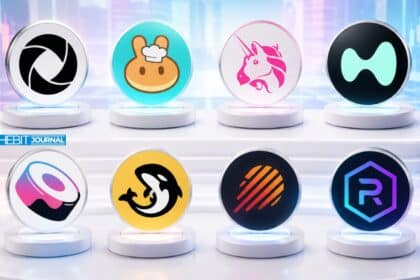
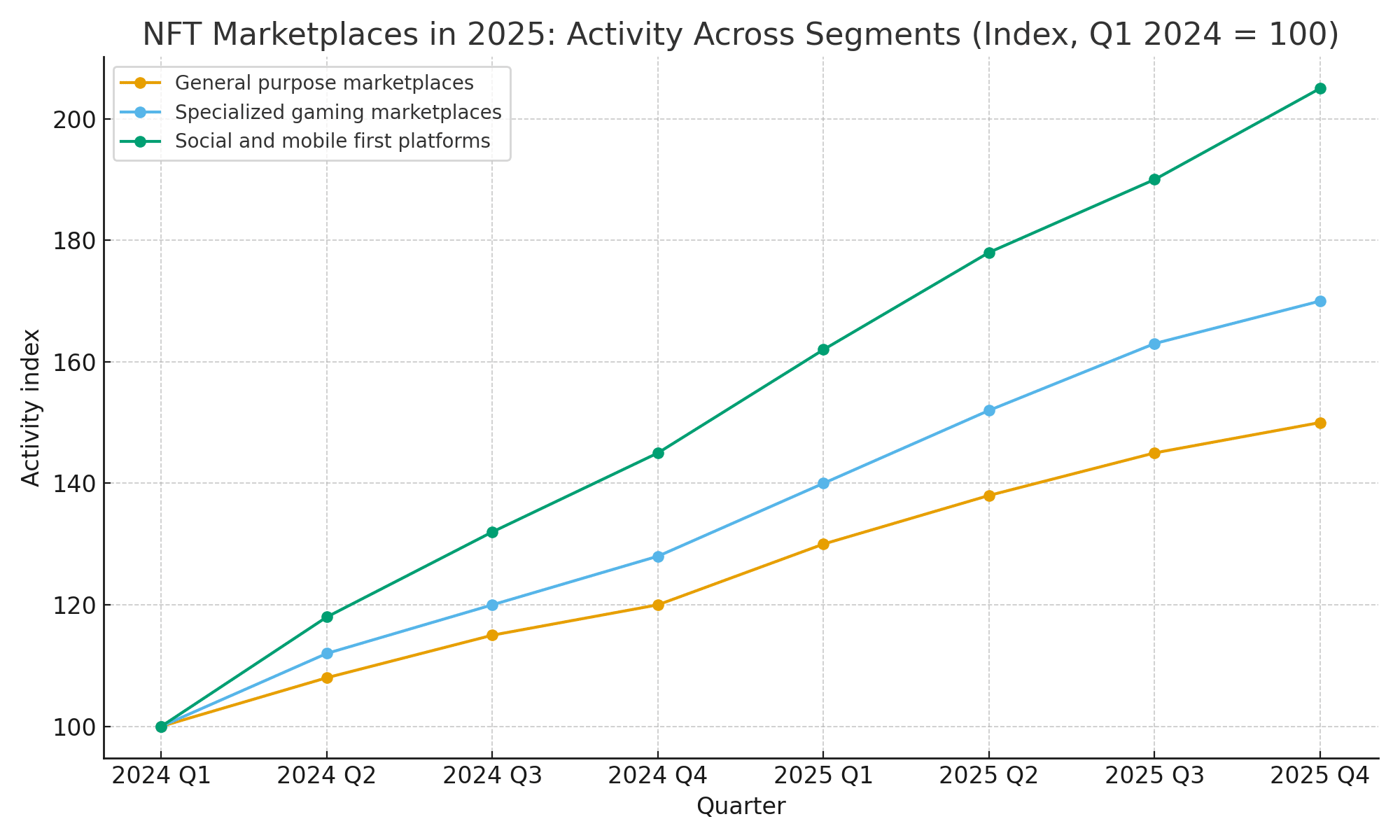
By 2025 the landscape has split into clear segments. General purpose marketplaces list profile picture collections, art, music, tickets, and gaming assets across several blockchains. These top NFT platforms tend to win on breadth. They integrate with many wallets, support multiple currencies, and offer portfolio dashboards that feel closer to brokerage software than to early experiment sites.
Specialized marketplaces serve narrower but highly engaged communities. Some concentrate on high end art and curated collections where provenance checks, gallery relationships, and physical exhibitions matter more than raw trading volume. Others lean into gaming and metaverse assets, where interface design looks more like an app store than a traditional order book. Unlike the more trading-driven top NFT platforms, these niche venues often measure success in daily active players, in-game transaction counts, and long-term retention.
A newer wave of social and mobile first products blends content feeds with trading. Creators post short videos, live streams, or behind-the-scenes clips that link directly to NFTs. For players and fans, the top NFT platforms in this category [6] feel like familiar social apps with an extra layer of ownership. Engagement metrics such as likes, comments, and repeat buyers become early signals of demand before floor prices move. In this segment, network effects and community culture matter as much as fee schedules.
Key crypto indicators behind NFT marketplace growth
Analysts who follow NFT markets rely heavily on on chain data. Trading volume, measured both in native network tokens and in stablecoin values, shows where capital is actually moving. Sudden spikes in volume without a matching rise in unique wallets can hint at wash trading. In contrast, steady volume growth alongside increasing wallet counts and healthy secondary sales often signals organic demand on the top NFT platforms.
Liquidity indicators are just as important. Tight bid ask spreads, frequent trades near the displayed floor price, and modest price impact from large listings usually point to deeper, more resilient markets. Thin books, wide gaps between bids and asks, and dramatic price swings after single sales suggest fragility. Observers also track the share of listings clustered near the floor versus those far above it, because that ratio reveals how realistic seller expectations are.
Network conditions form another layer of analysis. When gas fees spike on a base chain, lower value NFTs migrate toward sidechains or layer two networks, while high value pieces may wait for calmer conditions. When fees fall, activity often returns to the most secure settlement layers. Market participants also watch how often NFTs are used as collateral in lending protocols, how many collections support staking or reward features, and how closely NFT indices move with the broader crypto market.
Education, regulation, and user protection
As more money and cultural value flows through NFTs, regulators in several regions now pay closer attention to marketplace behavior. Teams that operate these venues dedicate staff to compliance, monitoring, and reporting. They flag suspicious activity, apply KYC checks where required, and restrict tokens that might fall under securities or consumer protection rules. This structure can feel restrictive to some traders, but it supports long term credibility for the entire sector.
Education has become a core feature rather than a side content tab. The top NFT platforms that take education seriously publish plain language guides on wallet security, smart contract risk, fake collections, and the difference between custodial and non custodial storage. They remind traders that NFT prices can fall sharply, that illiquidity is common in smaller collections, and that leverage multiplies downside as well as upside. This guidance helps align marketplace behavior with global expectations for responsible financial communication.
Good security habits still matter more than any platform feature. Careful review of contract addresses, verification badges, and transaction prompts provides a first line of defense. Additional tools, such as allowlist minting, hardware wallets, and multi-factor authentication, add further protection. Participants who treat NFTs as high risk assets and respect basic operational security usually navigate volatility more effectively.
The road ahead for NFT marketplaces
Looking forward, NFT marketplaces are likely to fade into the background of digital life in the same way that payment processors and domain registrars rarely appear in daily conversations. If standards for metadata, royalties, and cross chain interoperability continue to improve, most users will think less about tokens and more about the experiences those tokens unlock. At that point, the most resilient top NFT platforms will feel like invisible infrastructure that just works.
The market will almost certainly remain cyclical. Periods of intense innovation and speculation can still give way to sudden corrections when macro conditions tighten or sentiment turns. Projects that build on solid security, clear communication, and real utility have a better chance of surviving those swings. If NFT marketplaces manage that transition, they will become quiet but essential infrastructure for digital ownership, connecting creative work, community identity, and verifiable scarcity across the internet.
FAQs about top NFT platforms 2025
What is an NFT marketplace?
An NFT marketplace is an online platform where unique blockchain based assets can be minted, bought, sold, and traded. It connects creators who issue tokens with collectors and traders who want to own or resell those digital items.
How do NFT marketplaces earn revenue?
Most marketplaces charge a small fee on each completed trade and may take a commission when a collection launches. Some also sell premium promotion slots, offer data or API access for professional users, or run loyalty programs that reward high volume traders.
Are NFTs still relevant in 2025?
NFTs remain relevant because they extend beyond profile pictures. They support gaming items, digital art, music rights, ticketing, loyalty schemes, and tokenized versions of real products. This mix keeps attracting both creative communities and capital.
Which indicators are most useful when studying NFT markets?
Key indicators include trading volume, floor price trends, number of unique active wallets, liquidity depth near the floor, average holding periods, and the share of organic trades versus suspicious activity. Together, these signals help show whether demand is sustainable.
Are NFT marketplaces safe for new investors?
NFT marketplaces carry real risk. Prices can be very volatile, scams and fake collections exist, and smart contracts can fail. New investors benefit from starting with small amounts, using secure wallets, and viewing NFTs as high risk assets rather than guaranteed investments.
Glossary of Key Terms
Floor price
The lowest listing price for an NFT within a collection. It is often used as a quick snapshot of market sentiment and perceived demand for that project.
Liquidity
The ease with which an asset can be sold close to its current market value. Higher liquidity usually means tighter spreads, more frequent trades, and less price slippage.
Minting
The act of creating a new NFT by writing it into a smart contract on a blockchain. This process assigns ownership to a specific wallet address and records that ownership on chain.
Royalties
A share of each secondary sale that flows back to the original creator of an NFT. Royalties can be enforced by smart contracts or by marketplace level rules.
Wash trading
A practice where one party trades with itself to inflate reported volume or create the illusion of strong demand. Wash trading distorts market indicators and can mislead other participants.
References/Sources