



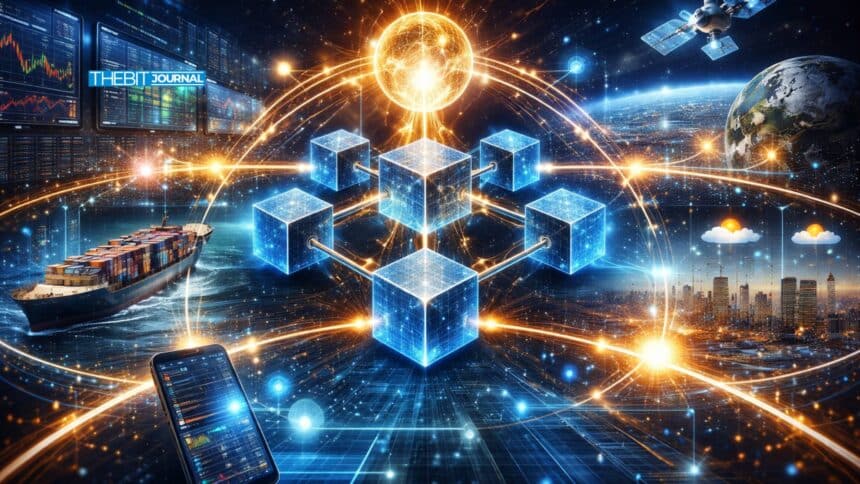

Blockchain oracles act like trusted data couriers as they bring external information such as asset prices, interest rates, weather events, sports scores, shipment confirmations, and even election results into a blockchain environment, so decentralized apps can make decisions based on reality, not guesses.
Without Blockchain oracles, smart contracts would be stuck in a closed room. They could move tokens around, follow rules, and run code, but they could not “know” what BTC trades at, whether a flight was delayed, or if a payment cleared in the real world. That makes the entire idea of real-world crypto finance feel incomplete.
Blockchain oracles explained
A simple way to picture an oracle is to imagine a trading bot locked inside a safe. The bot can do everything perfectly, but it has no screen and no internet. It needs someone outside the safe to pass it market prices. That messenger is the oracle.
Oracles exist because blockchains are intentionally isolated. This isolation protects the network from many types of attacks and prevents random external data from corrupting consensus. The tradeoff is obvious: isolation also limits usefulness.
Oracles solve that limitation by acting as a structured bridge between off-chain data and on-chain execution.
Why smart contracts cannot “just fetch data” from the internet
If a smart contract could pull data from any website or API whenever it wanted, it would open a messy security problem. Every node would have to query that data, and nodes could receive different answers. That breaks consensus, because blockchains require every participant to arrive at the same outcome.
So smart contracts stay deterministic. Same inputs, same outputs. Oracles supply those inputs in a way the chain can verify and agree on.
How oracles actually work behind the scenes
Most oracle systems follow the same general pipeline.
First, data is collected from one or more sources, such as exchanges, market makers, institutional feeds, IoT devices, or enterprise databases. Then the data is validated, aggregated, and transformed into a format a smart contract can use. Finally, the oracle network publishes the result on-chain, where applications can read it.
Most Blockchain oracles rely on cryptographic signatures, redundancy, and economic incentives to reduce the risk of bad data. In other words, they try to make lying expensive and honesty profitable.
That design matters because the moment money depends on data, data becomes a target.
The two oracle models most traders run into: push vs pull
In DeFi, the most common oracle setup historically has been “push.” That means the oracle updates price feeds on-chain at set intervals, whether anyone asks for the update or not. It is convenient and fast, but it can be expensive because updates cost gas.
Pull oracles flip the logic. The data is fetched only when an application needs it, typically at the moment of a transaction. That can reduce costs and can scale better across many chains, because updates are not constantly being written on-chain. This push vs pull difference is often described as a tradeoff between always-on freshness and on-demand efficiency.
Modern Blockchain oracles increasingly support hybrids, offering both styles depending on what a protocol needs.
The real reason oracles “matter” in crypto markets
Oracles are not just a technical detail as they decide how fair and functional many markets become. If a lending protocol uses unreliable prices, it can liquidate good borrowers at the wrong time. If a derivatives exchange sees stale data, it can misprice trades and get drained by arbitrage. If a stablecoin does not track collateral values correctly, it can wobble when conditions get rough.
This is why Oracle design ends up shaping key crypto indicators that traders watch every day, including liquidation cascades, funding-rate spikes, unusual spreads, and the difference between a clean breakout and a messy wick.
When Blockchain oracles fail, it is rarely subtle as it tends to show up as sudden bad debt, broken pegs, or a protocol emergency pause that arrives far too late.
DeFi price feeds are only the beginning
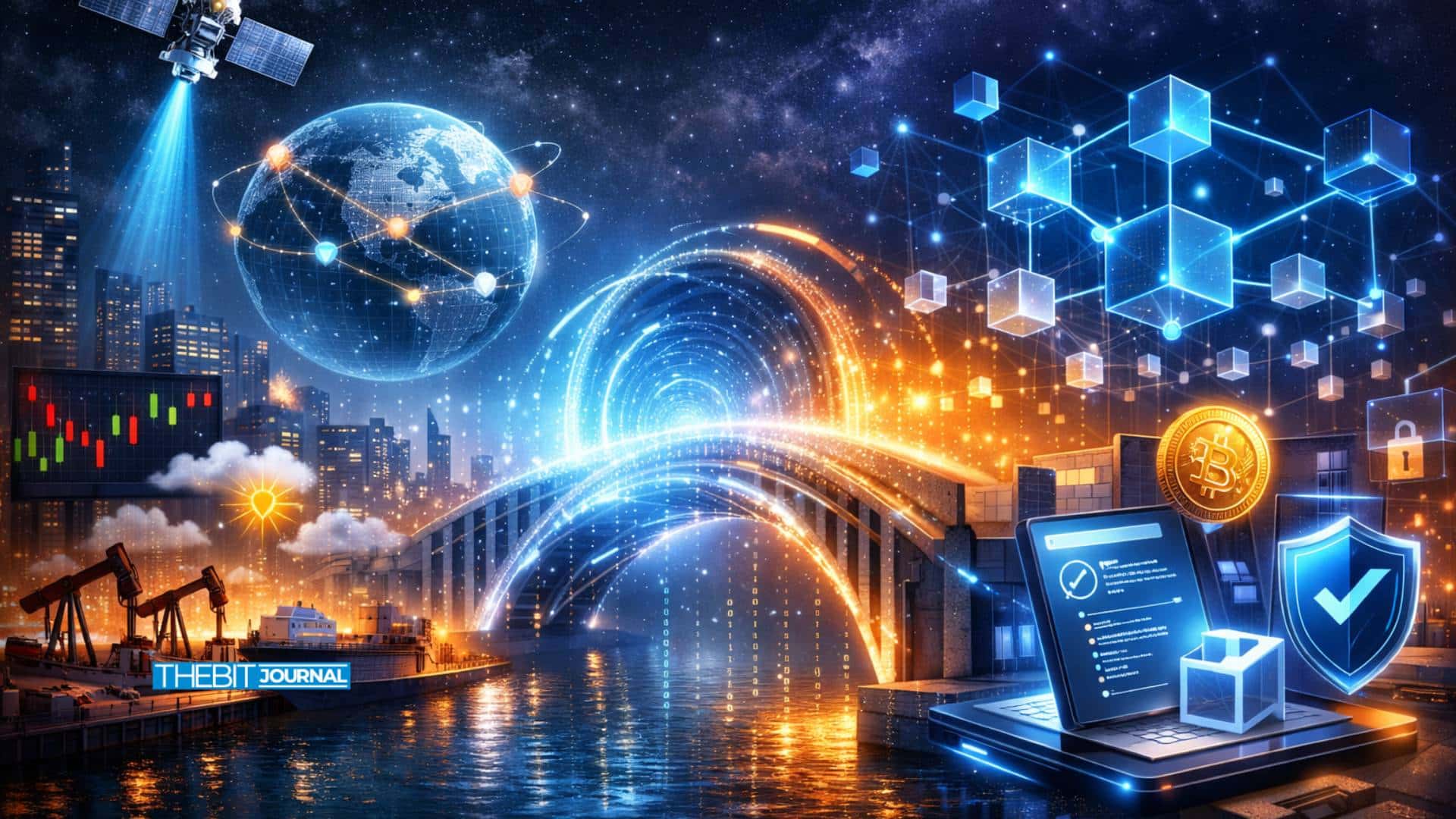
Most people first meet oracles through token prices, but the bigger story is that oracles turn blockchains into systems that can respond to events outside the chain.
That is how decentralized insurance can pay out after a storm, how tokenized treasuries can adjust yields based on benchmark rates, and how on-chain prediction markets can settle fairly.
DeFi remains the largest user because it is relentless about needing accurate information, especially for high-volume markets, collateral health, and liquidation thresholds. In practice, Blockchain oracles help define how safe leverage can be, and whether a protocol survives a day where BTC drops 8% in a few hours.
Oracles and the rise of real-world assets
Tokenized real-world assets are one of the loudest themes in crypto right now, but they are not possible at scale without reliable data updates.
A token representing a treasury bill, a commodity basket, or private credit exposure needs reference rates, pricing, settlement windows, and sometimes compliance signals. Oracles can deliver parts of that information, either directly or through verified computations, so on-chain products behave like real finance instead of fantasy finance.
This is the practical side of mass adoption. It is not flashy, but it is how serious money gets comfortable.
Cross-chain messaging is becoming an oracle story too
Oracles used to be discussed mainly as price feeds. That is changing.
Some oracle networks now power cross-chain token transfers and data messaging, which has become critical as liquidity spreads across multiple ecosystems. One well-known approach is a cross-chain interoperability protocol that enables token transfers and messaging between blockchains, designed with a defense-in-depth security model.
This matters because cross-chain failures are not “oops, try again” moments. They are often catastrophic. Security-first infrastructure has become a selling point, and oracle networks are increasingly positioned as part of that trust layer.
A quick look at the oracle networks gaining the most attention
In the current market, the oracle sector is not a one-horse race. Different designs serve different needs, and teams compete on update speed, cost, decentralization, and chain coverage.
Among Blockchain oracles, some networks focus on broad adoption across DeFi lending and stablecoin markets, while others prioritize ultra-low latency pricing for active trading. One example of a major market-data network highlights that it offers hundreds of real-time feeds, supports dozens of chains, and updates at very short intervals for freshness.
There are also oracle models built around on-demand delivery, which can reduce cost overhead for applications that only need data at execution time.
The point is simple: oracle design is not one-size-fits-all. A slow-moving lending market and a high-speed perpetuals exchange live in different worlds.
The biggest risks every oracle system must manage
Oracle risk is not just “bad data.” It is a whole family of issues.
There is a data-source risk, where the input is unreliable or manipulable. There is aggregation risk, where a flawed method creates a bad output even when the sources are fine. There is latency risk, where updates arrive late during volatility. There is economic risk, where attackers profit more from corruption than validators earn from honesty.
Then there is the human risk: poor parameter settings, weak monitoring, and rushed integrations.
The strongest protocols treat oracle selection like choosing a foundation for a building. If the foundation is shaky, nothing above it matters.
What to watch for when evaluating an oracle integration
A serious team will usually ask the same set of questions before trusting an oracle feed.
They look at how many data sources are used, how aggregation is handled, how often updates occur, what happens during market shocks, and what defenses exist against manipulation. They also pay attention to the “fail-safe” behavior, meaning what the protocol does when a feed stops updating or returns an outlier value.
It is boring work, but it is the difference between a resilient DeFi product and a future post-mortem.
Conclusion: oracles are the quiet backbone of crypto utility
A lot of crypto narratives focus on tokens, scaling, and new chains. Underneath it all, the market runs on information. As Blockchain oracles mature, they keep turning smart contracts from closed systems into tools that can react to reality, enforce outcomes, and power applications that feel practical instead of experimental. That is the real value. The next wave of on-chain finance is not only about faster block times. It is about better data, better guarantees, and fewer ugly surprises when markets turn chaotic.
Frequently Asked Questions (FAQs)
What is an oracle in blockchain?
An oracle is a system that delivers external data to a blockchain, allowing smart contracts to trigger actions based on information that exists outside the chain.
Are Blockchain oracles decentralized?
Some are decentralized through networks of independent nodes and multiple data sources, while others rely more heavily on direct publishers or smaller validator sets. Decentralization depends on architecture, incentives, and how data is aggregated.
Can oracles be hacked?
Oracles can be exploited through data manipulation, latency attacks, weak aggregation methods, or incentive failures. Strong designs use redundancy, validation, and economic security to reduce this risk.
What is the difference between push and pull oracles?
Push oracles publish updates on-chain continuously, while pull oracles deliver data on-demand when a transaction requests it. Push can be faster but more costly, while pull can be cheaper and more scalable.
Do oracles only provide price data?
No. Oracles can deliver many forms of information, including event outcomes, interest rates, proof of reserves, settlement confirmations, and cross-chain messages.
Glossary of Key Terms
Price Feed
A data stream that reports an asset’s price, often used for collateral valuation, trading, and liquidations.
Aggregation
The process of combining multiple data inputs into a single value that a smart contract can use.
Latency
The delay between a real-world event and the moment that event is reflected on-chain through an oracle update.
Push Model
An oracle design where updates are posted on-chain regularly, regardless of whether the data is immediately needed.
Pull Model
An oracle design where data is delivered only when requested during a transaction, often reducing unnecessary updates.
Cross-Chain Messaging
The ability to transmit data and instructions between different blockchains, often supported by oracle-based infrastructure.
References