






In every financial system, someone has to decide which transactions are real. In a bank, that role belongs to the bank’s internal ledger and compliance teams. In a decentralized blockchain, there is no central bookkeeper. The job of keeping everyone honest falls to something called a consensus mechanism.
A consensus mechanism is the rulebook that tells thousands of independent nodes how to agree on a single version of the ledger, even when some participants may be slow, offline, or actively malicious. It is one of the core reasons that cryptocurrencies can move value across the world without a central authority.
As digital assets move into the mainstream, understanding how consensus works is no longer a niche technical topic. It touches security, energy use, decentralization, and long-term value. In other words, it is a key indicator behind every serious crypto project.
What Exactly Is a Consensus Mechanism?
At its simplest, a consensus mechanism answers three questions for a blockchain:
Who is allowed to propose the next block of transactions?
How does the rest of the network check that block?
What happens if someone cheats.
Every node keeps its own copy of the blockchain. When a new block arrives, the consensus rules guide each node to verify it in the same way. If the block follows the rules and the majority of nodes accept it, that block becomes part of the shared history.
Academic research often describes consensus as the “backbone” of blockchain operations because it is what validates new blocks before they are added. Without this shared agreement, double spending, fake balances, and chaotic forks would dominate the network.
Why Consensus Mechanisms Matter For Crypto
For an investor or analyst, consensus affects several critical indicators:
Security. How expensive is it to attack the network and rewrite history.
Decentralization. How many independent parties really control the ledger.
Scalability. How many transactions per second can the system handle?
Energy and sustainability. How much real world cost the network imposes.
Economic incentives. How participants earn rewards, and who captures value.
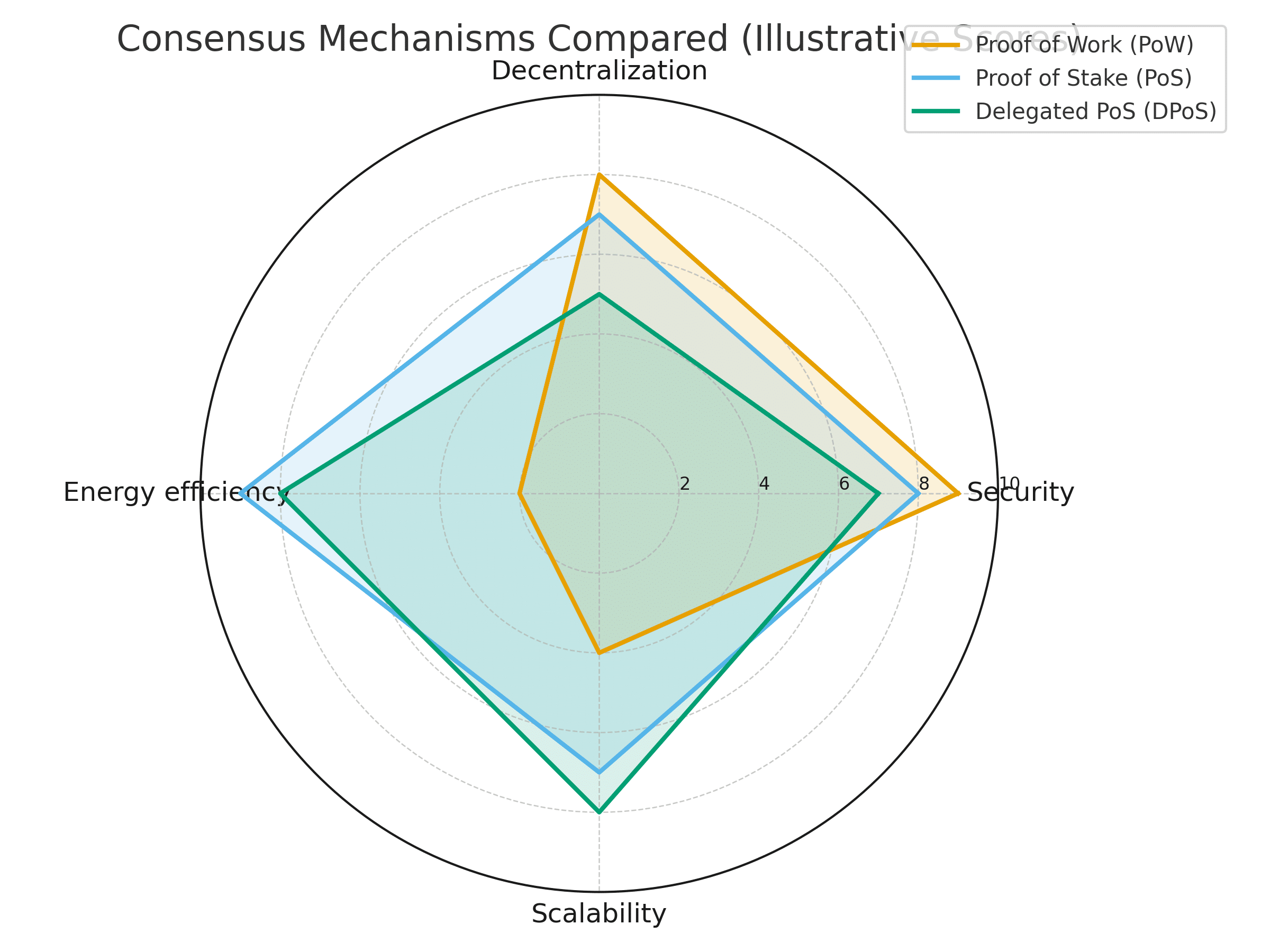
Proof of Work, Proof of Stake, and Delegated Proof of Stake answer these questions in very different ways. Those differences explain why some chains are slow but extremely secure, while others favor speed, low fees, or flexible governance.
How Consensus Works Step by Step
Although each algorithm has its own flavor, most public blockchains follow a similar high level rhythm.
Nodes collect recent transactions into a candidate block.
A small subset of participants earns the right to propose that block.
The rest of the network checks that the block follows the rules, including signatures, balances, and protocol limits.
If enough honest nodes agree, the block is accepted, the state updates, and rewards are paid.
The process repeats, one block at a time.
The main difference between consensus models is how they decide which participant earns the right to propose the next block and how they deter abuse.
Proof of Work: Security Through Computation
Proof of Work (PoW) is the original consensus mechanism that powers Bitcoin and several other major networks. In PoW, miners compete to solve a difficult cryptographic puzzle using specialized hardware. The first miner to solve it earns the right to add the next block and collect the block reward plus transaction fees.
This design has two important effects.
First, it creates a powerful security moat. An attacker must control a huge amount of computing power and electricity to outcompete honest miners and rewrite the chain. For large PoW networks, that cost is enormous, which is why many observers describe PoW as one of the most battle-tested models in crypto.
Second, it has a heavy environmental footprint. High hash rates mean high energy consumption. This trade off pushed newer projects to explore alternatives that maintain security without the same power demand.
PoW remains a strong indicator of conservative, security-first design. Hash rate, miner distribution, and energy mix are key metrics that analysts watch on PoW chains.
Proof of Stake: Security Through Skin in the Game
Proof of Stake (PoS) takes a different path. Instead of burning electricity, validators lock up a certain amount of the network’s native token as collateral. The protocol then selects validators to propose and attest to blocks, often with a mix of stake size and randomness.
If a validator behaves honestly, it earns rewards. If it approves invalid blocks or tries to cheat, part of its stake can be slashed. In other words, security comes from “putting up capital” rather than “burning energy,” as early PoS design essays often describe it.
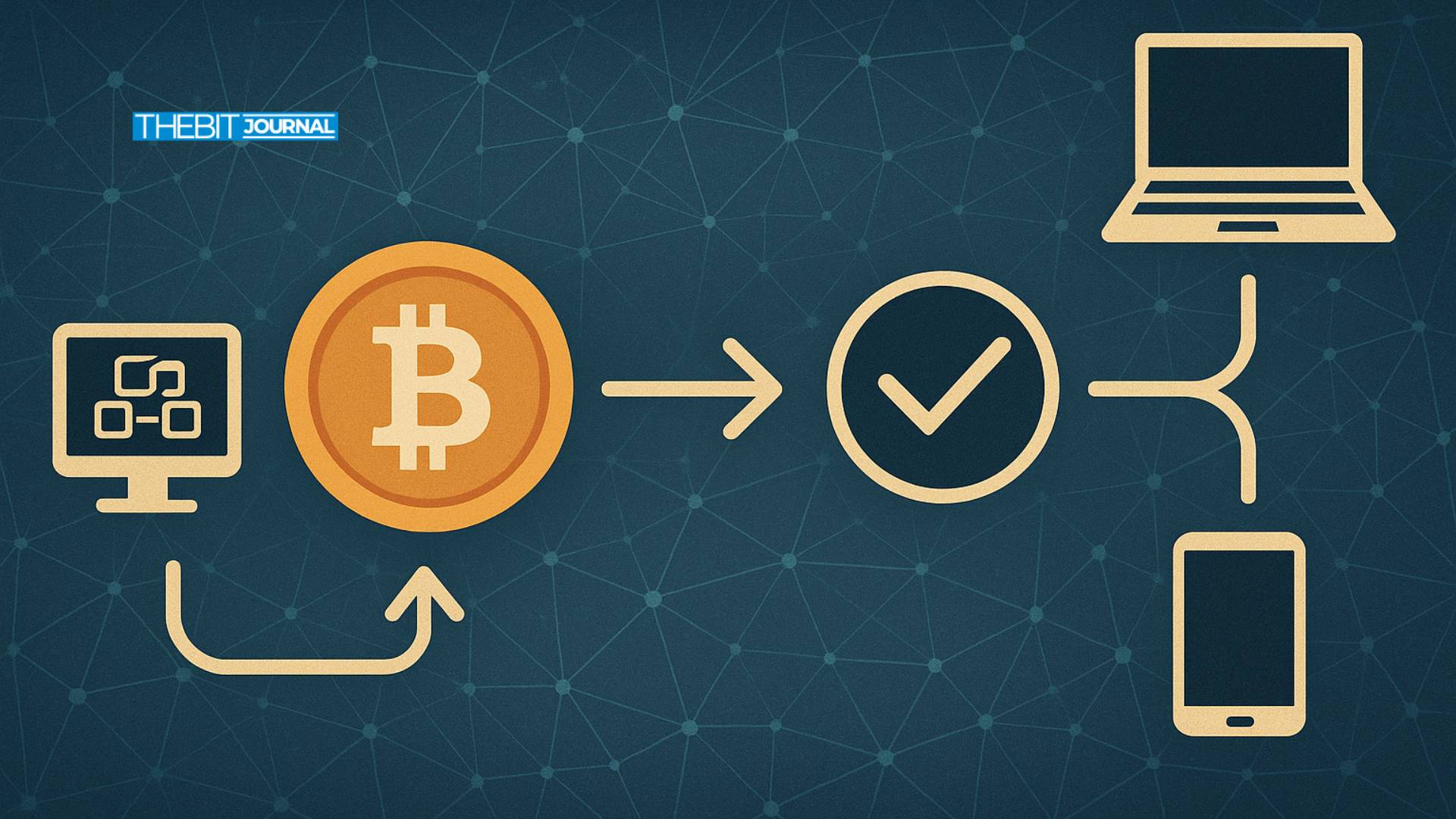
Ethereum’s move from PoW to PoS, often called the Merge, put this debate in the spotlight. The Ethereum Foundation has stated that PoS cuts energy use by more than 99 percent compared with the previous PoW design, while also improving some aspects of security and flexibility.
During a virtual forum in 2021, Ethereum founder Vitalik Buterin argued that “proof of stake is a solution to the environmental issues of Bitcoin which needs far less resources to maintain,” according to a report, highlighting the industry’s push toward greener infrastructure.
For PoS networks, important indicators include the total value staked, the share of supply locked in staking, the number and diversity of validators, and the design of slashing penalties. These factors reveal how much economic skin is really in the game and how concentrated control might be.
Delegated Proof of Stake: Voting For Block Producers
Delegated Proof of Stake (DPoS) is an evolution of PoS that tries to make block production more efficient and more explicitly democratic. The idea was first outlined by Daniel Larimer and used in projects such as BitShares, Steem, and EOS.
In DPoS, token holders do not all validate blocks directly. Instead, they vote for a smaller set of delegates or block producers. These delegates operate the validating infrastructure, create blocks, and share rewards with the voters who supported them.
This design can increase throughput because only a limited group of nodes needs to coordinate for each block. It also makes governance more visible, since token holders can add or remove delegates at any time through voting.
However, it introduces new risks. Power can concentrate in a small group of popular delegates. If those delegates form a cartel or stop acting in the interest of the wider community, the network can drift away from its decentralization goals. Analysts therefore follow voter participation, delegate turnover, and geographic distribution as important indicators on DPoS chains.
Consensus Mechanisms In Blockchain Explained
Across PoW, PoS, and DPoS, the consensus mechanism is the invisible referee that keeps the game fair.
In PoW networks, security relies on the economic cost of hash power. In PoS networks, it relies on capital at risk and the threat of slashing. In DPoS networks, it relies on the alignment between voters and the elected validators.
All three models validate transactions by:
Checking digital signatures to confirm that the spender owns the funds.
Verifying that inputs have not already been spent in earlier blocks.
Applying protocol rules such as block size, gas limits, or scripting constraints.
Only after a block passes these checks does it become part of the canonical chain that wallets and applications rely on.
Recent research and industry analysis consistently stress that consensus design is directly tied to overall blockchain security. Poorly chosen parameters or weak incentives can open the door to double spending, censorship, or long range attacks.
Key Crypto Indicators Linked To Consensus
When analysts study a new blockchain, they often map its consensus mechanism to a few practical metrics.
On PoW chains, hash rate, miner concentration, and hardware standards matter.
On PoS chains, staking ratio, validator count, and the share of stake controlled by the top entities are watched closely.
On DPoS systems, voter turnout, the number of active delegates, and the rate of governance changes become central.
Across all models, finality time, average transaction fees, and the history of past incidents, such as reorganizations or validator slashing events, help build a picture of real world resilience.
These indicators do not give a full guarantee, but they offer a grounded way to compare one protocol with another, beyond marketing slogans or short term price moves.
Evolving News Around Consensus Design
Consensus is not a finished story. Newer Web3 platforms continue to experiment with hybrid designs, such as combining PoS with committee-based voting or integrating zero-knowledge proofs to scale throughput. Industry surveys in 2025 highlighted how different mechanisms are being tuned for specific use cases, from gaming to enterprise finance.
As regulation, sustainability pressure, and institutional demand grow, consensus choices are likely to keep shifting. For serious observers of the crypto market, tracking that evolution is part of understanding where value may flow next.
Conclusion
A consensus mechanism is more than a technical detail on a whitepaper. It is the engine that decides who can propose blocks, how transactions are verified, and what it takes to attack the system.
Proof of Work builds security on raw computation and energy cost. Proof of Stake ties security to capital at risk and more nuanced incentive design. Delegated Proof of Stake adds a political layer, where token holders elect the small group that runs the chain.
Each approach comes with distinct trade offs in decentralization, performance, and environmental impact. For that reason, any careful analysis of a crypto asset treats its consensus mechanism as a core part of due diligence, alongside use case, tokenomics, and regulatory landscape.
When those pieces come together, consensus becomes exactly what the name suggests. A shared agreement on digital truth that everyone in the network can rely on.
Frequently Asked Questions
What is a consensus mechanism in simple terms?
A consensus mechanism is the rule set that helps all nodes in a blockchain network agree on which transactions are valid and in what order they should appear.
Why do different blockchains use different consensus mechanisms?
Different projects optimize for different goals such as maximum security, low fees, high speed, or energy efficiency, so they choose the model that best fits those priorities.
Is Proof of Stake safer than Proof of Work?
Both can be secure when well designed. Proof of Work relies on energy and hardware, while Proof of Stake relies on staked capital and slashing rules. The details of each implementation matter more than the label.
Glossary of Key Terms
Node
A computer that connects to a blockchain network, stores a copy of the ledger, and often validates transactions and blocks.
Miner
A participant in a Proof of Work system who uses computing power to solve cryptographic puzzles and add new blocks, in exchange for rewards.
Validator
A participant in a Proof of Stake or Delegated Proof of Stake system who stakes tokens and helps confirm blocks, usually in return for staking rewards.
Proof of Work (PoW)
A consensus model where miners expend computing power and electricity to compete for the right to add new blocks.
Proof of Stake (PoS)
A consensus model where validators lock up tokens as collateral and are chosen to create blocks based on their stake and other rules.
Delegated Proof of Stake (DPoS)
A consensus model where token holders vote for a smaller group of delegates who operate the validating infrastructure and produce blocks.
Slashing
A penalty in Proof of Stake style systems where part of a validator’s staked funds is destroyed or seized when that validator behaves dishonestly or violates protocol rules.
References/Sources