



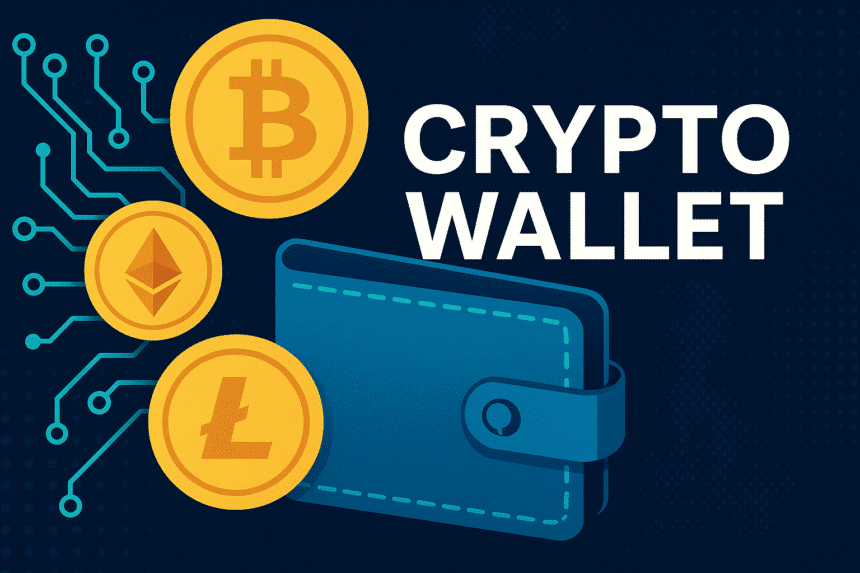

In the vast world of digital currencies, a crypto wallet is more than just a tool it is the bridge between human intent and blockchain execution. Unlike the leather billfold in a pocket, it stores no physical currency.
Instead, it manages the cryptographic keys by which one may access, transmit, and store digital assets. This ostensibly effortless tech has become a pillar of a decentralization-based financial system along with transparency and direct ownership.
Why Crypto Wallets Matter in Today’s Digital Economy
A Crypto Wallet is the user interface for accessing blockchain networks. Although the blockchain itself contains a record of every coin, every token, and every transaction, the wallet provides the right to assert ownership and sanction transfers of assets. Without it, cryptocurrency might as well be invisible.
The importance is also evident from adoption figures. In 2024, 560 million global citizens owned cryptocurrencies—a 6.8% global penetration. Adoption rose to 12.4% of connected global adults by 2025, and mobile wallet deployments reached 982 million, up 13.8% from the prior year.
The industry itself is thriving, with a worth of USD 12.59 billion in 2024, projected to reach USD 100.77 billion by 2033 at a 26.3% CAGR. This is not speculative growth—it is based on demand for self-custody, DeFi interaction, NFT ownership, and cross-border payments.
Brief History of Crypto Wallets
The first wallet for Bitcoin materialized in 2009, packaged as part of Satoshi Nakamoto’s initial Bitcoin program. It was all software and saved keys on the user’s desktop PC locally. During the following decade, pocketbook technology branched out into new dangers, new requirements for users, and increasing complexity of blockchain.
- 2011–2013: Online wallets from exchanges simplified access but introduced custodial risk.
- 2014–2016: Hardware wallets like Ledger Nano S and Trezor popularized cold storage for individuals.
- 2017–2020: Non-custodial phone purses such as Trust Wallet became mainstream phenomena, especially following DeFi adoption.
- From 2021 onwards: Multi-chain purses and built-in DApp browsers became standard, mirroring a multi-blockchain universe.
The development of the wallet parallels the industry’s transformation from amateur groups into an international finance industry.
Types of Crypto Wallets — Clear, Practical Breakdown
Custodial vs Non-Custodial Crypto Wallet
In a custodial wallet, the private keys are retained by the service provider, usually an exchange. This is comparable to a bank maintaining depositors’ monies: easy but relying on the integrity and security of the custodian.
For easier recovery mechanisms and support for customers, many newbies go for the custodial options. Historically, however, there have been cases of custodial mishaps—the 2014 example of Mt. Gox—to result in disastrous loss.
A non-custodial crypto wallet puts control solidly into the user’s own hands. This is in line with the crypto mentality of “not your keys, not your coins.” This also puts the onus of security on the individual.
Hot vs Cold Crypto Wallets
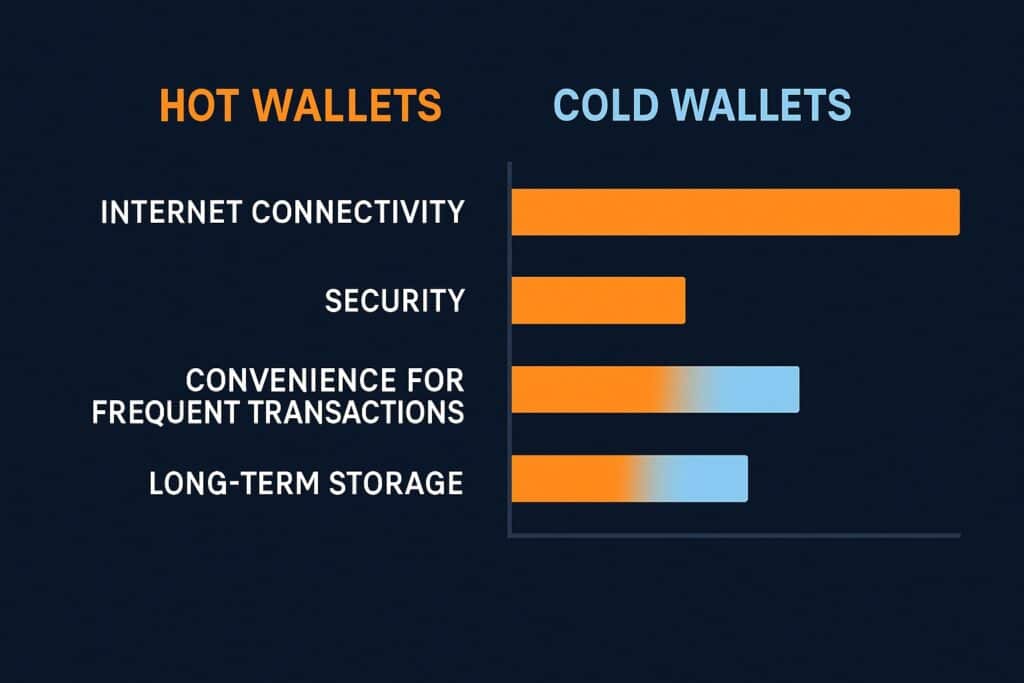
- Hot wallets operate online. Examples include browser-based MetaMask and mobile apps like Phantom or Coinbase Wallet. They are ideal for active traders and DeFi participants but carry increased exposure to hacking.
- Cold wallets remain offline, such as hardware devices or even paper printouts of keys. They are preferred for large, long-term holdings because they eliminate remote attack vectors. Hardware wallets hold 44% of the cold-storage market, with brands like Ledger and Trezor continually releasing security-enhanced models.
Multisig & Emerging Wallet Types
Multisig wallets require multiple keys for authorization. A company treasury may demand signatures from three executives, reducing insider or single-point failure risks. Multisig setups are also common in DAO governance.
Emerging wallet types include multi-chain wallets, smart contract wallets that enable programmable spending limits, and integrated identity wallets combining authentication with asset control.
How Crypto Wallets Work — Simplified Yet Deep Insight
At the center is public-key cryptography. All of the wallets generate a key pair:
- Private Key: Secret, known only to the owner, required to sign transactions.
- Public Key: Openly shared; it is derived from the private key.
- Address: Abbreviated, easy-to-use version of the public address for receiving money.
Upon initiation of a transaction, the wallet program generates a digital signature with the private key. Blockchain nodes check it against the public key in order to ascertain that the sender has the privilege of spending those funds.
Sophisticated wallets contain seed phrases—12 or 24 randomly generated words—that will re-create the private key if it is lost. These must be kept offline since loss of or theft of the seed will irreparably compromise the wallet.
Trends and Adoption — What the Data Reveals
The Global Reach: 560 million crypto holders in 2024, which accounts for 6.8% of the world populace (triple-a
- User Base: While between 2023 and 2025 crypto wallet downloads on mobile devices jumped from 770 million to almost 1 billion installations.
- Regional Perspective: Asia takes the lead with approximately 160 million wallet users and Africa has the highest yearly percentage growth.
- Government Initiatives: Adoption of El Salvador’s Chivo wallet—3 million downloads—is an example of how government-backed wallets fast-enter markets.
- Sector Enablers: NFTs, DeFi, and remittances across borders continue to be significant
These numbers indicate crypto wallets are no longer niche products. They’re infrastructure for a parallel financial network available to anyone with a smartphone.
Security & Best Practices — Expert Guidance
The most common wallet compromises stem from phishing, malware, and social engineering—not cryptographic failure. Experts recommend:
- Using cold storage for substantial holdings.
- Maintaining multisig arrangements for organizational funds.
- Backing up seed phrases in multiple offline, physically secure locations.
- Avoid public Wi-Fi for wallet access.
- Keeping wallet software updated to patch vulnerabilities.
High-profile breaches, from the $600 million Ronin Network exploit to smaller exchange hacks, reinforce that security is not optional but fundamental.
The Role of Crypto Wallets in Web3 & Beyond
Wallets are evolving into more than transaction tools. They are becoming digital passports for Web3, carrying not only assets but also decentralized identities, voting credentials for DAOs, and token-gated access to content.
Projects like Ethereum’s ERC-4337 (Account Abstraction) aim to make wallets smarter—automating payments, adding recovery mechanisms, and enabling custom rules. In this future, a wallet could enforce spending caps or require biometric confirmation for certain transactions.
Conclusion — The Future of Crypto Wallets
The Crypto Wallet is the linchpin of user sovereignty in financial digital assets. It brings together cryptography, user responsibility, and dynamic standards of security within one interface. With increasing adoption of blockchain technology within payments, gaming, art, and governance, the wallet will underlie the user experience.
From desktop programs of the early days through hardware-based cold storage and AI-powered multi-chain systems, the wallet journey parallels the overall crypto trend: from experimental niche to infrastructural standard. For analysts, builders, and students, learning the technical and strategic dimensions of the wallet is not a choice—it is a prerequisite for entry into the next decade of finance.
Glossary
- Private Key – A secret alphanumeric code giving access to cryptocurrency.
- Public Key – A non-secret code allowing others to send crypto.
- Non-Custodial Wallet – User controls private keys.
- Custodial Wallet – A third party holds the keys.
- Hot Wallet – Online, connected wallet for frequent use.
- Cold Wallet – Offline wallet storage for secure holdings.
- Hardware Wallet – Physical device that securely signs transactions.
- Multisig Wallet – Requires multiple signatures to authorize transactions.
- Seed Phrase – Backup phrase that restores wallet access.
- Multi-chain Wallet – Supports different blockchain networks through one interface.
Frequently Asked Questions (FAQs)
- What exactly is a Crypto Wallet?
It is software or hardware that manages cryptographic keys to send, receive, and sign blockchain transactions. - How do custodial and non-custodial differ?
Custodial wallets give control to a provider; non-custodial wallets give full control to the user. - Are hardware wallets necessary for security?
They provide strong protection by keeping private keys offline, making them ideal for long-term holdings. - What is a multisig wallet used for?
It adds security by requiring several parties to sign transactions—useful for organizations and high-value storage. - Is adoption of crypto wallets growing globally?
Yes, adoption is rising across all continents, with nearly 1 billion mobile wallet installs in 2025.
Content Brief Summary
This article defines “Crypto Wallet” as the essential tool for managing blockchain private and public keys. It explores key types—custodial, non-custodial, hot, cold, hardware, and multisig—and explains public-key cryptography in accessible terms. Historical context traces wallets from Bitcoin’s 2009 client to today’s multi-chain smart wallets. Global adoption data shows 560 million owners in 2024, 12.4% online adult penetration in 2025, and nearly 1 billion mobile installs. The USD 12.6 billion market is forecast to grow eightfold by 2033. Security best practices emphasize cold storage, multisig, and seed-phrase management. The article concludes that wallets are evolving into Web3 passports, merging asset control with identity and governance.