





The Buzz Around Blockchain: Why the World is Watching
In a society driven by digital records and online transactions, trust has emerged as the new currency. Blockchain technology arose not as a fad, but as a fundamental revolution in how data is safeguarded, shared, and verified. From financial systems to global logistics, this transformational technology is quietly becoming the foundation of digital ecosystems.
How Blockchain Technology Works: The Simple Truth About a Complex System
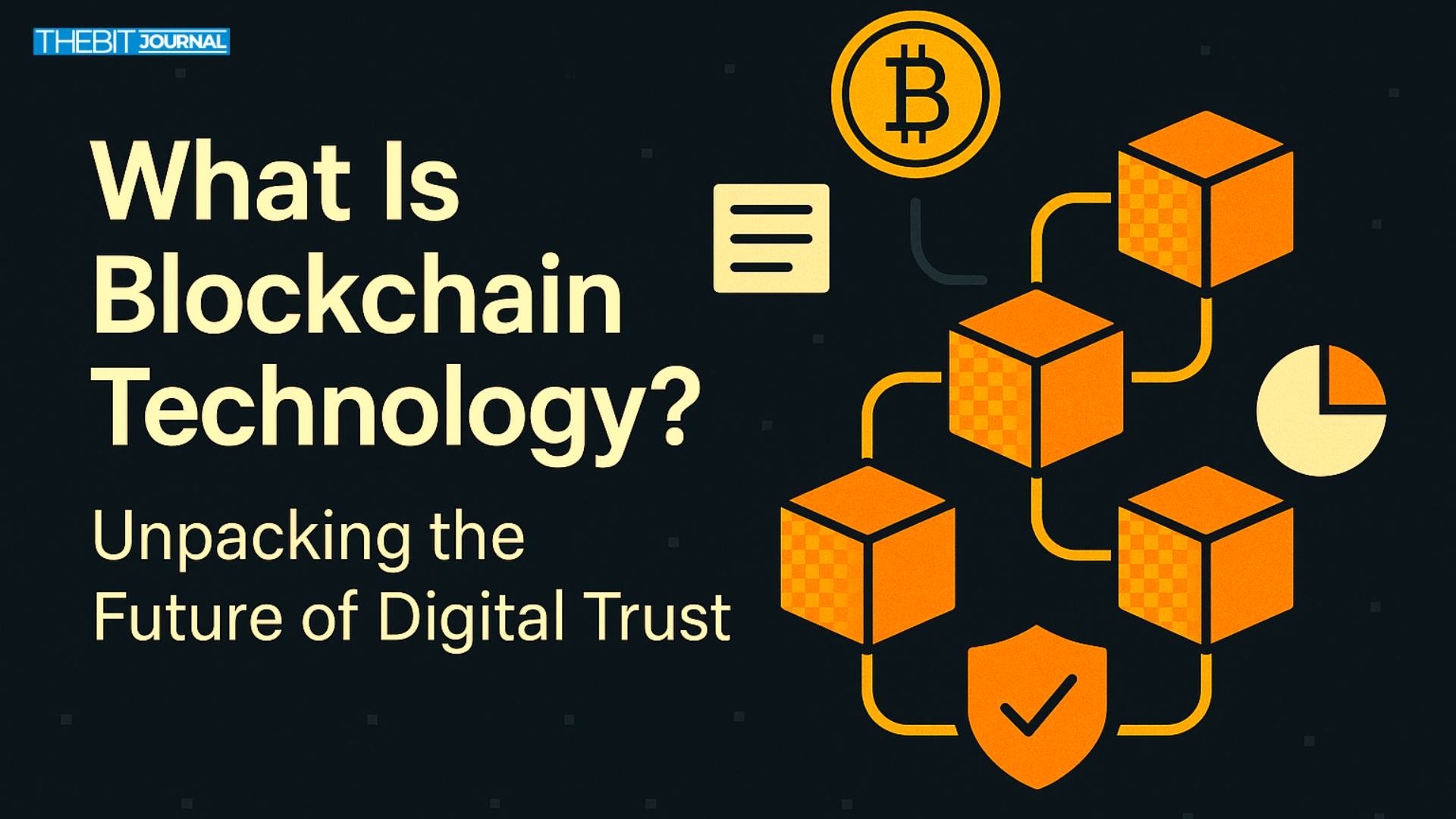
Blockchain is a decentralized, immutable ledger. It stores data over a dispersed network of computers (called nodes), reducing the need for centralized control. Every transaction is organized into a block and connected to the preceding block using cryptographic hashes, resulting in a chronological chain.
According to IBM’s blockchain research, this design assures that once data has been stored, it cannot be changed retroactively without network consensus. This makes fraud practically impossible, providing blockchain its defining characteristics: transparency, security, and decentralization.
Blocks, Chains, and Consensus: Understanding the Building Blocks
Each block consists of three crucial elements: data (such as transaction information), a unique hash (similar to a digital fingerprint), and the preceding block’s hash. When someone attempts to edit any section of a block, the hash changes, breaking the chain. To revalidate the entire chain, one would need to control more than 51% of the network, which is almost impossible in large-scale public blockchains such as Bitcoin or Ethereum.
The consensus process is what keeps the system together. Bitcoin’s Proof-of-Work (PoW) system requires miners to solve challenging mathematical problems in order to validate transactions. Ethereum, on the other hand, switched to Proof-of-Stake (PoS), which selects validators based on their ETH holdings, significantly lowering energy consumption.
Blockchain Applications: Not Just Bitcoin
While Bitcoin popularized blockchain, the technology’s applications have expanded well beyond currency. Blockchain technology provides complete visibility across the supply chain management process. IBM and Maersk created TradeLens, which tracked shipping containers in real time using blockchain, before abandoning the project due to acceptance issues.
Healthcare providers are increasingly using blockchain technology to securely store patient information, assuring privacy and interoperability. Smart contracts in real estate enable digital property transactions to take place without the need for middlemen. Even voting systems are experimenting with blockchain to reduce manipulation and increase transparency.
Key Metrics: Understanding the Indicators That Matter
Investors, engineers, and analysts frequently use numerous metrics to measure the health of blockchain networks:
- Transaction Volume: Transaction volume indicates how busy a Blockchain technology is. According to Etherscan, Ethereum routinely conducts more over one million transactions each day.
- Hash Rate: The hash rate indicates the network’s security. Bitcoin’s hash rate topped 600 EH/s in 2025, indicating significant miner activity.
- TVL (Total Value Locked): TVL (Total Value Locked) is important in DeFi since it indicates how much capital is kept in smart contracts. DeFiLlama estimates that the TVL across chains will approach $140 billion by mid-2025.
- Developer Activity: The volume of contributions, pull requests, and forks on GitHub indicates network innovation. According to Electric Capital, Solana and Polkadot were two of the fastest-growing ecosystems in 2024 and 2025.
Risks and Regulatory Realities
Blockchain technology is not without danger. Smart contract vulnerabilities, bridge exploits, and rug pulls have resulted in billions in damages. Furthermore, regulatory ambiguity causes friction in adoption. The SEC’s investigation into token categorization, Europe’s MiCA laws, and the FATF’s travel restrictions are all redefining how projects operate worldwide.
However, this examination provides validity. As governments move toward regulation, institutional acceptance increases. According to a recent Chainalysis research, institutional investors accounted for 45% of cryptocurrency transaction volume in 2024.
Analysts Weigh In: What Social Media Is Saying
Blockchain discussions are thriving on Reddit, Discord, and X (formerly Twitter). Solana, in particular, has received more attention when engineers demonstrated a 0.4-second block finality enhancement in July 2025. “Solana’s on-chain speed feels like using the internet in 1999 versus 2025,” one developer said at a Hacker House event. This view has sparked increased interest in Solana’s scalability compared to Ethereum.
Conclusion: Why Blockchain is the Future of Digital Infrastructure
Blockchain is a long-lasting breakthrough. As established institutions merge with decentralized frameworks, the demand for safe, trustworthy, and transparent solutions grows. Whether it’s financial independence, data sovereignty, or digital identity, Blockchain technology is shaping a future of responsibility.
“This post is intended for informative purposes only and does not provide financial advice. Readers should do their own research before making any investing decisions.
Frequently Asked Questions (FAQs)
1. What is blockchain technology in simple terms? Blockchain is a digital system that records transactions across many computers, ensuring data can’t be changed without everyone knowing.
2. How secure is blockchain? Blockchain is extremely secure due to cryptography and decentralization. However, vulnerabilities can exist in apps built on top of blockchains.
3. Can blockchain be used outside of crypto? Yes, it’s used in logistics, healthcare, voting, and more. Its transparency and security make it ideal for many industries.
4. What are the downsides of blockchain? High energy usage (in PoW), scalability issues, and lack of regulatory clarity are common concerns.
5. How is blockchain regulated? It varies by region. In the U.S., the SEC and CFTC play key roles. In Europe, MiCA sets the standard.
Glossary of Key Terms
Blockchain: A digital ledger where data is recorded in blocks linked in chronological order.
Proof-of-Work (PoW): A consensus algorithm that requires computational effort to validate transactions.
Proof-of-Stake (PoS): A consensus mechanism that selects validators based on their token holdings.
Smart Contracts: Self-executing contracts with terms written in code.
TVL (Total Value Locked): The total amount of assets staked in DeFi protocols.
Hash Rate: A measure of computing power used to secure blockchain networks.
Sources/References