




Power flows differently on blockchains, and people can feel it. In DAOs in Web3, communities set rules in code, vote in the open, and move funds with transparent execution. The result is a new way to coordinate work at an internet scale. A decentralized autonomous organization uses smart contracts to manage proposals, budgets, and permissions. Members hold tokens or credentials that grant voting power and access.
Every key action is auditable on chain, which builds trust without long emails or backroom meetings. This guide explains the core ideas behind DAOs In Web3 in a simple voice. It covers how DAOs work in Web3, which decentralized governance models exist, where DAOs beat traditional structures, and what risks to expect today.
How DAOs Work In Web3
A DAO runs on three building blocks. First, smart contracts store rules for membership, proposals, and treasuries. Second, tokens or nontransferable credentials represent voting rights and roles. Third, off-chain tools handle discussion, drafting, and contributor onboarding.
Members create proposals inside the DAO app. A proposal might hire a contributor, launch a product, or allocate a grant. Voting periods and quorum thresholds prevent rushed decisions. Execution flows directly from the proposal to the chain, which keeps outcomes consistent and visible.
Most DAOs use multisig wallets for higher-value moves. A multisig requires several signers to approve a transaction before funds leave the treasury. It is a human check that complements on chain automation and reduces mistakes when the stakes are high.
Decentralized Governance Models
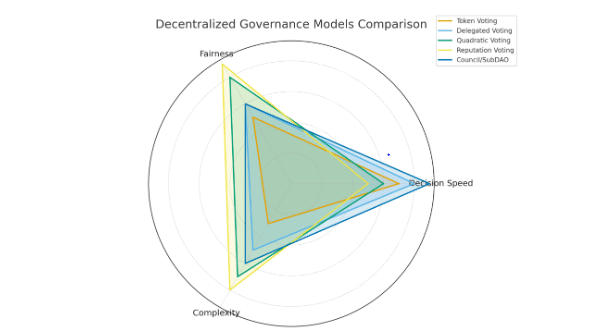
Not every DAO looks the same. The right governance model depends on size, mission, and risk tolerance. Below are common decentralized governance models used today.
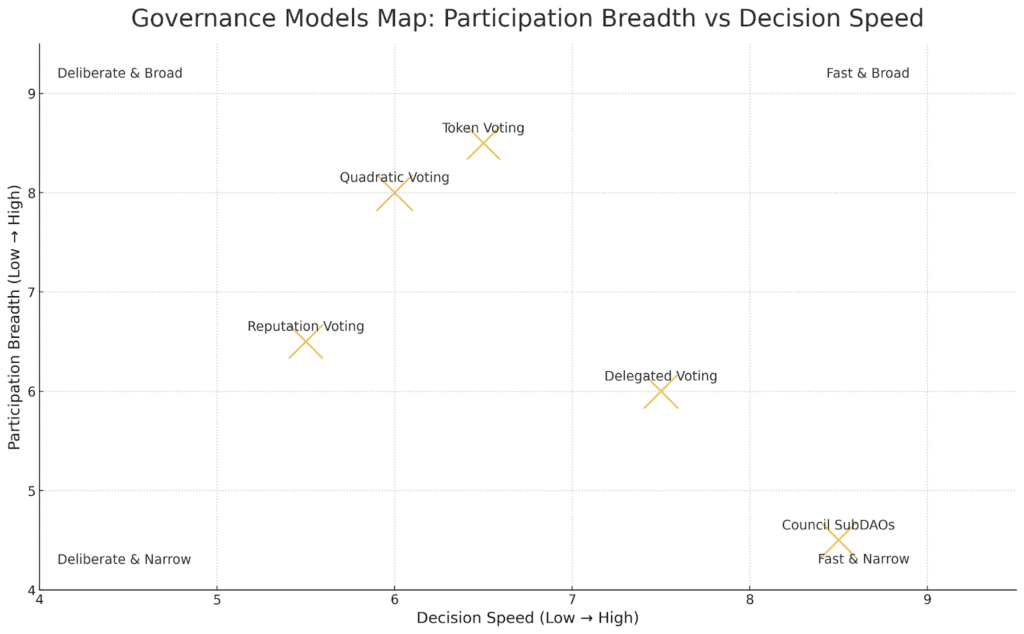
Token Voting: Holders vote in proportion to tokens held. It is simple, liquid, and fast. It can also concentrate power among whales.
Delegated Voting: Holders assign votes to trusted delegates who study proposals full-time. Delegated voting boosts participation and brings expertise into daily decisions.
Quadratic Voting: Votes scale with the square root of tokens used. It reduces the impact of large holders and helps surface broad support.
Reputation or Soulbound Voting: Nontransferable credentials reflect work history and verified contributions. Reputation voting values effort over wealth and reduces vote buying.
Council or SubDAO Model: Elected councils run specific scopes like treasury, product, or grants. SubDAOs move faster and focus deeper while the main DAO sets strategy.
Each model trades speed, fairness, and complexity. Teams often blend models to fit real-world needs and the stage of growth.
DAO Vs Traditional Organizations
Both aim to coordinate people and capital, yet they differ across control, transparency, and speed. The table below compares common traits.
| Dimension | DAO | Traditional Organization |
| Legal Form | May use a foundation, LLC, or association. Some operate as a protocol community. | Usually a corporation or nonprofit with fixed jurisdiction. |
| Control | Token holders or credentialed members vote on proposals. | Executives and boards make decisions with limited shareholder votes. |
| Treasury | On chain, transparent, and governed by smart contracts. | Bank accounts controlled by management and finance teams. |
| Access | Open by default with permissioned roles for security. | Hires and invites control access with HR and legal processes. |
| Speed | Faster funding for small grants and bounties. Slower for complex, high-risk calls. | Predictable timelines with top-down directives, faster on urgent calls. |
| Incentives | Tokens, stablecoins, and on-chain rewards tied to outcomes. | Salaries, bonuses, and equity with longer vesting and more paperwork. |
| Audits | Activity visible on the chain and in public forums. | Activity recorded in internal systems and audits, not always public. |
| Global Reach | Borderless membership and 24/7 coordination across time zones. | Offices and regional entities set limits and add friction. |
Benefits Of Decentralized Autonomous Organizations
DAOs offer benefits that align with how the internet already works. The points below focus on outcomes rather than hype.
Open Participation
DAOs make it possible for anyone to contribute without needing approval from a manager or insider. People can submit ideas, complete tasks, or earn credentials based on merit rather than connections. This openness attracts global talent, encourages creativity, and helps communities grow faster than traditional organizations.
Aligned Incentives
Members of a DAO earn tokens or on-chain rewards when they contribute value to the project. These rewards give contributors real ownership and a share in the DAO’s success. When people earn based on output instead of job titles, motivation increases and results improve.
Transparent Decisions
Every vote, budget allocation, and payout is recorded on the blockchain, where anyone can verify it. This transparency reduces hidden agendas, political behavior, and mistrust inside the organization. Members know how decisions are made and where funds are going, which creates accountability.
Composability
DAOs can easily connect with DeFi platforms, identity tools, analytics dashboards, and other smart contract systems. These integrations allow money, roles, and data to flow across apps like building blocks. Because everything runs on open standards, DAOs can expand their capabilities without rebuilding from scratch.
Rapid Funding Loops
DAO treasuries can approve small grants or bounties within days instead of weeks or months. This speed lets members test ideas, ship prototypes, and reward contributors with minimal friction. Successful experiments lead to bigger funding, creating a cycle of innovation and growth.
Risks, Constraints, And Tradeoffs
Every structure carries risk. DAOs reduce some risks and introduce new ones. Teams should plan for the following points.
- Voter Apathy. Many holders do not vote, which can stall progress. Delegation and incentives help, but they require constant care.
- Whale Influence. Token voting can grant outsized power to large holders. Quadratic or reputation systems reduce this effect but add complexity.
- Legal Uncertainty. Rules differ by country and change over time. Some DAOs wrap in legal entities to manage custody, taxes, and contracts.
- Security And Upgrades. Smart contracts can contain bugs. Timelocks, audits, and emergency guardians help reduce damage from mistakes.
- Coordination Overhead. Open forums can flood with ideas. Strong scopes, clear templates, and steady moderators keep work moving forward.
A healthy DAO treats these as design constraints, not deal breakers, and adjusts over time.
Real Use Cases Today
DAOs already run products and programs at scale. The list below highlights common patterns with clear value.
DeFi Protocol Governance
In decentralized finance, DAOs allow token holders to decide protocol fees, liquidity incentives, and risk controls. Members vote on proposals that shape lending rates, insurance funds, or staking rewards. Treasury funds are also used to pay for audits, partnerships, and technical upgrades, making governance both transparent and functional.
Grants And Public Goods
Many DAOs exist to support research, education, open-source tools, or climate and social initiatives. They distribute funds using proposals or quadratic funding rounds, where community members vote using tokens or reputation. This model ensures that resources go to projects that serve broad community needs, not just individual interests.
Creator And Gaming Communities
In Web3 gaming and creator economies, DAOs let players, artists, and fans co-own assets and decisions. Members can vote on tournament rules, storyline updates, prize pools, or content budgets. This shared ownership strengthens loyalty and makes communities feel like stakeholders, not just users or consumers.
Collectors And Investment Clubs
Collector DAOs pool funds to buy NFTs, rare art, domain names, or even startup equity. Rules are written in smart contracts, while multisig wallets and legal agreements protect the group’s funds. Every decision—from buying assets to selling them—is voted on by members, which keeps the process fair and transparent.
Regional And Cause DAOs
Some DAOs form around real-world communities, cities, or social causes. They fund local events, hackathons, educational workshops, or humanitarian campaigns. By bridging digital communities with real locations, these DAOs bring Web3 participation into everyday life.
Building Or Joining A DAO: A Practical Path
Readers often ask where to start. The steps below offer a simple path that works for many teams.
- Define Mission And Scope. Start with a clear problem and a narrow scope. Scope keeps proposals focused and budgets realistic.
- Pick A Governance Model. Choose token voting with delegation for a fast start. Add reputation or councils as the group grows.
- Set Up Treasury And Tools. Use a multisig for safety and a DAO app for proposals. Add a forum, chat, docs, and a public roadmap.
- Design Roles And Rewards. Write short job templates with budgets and timeframes. Use bounties for small tasks and grants for larger work.
- Ship In Small Loops. Fund small experiments, measure results, and iterate. On-chain transparency builds confidence one win at a time.
Governance Mechanics That Actually Work
Governance gets messy without structure. The mechanics below keep decisions clear and time-bound.
Proposal Templates
A clear proposal template helps a DAO stay structured and efficient. Each proposal should include the problem being solved, the goals, the budget needed, the timeline, milestones, and success metrics. When every proposal follows the same format, members spend less time trying to interpret it and more time making decisions. This reduces confusion and speeds up the review process.
Quorum And Thresholds
Quorum ensures that decisions are made with enough voter participation. Without it, a small group could pass major changes that affect everyone. Thresholds define how many votes are required to approve a proposal. These limits should match the risk level and scope of the decision to keep governance secure and fair.
Timelocks And Reviews
Timelocks add a waiting period before a proposal is executed on the chain. This pause gives members time to react, review, or stop harmful actions. Reviews, often scheduled quarterly, help evaluate core parameters, budgets, and goals to keep the DAO aligned and adaptable over time.
Conflict Rules
DAOs work best when members act transparently. Conflict rules require contributors to disclose personal interests that could affect decisions. By making potential biases visible, DAOs can maintain trust and resolve disputes before they damage the community.
Token Design And Participation
Tokens can help or hurt participation. Design choices should serve the mission, not the price chart.
Utility And Access. Tokens can unlock proposal rights, working groups, or product features. Utility builds durable demand.
Emission And Vesting. Distribute tokens for work, not only capital. Use vesting and cliffs to reward long-term contributions.
Nontransferable Credentials. Add soulbound or reputation badges for verified work. Blend them with token voting to balance wealth and effort.
The right mix brings builders to the table and keeps them there.
Compliance And The Real World
DAOs operate in real jurisdictions with real requirements. Teams should map the legal basics early.
Entity Wrappers
Many DAOs operate using legal structures such as foundations, LLCs, or associations. These entities can handle payroll, sign contracts, distribute grants, and manage off-chain responsibilities. By using a legal wrapper, contributors protect themselves from personal liability while allowing the DAO to interact with traditional systems like banks and governments.
Tax And Reporting
DAO treasuries often generate taxable events when they distribute funds, trade tokens, or make investments. To stay compliant, budgets, payouts, and token valuations should be tracked in a simple but accurate ledger. Good bookkeeping prevents legal issues and makes financial reporting easier for contributors and regulators.
KYC For Specific Programs
Not every DAO needs identity checks, but some grants, partnerships, or regulatory jurisdictions require Know Your Customer (KYC) verification. In these cases, DAOs use trusted third-party providers to verify identities securely. Sensitive data should be kept off-chain to protect privacy while still meeting legal requirements.
The Future Of DAOs In Blockchain
The future of DAOs in blockchain looks more practical and less experimental. The strongest DAOs will feel like well-run internet cooperatives that ship products on schedule.
Expect more delegated voting with professional stewards and clearer scopes. Expect blended voting that weights reputation and reduces whale impact. Expect treasury management to look like simple on-chain ETFs with risk controls and audits.
As tooling matures, DAOs in Web3 will fade into the background. Users will interact with products that are governed by DAOs, not with DAOs themselves, which reflects real adoption.
Governance Models And Best Fit
Use this simple matrix to pick a starting model.
| Model | Best For | Strength | Watch Out For |
| Token Voting | Early growth and broad access | Simple and fast to launch | Whale dominance |
| Delegated Voting | Large token bases with low turnout | Expertise and higher participation | Delegate capture |
| Quadratic Voting | Grants and public goods | Broad community signal | Sybil resistance |
| Reputation Voting | Work-driven communities | Rewards proven contributors | Harder to bootstrap |
| Council SubDAOs | Complex products with many scopes | Speed and accountability | Coordination overhead |
Conclusion
DAOs replace opaque gatekeeping with programmable rules and public ledgers that turn coordination into an auditable workflow, allowing communities to propose, budget, and execute with fewer bottlenecks while maintaining accountability at each step, provided they choose governance that matches their risk, establish clear thresholds and reviews, and prioritize process over charisma or momentary market noise.
The promising curve from here is disciplined rather than theatrical, as professional stewards, blended reputation and token voting, conservative treasuries, and friendlier applications make governance feel boring in the best way, while legal wrappers, basic tax hygiene, and selective off-chain checks ground operations, so teams can start small, compound wins, and let consistent delivery build trust.
Frequently Asked Questions About DAOs in WEB3
How Do DAOs Work In Web3?
DAOs use smart contracts to manage proposals, votes, and funds. Members vote, and the contract execution results on the chain.
Which Decentralized Governance Models Are Most Common?
Token voting, delegated voting, quadratic voting, and reputation voting are common. Many DAOs blend these models over time.
What Are The Benefits Of Decentralized Autonomous Organizations?
They offer open participation, aligned incentives, transparent decisions, and quick funding loops. These traits fit internet-scale work.
How Should A Team Compare DAO Vs Traditional Organizations?
Compare control, treasury, transparency, and speed. DAOs excel at openness and on-chain coordination. Companies excel at legal clarity and urgent calls.
What Is The Future Of DAOs In Blockchain?
Expect professional delegates, blended voting with reputation, better treasury tools, and smoother user experiences across products.
Glossary
- DAO. A decentralized autonomous organization that runs on smart contracts and member votes.
- Smart Contract. Code on a blockchain that holds funds and enforces rules automatically.
- Multisig. A wallet that needs several approvals before sending funds.
- Token Voting. A system where voting power matches tokens held by a member.
- Delegation. Assigning voting power to a trusted representative for a period of time.
- Quadratic Voting. A method that reduces whale influence by using square root weighting.
- Reputation Badge. A nontransferable credential that reflects verified work history.
- Quorum. The minimum participation needed for a valid vote.
- Timelock. A delay before a passed proposal executes on the chain.
- SubDAO. A smaller DAO unit focused on a specific scope, such as grants or product.
Summary
This article explains DAOs in Web3 in plain language for a general audience. It defines what DAOs are, how DAOs work in Web3, and which decentralized governance models operate in practice. It compares DAO vs traditional organizations in a clear table and outlines the benefits of decentralized autonomous organizations along with key risks like voter apathy, whale influence, and legal uncertainty. It offers a practical path to start a DAO, suggests governance mechanics that prevent confusion, and covers token design choices that drive healthy participation. The piece closes with a realistic view on the future of DAOs in blockchain and a short glossary and FAQ for quick reference.