





The New Frontier of Finance That Everyone’s Talking About
In recent years, decentralized finance, or DeFi, has shifted from a niche concept into a multibillion-dollar ecosystem. At the heart of this movement lies a powerful strategy known as Yield Farming in DeFi, which has captured the imagination of traders, blockchain developers, and everyday investors alike. This method of earning returns is often called the “crypto version of high-yield savings,” though the risks and rewards run far deeper.
Yield Farming Explained: Beyond the Buzzwords
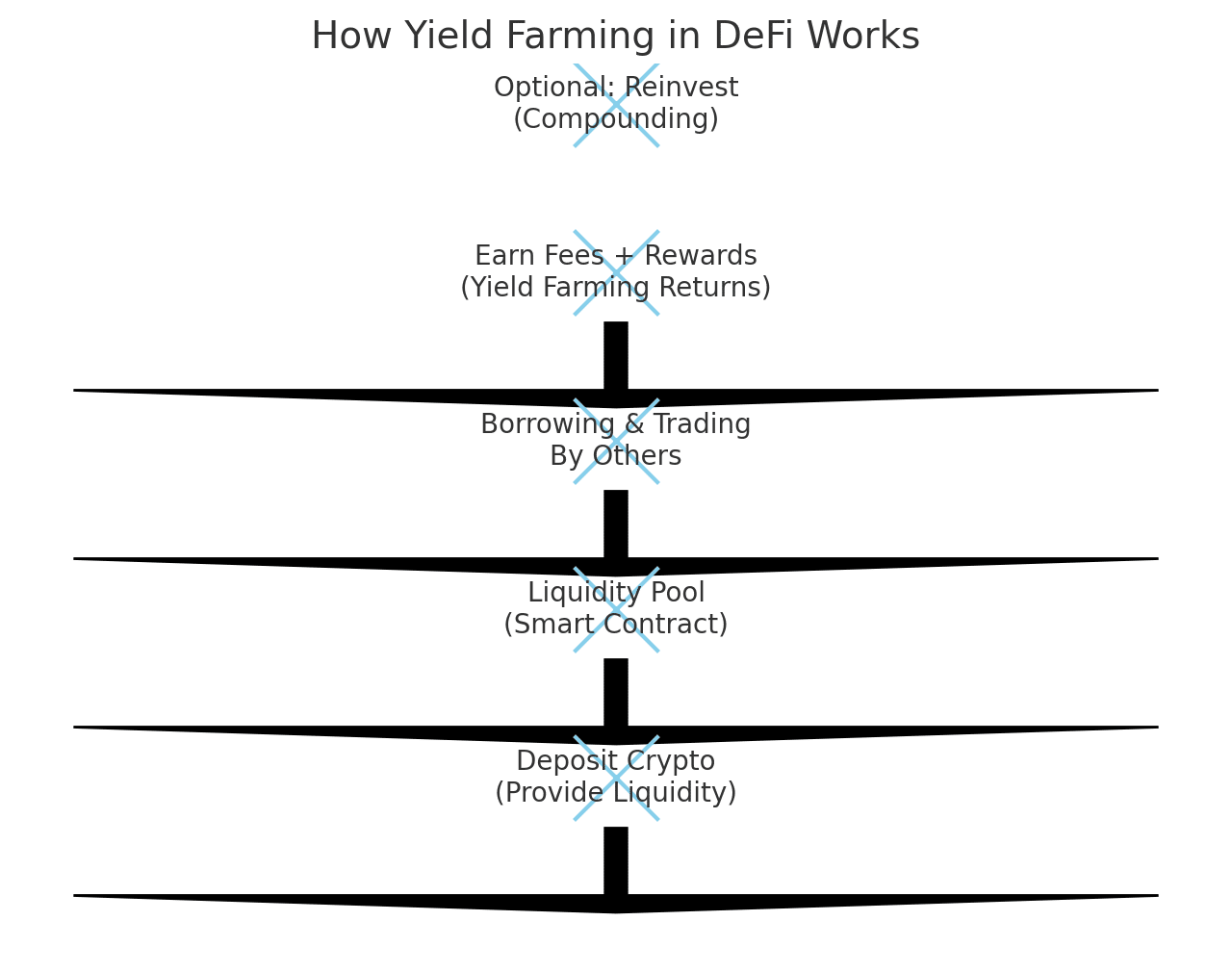
Yield farming is the practice of lending or staking cryptocurrency in decentralized protocols to earn rewards. Unlike traditional banks that lend deposits at low interest, DeFi platforms use smart contracts to create automated liquidity markets. When users lock their tokens into these contracts, they provide liquidity that fuels trading, borrowing, and lending on decentralized exchanges.
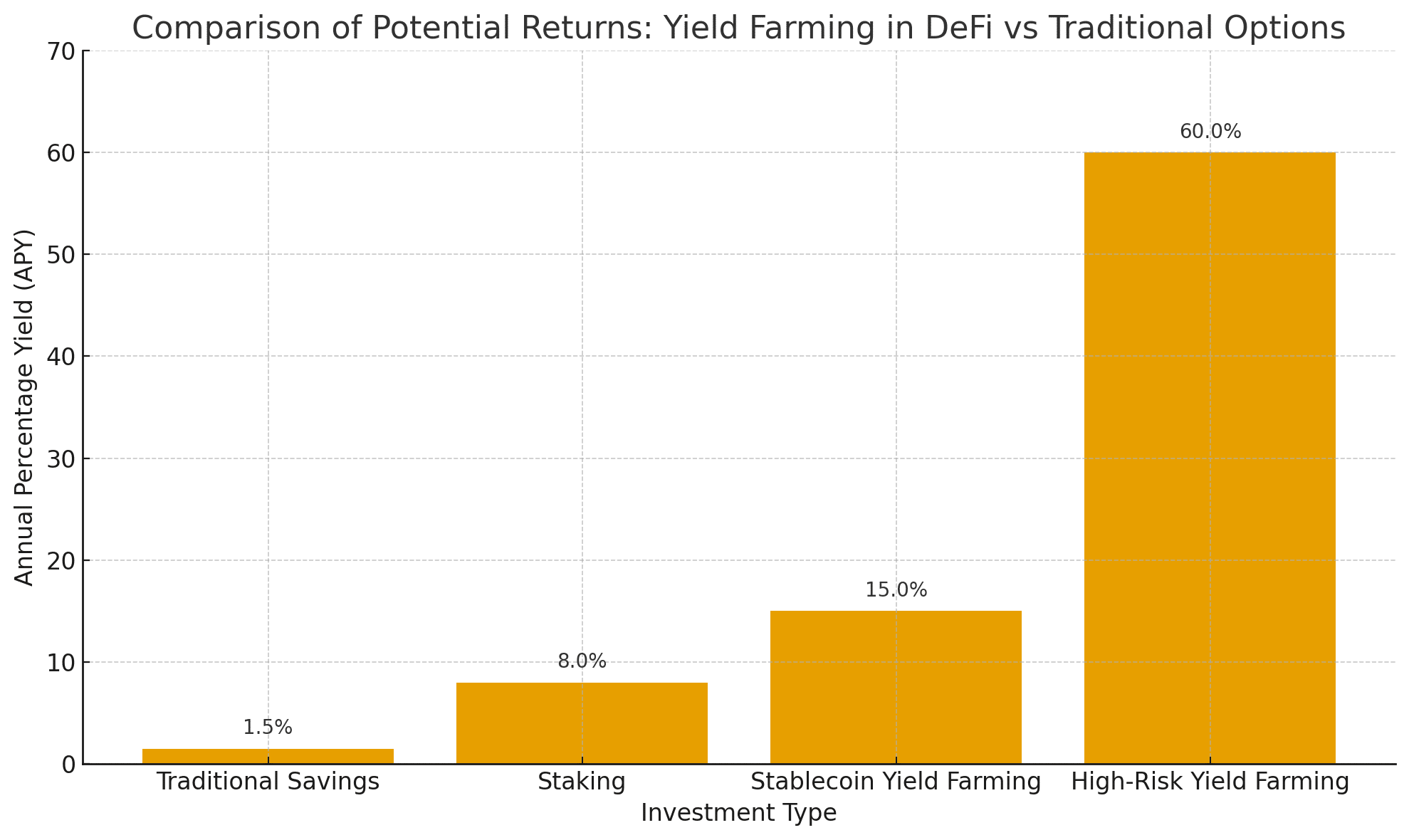
In return, yield farmers receive incentives, typically in the form of additional crypto tokens. These rewards can sometimes surpass double-digit or even triple-digit annual percentage yields (APY). According to research from Messari, some DeFi platforms at their peak offered over 200% APY, though such figures rarely remain sustainable.
Why Yield Farming Became the Darling of DeFi
The growth of yield farming is closely tied to the rise of liquidity pools, automated market makers, and decentralized exchanges (DEXs). By encouraging users to lock tokens, platforms eliminate the need for centralized intermediaries. This innovation opened the door to a new financial model where investors could put their idle assets to work.
The excitement grew in 2020, during the so-called “DeFi Summer,” when total value locked (TVL) in DeFi protocols surged from under $1 billion to over $15 billion, according to data from DeFi Pulse. That explosive growth cemented yield farming as a cornerstone of decentralized finance.
How Does Yield Farming Work in Practice?
To understand the mechanics, consider a simplified example. A user deposits stablecoins into a DeFi protocol. These funds are pooled with thousands of others, forming liquidity for borrowers or traders. Smart contracts automatically manage the lending process, eliminating banks or brokers.
In exchange, the depositor earns interest plus bonus tokens distributed by the platform. Those bonus tokens may themselves rise in value, creating an additional layer of returns. Some investors even reinvest those rewards back into new pools, a process called “compounding,” which can magnify gains over time.
The Allure of Passive Income
Yield farming appeals to those chasing passive income opportunities outside the stock market. Financial analysts often compare it to dividend investing or real estate rentals, where money generates money without constant effort. In DeFi, the attraction is speed. Rewards accrue by the block, sometimes distributed every few minutes, not quarterly like dividends.
Blockchain developers highlight that such systems also empower users in regions with limited access to banking. By connecting to the internet and a digital wallet, anyone can participate. This global inclusivity adds to the allure of yield farming as part of a financial revolution.
Risks Every Investor Must Weigh
Despite the appeal, Yield Farming in DeFi is not without significant risks. Smart contract vulnerabilities can expose funds to hacks, which have already drained billions from the ecosystem, according to Chainalysis. Token prices also swing wildly, meaning that rewards might lose value before they can be cashed out.
Another challenge is “impermanent loss,” a phenomenon unique to liquidity pools. If token prices move significantly while funds are locked, farmers may end up with fewer valuable assets than if they had simply held them. Regulatory uncertainty adds another layer of concern, as governments continue to debate how decentralized lending should be governed under financial laws.
As the Financial Stability Board noted in its 2023 report, the interconnectedness of DeFi protocols could pose systemic risks if not properly regulated. Such warnings underscore the need for caution and thorough research.
Getting Started Without Getting Burned
For newcomers, diving into yield farming can feel intimidating. Analysts recommend starting with stablecoin-based pools, as these reduce exposure to crypto price swings. Reading audits of protocols before depositing funds is also critical. Blockchain explorers and analytics platforms can help track liquidity, trading volumes, and token distribution to ensure transparency.
Experts stress the importance of diversification. Rather than placing all funds into one pool, investors can spread exposure across different protocols to reduce risk. And perhaps most importantly, participants should never invest money they cannot afford to lose.
Real-World Examples of Yield Farming Impact
Case studies show how yield farming has reshaped decentralized markets. On-chain data reveals that liquidity incentives have directly fueled the rise of decentralized exchanges, some of which now rival centralized platforms in daily volume.
In regions with inflationary currencies, stablecoin yield farming has offered locals a way to preserve value. Academic studies from institutions like the Cambridge Centre for Alternative Finance note how DeFi solutions can bridge gaps in underbanked economies. This illustrates the potential of yield farming as both a profit-generating tool and a financial lifeline.
The Future of Yield Farming in DeFi
Looking forward, experts predict yield farming will evolve through better security, regulated DeFi platforms, and integration with traditional finance. The growing interest of institutional investors signals a future where banks and funds might one day adopt similar mechanisms. Tokenized assets, from real estate to government bonds, could further expand opportunities for decentralized yield strategies.
At the same time, regulators worldwide are sharpening oversight. The European Union’s MiCA framework and the U.S. SEC actions highlight the tension between innovation and investor protection. The outcome will determine how yield farming scales in coming years.
Conclusion: Opportunity with Caution
Yield Farming in DeFi represents one of the most innovative ways to generate returns in the digital economy. It merges financial creativity with blockchain efficiency, offering passive income opportunities previously unimaginable.
Yet, with high returns come high risks. The story of yield farming is not just about quick profits but about the long-term reshaping of global finance. Those who step into this frontier must do so with open eyes, informed strategies, and a willingness to adapt.
Disclaimer
This article is for informational purposes only and does not constitute financial advice. Readers should conduct their own research before making investment decisions.
Glossary of Terms
Yield Farming: A DeFi strategy of staking or lending crypto to earn rewards.
Liquidity Pool: A pool of tokens locked in a smart contract for trading and lending.
APY (Annual Percentage Yield): The real rate of return on an investment, accounting for compounding.
Impermanent Loss: Loss that occurs when the price of tokens in a liquidity pool changes during participation.
Smart Contract: Self-executing code on the blockchain that automates transactions.
Stablecoin: A cryptocurrency pegged to stable assets like the U.S. dollar.
Total Value Locked (TVL): The total amount of assets deposited in DeFi protocols.
Frequently Asked Questions
1. What is Yield Farming in DeFi?
It is the practice of locking or lending crypto assets in decentralized protocols to earn rewards and incentives.
2. Is yield farming safe?
No. It carries risks such as smart contract hacks, impermanent loss, and regulatory uncertainty.
3. How much can someone earn from yield farming?
Earnings vary widely. Some pools offer double-digit APY, but rates fluctuate and high returns often carry higher risk.
4. What is the difference between staking and yield farming?
Staking secures a network by locking tokens, while yield farming provides liquidity to earn additional rewards.
5. Do beginners need technical skills to yield farm?
Not necessarily. However, understanding wallets, protocols, and risks is essential before participating.