





This article was first published on The Bit Journal.
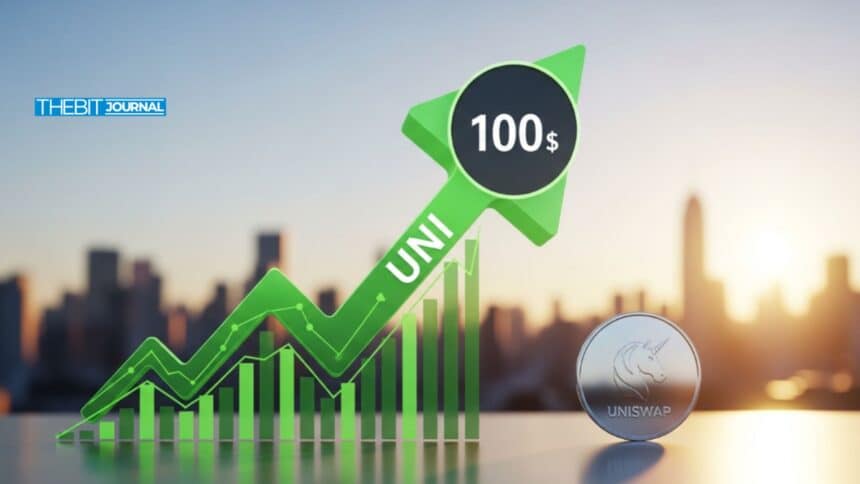
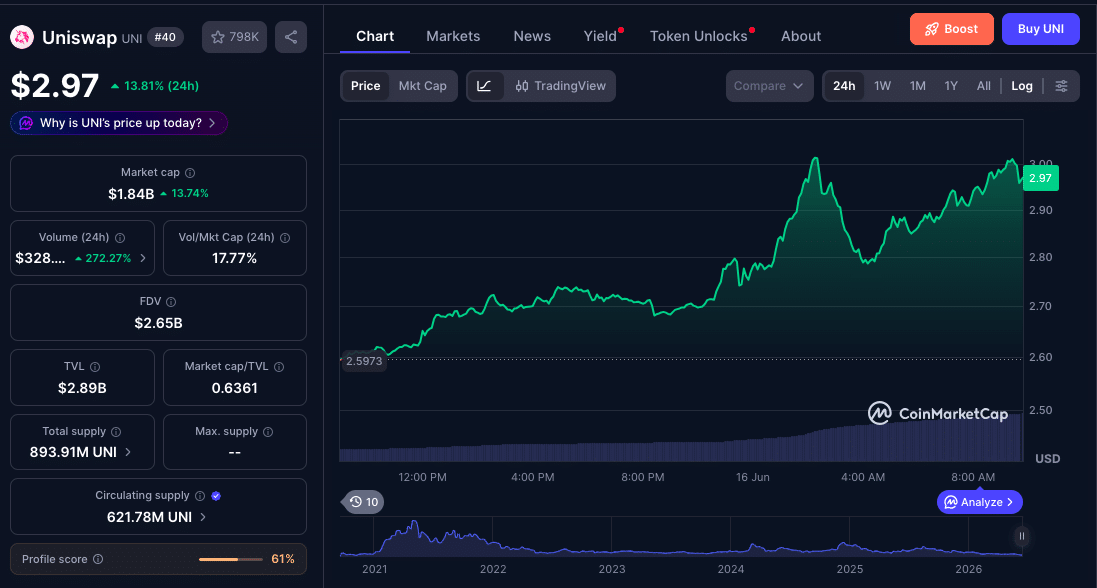
A brand new forecast from Standard Chartered has thrown Uniswap into an optimistic long term prediction. UNI price prediction from the bank is that UNI, Uniswap’s native token, could rise from around $2.70 right now to about $100 by the end of 2030. That is a gain of almost 40 times what it is today.
Standard Chartered’s digital assets team genuinely believes that the next way forward for crypto will come from tokenized real-world assets slowly making their way onto public blockchains and into DeFi apps, and Uniswap is perfectly placed to be right in the middle of all that.
Why Standard Chartered Is Bullish on UNI
According to the bank, the value of tokenized assets on public blockchains is going to go from around $340 billion today to a massive $4 trillion by the end of 2028. Also, the percentage of those assets actually getting used in DeFi is going to leap from 3.5% to 30% by 2030.
When combined with the growth of crypto-native assets, Standard Chartered estimated that the total value locked across DeFi is going to reach $2.7 trillion by the end of the decade, which is roughly 37 times bigger than current levels .
Geoff Kendrick, Standard Chartered’s head of digital assets research, believes that the expansion would increase the volume of assets available for trading on decentralized exchanges such as Uniswap.
The bank’s forecast for the price of UNI goes like this
| Year | Standard Chartered Forecast |
| End of 2026 | $6.50 |
| End of 2027 | $20 |
| End of 2028 | $40 |
| End of 2029 | $65 |
| End of 2030 | $100 |
The Bank also expects UNI to outperform both Bitcoin and Ethereum over that period.

Uniswap’s New Tokenomics Strengthen the Bull Case
The optimistic UNI Price prediction is tied to major changes in Uniswap’s economic model.
For years, swap fees generated were going entirely to liquidity providers but with the rollout of the UNIfication upgrade, that all changed. This has introduced protocol-level fee collection and a token burn mechanism.
Since activating the fee switch, Uniswap has generated approximately $21 million in protocol fees and they have also burned around 5 million UNI tokens, an annualized burn rate of nearly 1%.
Supply has really contracted.
A one off burn of 100 million UNI combined with the ongoing burns, has seen the total token supply shrink from 1 billion to 895 million. Circulating supply is now down to around 622 million UNI.
Just this month, the protocol got rid of its largest daily burn on record, removing 134,000 UNI from circulation in a single day, through the UNIfication.
Why Uniswap Stands Out From the Crowd
Standard Chartered compared Uniswap’s Business model with Coinbase.
The bank described Uniswap as similar to YouTube, where users create and supply the content in this case, liquidity pools. Coinbase, meanwhile, was compared to Netflix because it manages and operates its own infrastructure.
That makes a big difference because Uniswap requires way less capital to run. users are the ones providing liquidity rather than the protocol itself and that allows the platform to scale without the same infrastructure costs as a centralized exchange.
The Bank thinks this structure is going to become more valuable as more real world assets (ie, stocks bonds etc) start getting tokenized and moved onto the blockchain.
What Could Stop UNI Reaching $100?
While the Uni price prediction is bullish, Standard Chartered have also highlighted a few risks.
Specialized decentralized exchanges could create products that are better suited to specific market segments. There’s also the real chance that competition for tokenized asset trading is going to get more intense as more DeFi protocols come into the space.
The bank also noted that the Uniswap V4 hook system hasn’t been properly tested yet at the scale assumed in its long-term forecasts. Additionally, success in tokenized assets will likely require deeper partnerships with traditional financial institutions.
Regulation is always a variable but Standard Chartered predicts that the future US regulatory frameworks and more guidance from the Securities and Exchange Commission could encourage participants to get on board with DeFi.
Conclusion
The latest Uni price prediction from Standard Chartered shows just how seriously they take DeFi. They predict that it is going to be a huge part of the global markets by 2030.
With tokenized assets projected to reach $4 trillion, DeFi assets potentially growing to $2.7 trillion and UNI supply continuing to decline, the bank sees Uniswap as one of the strongest long term beneficiaries of on-chain finance.
Glossary
UNI: Uniswap’s governance token.
DeFi: Decentralized finance applications that operate on blockchain networks without traditional intermediaries.
Token Burn: when tokens get permanently removed from the system to keep the supply under control.
Tokenized Assets: Traditional financial assets represented digitally on a blockchain.
Total Value Locked (TVL): The total value of assets deposited within decentralized finance protocols.
Frequently Asked Questions About UNI Price Prediction
What is Standard Chartered’s UNI price prediction for 2030?
Standard Chartered predicts UNI could hit $100 by the end of 2030.
Why does the bank think UNI will go up ?
The bank’s forecast is based on a few things: growth in tokenized assets, DeFi starting to take off and Uniswap’s token burn model.
How many UNI tokens have been taken out of circulation ?
About 5 million UNI have been taken out through the fee mechanism at Uniswap, and then there was a one off burn that removed 100 million UNI from the supply.
How big do Standard Chartered think Uniswap’s DeFi opportunities are ?
Standard Chartered reckon there could be a whopping $2.7 trillion locked up in DeFi by 2030 – thats a pretty big number.
References