



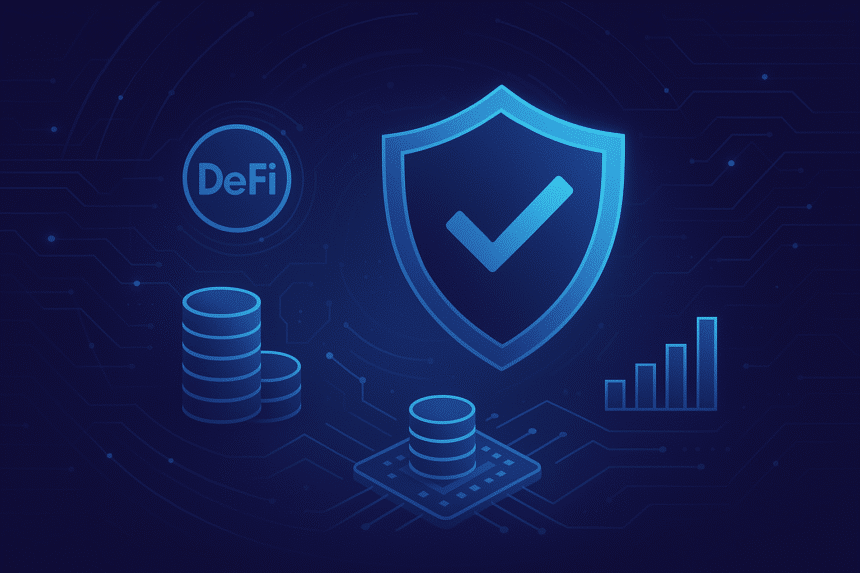

Decentralized Finance, or DeFi, has gone through many stages. In the beginning, DeFi 1.0 was simple lending and borrowing platforms. Later, DeFi 2.0 tried to solve liquidity problems with new token models. But both versions still had big risks. People lost money in hacks, scams, and market crashes.
DeFi 3.0 is now seen as the next step. It is not only about giving high returns but also about making sure those returns are safer. At the center of this new stage are risk-managed yield aggregators. These platforms want to balance rewards with protection, so users can grow their crypto without always worrying about sudden losses.
The idea is simple. Instead of users managing many DeFi apps by themselves, the aggregator does the work. But unlike old systems, DeFi 3.0 puts more focus on safety. It tries to lower risk while still keeping rewards attractive.
Understanding Yield Aggregators in DeFi
A yield aggregator is a tool that collects funds from many users and then spreads them across different yield farming or lending opportunities. The goal is to maximize profits automatically. The user does not have to check every protocol or move funds around every day. The smart contracts do it.
In DeFi 1.0 and 2.0, yield aggregators were very popular. They offered auto-compounding, which means profits earned were put back again to earn more profits. But these aggregators had a weakness. They only cared about higher returns. They did not think much about risk. If one protocol failed or got hacked, users lost their funds.
So while yield aggregators made life easy, they also created danger. It was like putting money in a basket that promised fast growth but did not check if the basket had holes. This is where DeFi 3.0 changes the game.
Why Traditional Yield Farming Has Risks
Traditional yield farming may look exciting, but it comes with many hidden risks. The first one is volatility. Crypto markets change in seconds. A small drop in price can erase profits quickly.
The second risk is smart contract hacks. Since yield farming depends fully on code, any bug in the code can be used by hackers to steal funds. Many such cases have happened, with millions lost in a single day.
Another common issue is impermanent loss. When users provide liquidity to pools, price changes between the two tokens can make them end up with less value than they started. This is confusing for many new users and often creates unexpected losses.
There are also scams, often called rug pulls. A project may look strong but suddenly disappear with all the locked funds. This was one of the biggest problems in DeFi 2.0 and made many users afraid.
All these risks showed that DeFi needed a new version. A system that gives returns but does not ignore safety. That is why DeFi 3.0 and risk-managed yield aggregators became the next natural step.
The Rise of DeFi 3.0
DeFi 3.0 is not about making promises of the biggest yield. It is about building trust with balanced returns and strong risk controls. The goal is to let people earn but also sleep well at night.
This new stage started because too many people were burned in older DeFi projects. Losses from hacks, bad token designs, and unstable pools made the community ask for better solutions. Risk-managed yield aggregators became the answer. They take the best of yield farming but add protection layers.
DeFi 3.0 also looks at the long-term picture. Instead of quick money that may vanish, it focuses on sustainable growth. The idea is that if more people feel safe, more people will use DeFi, and the whole ecosystem will grow stronger.
So, DeFi 3.0 is not just an upgrade in technology. It is an upgrade in thinking. It understands that managing risk is just as important as chasing returns. This balance is what makes it stand out.
Key Features of DeFi 3.0 Yield Aggregators
DeFi 3.0 yield aggregators are built with safety and balance in mind. Unlike old systems that just chased high returns, these platforms add layers that lower risks while still keeping yields attractive.
One of the most important features is automated risk controls. The system does not only check for best yields but also checks the safety of the pool or lending platform. If a platform looks unsafe, funds are quickly moved away.
Another feature is diversified pools. Instead of putting all money into one place, DeFi 3.0 splits it across many safe pools. This lowers the chance of total loss if one pool fails.
Some platforms also add insurance and protection layers. These are backup funds or partner insurance protocols that help cover losses in case of hacks or failures. It creates a cushion that did not exist in DeFi 1.0 or 2.0.
Lastly, DeFi 3.0 uses smart allocation of assets. This means money is not just spread randomly. Algorithms choose the best mix of safe and profitable pools. It’s like having a financial advisor built into the system.
How Risk Managed Yield Aggregators Work
The working of a risk managed yield aggregator can be explained step by step. First, users deposit their tokens into the aggregator. Once inside, the funds are controlled by smart contracts. These contracts follow rules set by the platform for both yield and safety.
The aggregator then spreads the funds across different pools or lending platforms. But unlike older systems, it runs risk checks before allocation. It looks at liquidity, security audits, and stability of the protocol.
Another key step is rebalancing. Markets keep changing, so funds are moved when needed. If a yield pool becomes too risky or unprofitable, the aggregator pulls funds and shifts them to safer options.
Finally, profits earned are either paid out or automatically compounded. This makes earnings grow over time without extra effort. The goal is to keep both profits and protection active at the same time.
| Features | DeFi 2.0 | DeFi 3.0 Risk Managed Aggregators |
| Focus | High yields and liquidity farming | Balanced yields with risk management |
| Risk Protection | Very limited or none | Built-in risk controls and insurance |
| Diversification | Often single protocol focus | Spread across multiple safer pools |
| User Experience | Confusing, risky for beginners | Easier, safer, more automated |
| Long-Term Stability | Short-lived hype projects | Sustainable and growth-focused |
This table shows how DeFi 3.0 is not only about profit but also about protecting funds. While DeFi 2.0 created hype, it often ended badly. DeFi 3.0 tries to build trust and last longer.
Benefits of Risk Managed Yield Aggregators
Risk managed yield aggregators in DeFi 3.0 give a number of benefits that make them different from older systems. The first benefit is stable returns with less risk. Instead of chasing extreme APYs that collapse overnight, the goal is steady growth that lasts longer.
Another benefit is lower gas fees and auto compounding. The aggregator does many transactions inside the protocol, so users do not pay for every move. This makes DeFi 3.0 more cost-effective, especially for smaller investors.
DeFi 3.0 platforms also bring easier access for new users. Since most risk and allocation is handled automatically, people who are not experts can still join. This is important because DeFi cannot grow if only advanced traders use it.
Finally, these aggregators support sustainable ecosystem growth. When users feel safe, they invest more and stay longer. This keeps liquidity strong, which helps both the users and the whole DeFi space.
Real-World Examples of DeFi 3.0 Projects
There are already some projects moving toward DeFi 3.0 ideas. Many of them add insurance pools, automatic diversification, or AI-based allocation. For example, some aggregators connect with DeFi insurance platforms to cover smart contract hacks. Others use algorithms to balance stablecoins with higher-risk assets.
Compared to DeFi 2.0, these projects focus more on safety first. Where DeFi 2.0 was mostly about getting as much liquidity as possible, DeFi 3.0 projects want to create systems that can last for years.
The exact names of projects keep changing, but the trend is clear. Yield aggregators are no longer just about “highest yield.” They are about “best balance of yield and protection.” This is what makes them stand out in the current market.
Risk Management in DeFi 3.0
Risk management is the core idea of DeFi 3.0. Without it, the system would just be a repeat of DeFi 2.0 failures. Risk-managed yield aggregators handle different types of risk and create backup systems to reduce damage.
One type is market risk, which comes from price swings and volatility. Aggregators reduce this by spreading investments across safer pools, including stablecoin pools.
Another type is protocol risk, which happens if a DeFi platform has bugs or gets hacked. Here, insurance layers or audits are used. Some platforms even set aside funds as a safety net.
There is also liquidity risk, where a pool may not have enough funds to allow withdrawals. In DeFi 3.0, this is managed by choosing only pools with deep liquidity and trusted platforms.
To explain this better, here is a simple table:
| Risk Type | Protection Strategy | Outcome if Problem Happens |
| Market Risk | Diversification across assets and stablecoins | Lower loss during price swings |
| Protocol Risk | Insurance pools and audits | Compensation for losses from hacks |
| Liquidity Risk | Choosing high-liquidity platforms | Smooth withdrawals without delays |
This table shows how DeFi 3.0 tries to prepare for different dangers. The system may not be perfect, but it is far stronger than what came before.
Challenges Facing DeFi 3.0
Even with all its improvements, DeFi 3.0 is not free from problems. The first challenge is that it is still very new and experimental. Many platforms are only a few months or years old, which means they have not faced every kind of market stress yet.
Another big issue is regulatory uncertainty. Governments around the world are still trying to decide how to handle DeFi. Some countries support it, while others may place heavy restrictions. This makes it hard for projects to plan long-term.
Smart contract bugs are also still possible. Even if code is audited, no system is 100% safe. Hackers always look for new ways to exploit weaknesses. This means DeFi 3.0 can lower risks but cannot remove them completely.
Lastly, there is a user education gap. Many people still do not understand how DeFi works. If users do not learn the basics, they may enter with wrong expectations or fall for scams outside the aggregator system.
Market Adoption Problems
The adoption of DeFi 3.0 is also facing barriers. One of the biggest reasons is trust. Many users were burned during DeFi 1.0 and 2.0, so they hesitate to try again. Even if DeFi 3.0 offers more safety, it will take time to rebuild confidence.
Another problem is the comparison to traditional finance systems. Banks may offer lower returns, but they are trusted and insured by law. DeFi 3.0 must prove it can be just as reliable if it wants to attract bigger groups of users.
Some users also find it hard to switch from old platforms. They may have funds locked in long-term pools, or they simply do not want to learn a new system. This slows down adoption.
So while the idea of DeFi 3.0 is strong, its success depends on how well it can earn trust and show results over time.
Future of DeFi 3.0 and Yield Aggregators
The future of DeFi 3.0 looks promising if adoption grows. Many experts believe the next big upgrades will come from AI and automation. Smart systems can scan risks in real time and rebalance even faster.
Another likely step is integration with traditional banking. If DeFi 3.0 shows it can manage risk well, banks and financial firms may start using similar models. This would make DeFi part of the wider financial system, not just a niche product.
DeFi 3.0 may also play a role in the mass adoption of DeFi. Safer returns and simpler access are the keys to getting millions of new users. Once people see they can earn without high risk, they may prefer DeFi over bank savings.
To make this clearer, here is a table with expected future trends:
| Trend | Impact on DeFi | Timeline (Est.) |
| AI-based risk scanning | Faster and smarter fund protection | 1–3 years |
| Traditional bank integration | More trust and bigger adoption | 3–5 years |
| Cross-chain aggregation | Safer yield options across many blockchains | 2–4 years |
| Regulation frameworks | Legal clarity and mainstream growth | 2–6 years |
This shows that DeFi 3.0 is not just a passing phase. It is a step toward long-term, secure, and global adoption of decentralized finance.
Practical Guide: How Users Can Join DeFi 3.0
For people who want to be part of DeFi 3.0, the process is much easier than the early days of DeFi. Most risk managed yield aggregators are built to be simple and automated. The first step is to choose a trusted aggregator. Look for platforms that have security audits, good community feedback, and clear details about how funds are managed.
After selecting a platform, tokens need to be deposited. These can be stablecoins like USDT or USDC, or sometimes other major tokens. Once deposited, the aggregator will automatically allocate funds into different pools. Unlike the older yield farming systems, users don’t have to keep shifting money or checking daily updates. The system does it for them.
Still, even if the platform handles risk, users must remain careful. Understanding the basics of liquidity pools, token value, and smart contracts will help in making better decisions. Entering DeFi 3.0 without any knowledge may still be dangerous, since no system is 100% safe.
Safety Checklist
To help users, here is a simple safety checklist for joining DeFi 3.0 yield aggregators:
| Step | Why it Matters | What to Check |
| Platform Audit | Shows if code has been reviewed | Confirm independent security audits |
| Liquidity Depth | Ensures smooth withdrawals | Check pool size and daily volume |
| Insurance Coverage | Protects against hacks or bugs | Look for insurance or safety nets |
| Diversification | Lowers exposure to one risky pool | Ensure funds spread across assets |
| Community & Transparency | Builds trust and shows real users | Active social channels and updates |
This checklist makes it easier to avoid common mistakes. Many people lost money in older DeFi projects because they skipped these simple checks. DeFi 3.0 is safer, but being careful is always important.
Conclusion: Why DeFi 3.0 Matters
DeFi has changed a lot in just a few years. From basic lending in DeFi 1.0 to liquidity experiments in DeFi 2.0, the journey has been fast but risky. Many people gained profits, but many also faced big losses.
DeFi 3.0 is the response to those problems. By focusing on risk-managed yield aggregators, it tries to give both profits and safety. The new systems use diversification, insurance, and smart allocation to protect users while still delivering yields.
Challenges remain, like regulations and trust issues, but the direction is clear. DeFi 3.0 is not about quick hype, it is about building something that lasts. If more people feel safe using it, decentralized finance can grow from a niche market into a global system.
In the end, DeFi 3.0 matters because it balances reward and protection. That balance is what can make decentralized finance part of everyday life in the future.
FAQs on DeFi 3.0 – Risk Managed Yield Aggregators
What is DeFi 3.0?
DeFi 3.0 is the third stage of decentralized finance. It focuses on safer and smarter ways to earn yields. The main idea is using risk managed yield aggregators that balance profits with protection.
How do yield aggregators work in DeFi?
Yield aggregators collect funds from users and spread them across different yield farming or lending pools. They use smart contracts to move funds, compound profits, and reduce risks.
Why is DeFi 3.0 safer than DeFi 2.0?
DeFi 2.0 mostly focused on high yields, but it often ignored risks like hacks or rug pulls. DeFi 3.0 adds diversification, insurance, and risk checks to make the system more secure.
Can users still lose money in DeFi 3.0?
Yes. Even with risk management, there are still dangers like market crashes or new bugs in smart contracts. The goal of DeFi 3.0 is to lower risks, not remove them completely.
Glossary
DeFi (Decentralized Finance): A system of financial apps built on blockchain where people trade, lend, and earn without banks.
Yield Aggregator: A platform that collects funds and spreads them across different pools to maximize earnings automatically.
Risk Managed Yield Aggregator: A newer type of aggregator that focuses on both profits and safety by using insurance, diversification, and risk checks.
Liquidity Pool: A collection of tokens locked in a smart contract that helps with trading and lending on DeFi platforms.
Impermanent Loss: A loss that happens when the price of tokens in a pool changes, and users end up with less value than they started.
Smart Contract: Self-running code on a blockchain that handles transactions and agreements without needing banks or middlemen.
Rug Pull: A scam in DeFi where project owners take all the funds from users and disappear.
Stablecoin: A crypto token linked to a stable asset like the US dollar, made to reduce price volatility.
Protocol Risk: The chance of losing money if a DeFi app has a bug or gets hacked.
Auto-Compounding: A process where profits are reinvested automatically to earn more returns over time.