












The global market is on edge as investors look ahead to the next Federal Reserve meeting in December. Everyone from stock and bond traders to crypto investors is trying to figure out what happens if the Fed cuts rates again, or if policymakers decide to wait and watch.
The outcome matters because it influences borrowing costs, the strength of the U.S. dollar, and how much risk investors are willing to take across all major assets, including Bitcoin and altcoins.
Inflation has cooled from its recent peak, but it still isn’t comfortably at the Fed’s target. Growth is slowing, job gains are more modest, and bond yields swing sharply every time fresh economic data hits the screen.
When talk of a possible Fed Cut Rates decision surfaces, it’s like pouring fuel on an already nervous market. Crypto traders, in particular, often see it in simple terms: cheaper money can support higher valuations for scarce digital assets.
Why the December decision matters
The December meeting lands at an awkward moment for the economy. Consumer demand is no longer booming, but it hasn’t collapsed either. Wage growth is softer, yet many households still feel squeezed by high living costs. The Fed is trying to cool inflation without tipping the real economy into something worse.
A potential Fed cut rates move here would send a strong signal that officials believe the worst of the inflation scare is behind them and that the economy needs a bit more support on the growth side.
At the same time, policymakers still carry the scars of the last inflation spike. If the Fed cuts rates too quickly and financial conditions loosen too much, there’s a real risk that prices start climbing again.
That’s why Fed officials speak so carefully in public. They repeat that every meeting is “data-dependent” and that nothing is locked in ahead of time. Markets listen to every sentence, and futures pricing shifts almost daily as traders adjust the odds of another cut at the end of the year.
How rate cuts shape risk assets and the dollar
When the Fed cuts rates, short-term interest rates either fall or are expected to fall. Lower yields on cash and short-term government bonds make those ultra-safe options less attractive.
Investors who still want returns above inflation have to move further out on the risk curve. That shift often supports equities, corporate credit, and more speculative assets such as cryptocurrencies.
Lower policy rates can also weaken the dollar over time, especially if other major central banks are not cutting at the same pace. A softer dollar tends to support dollar-denominated assets, including Bitcoin, because foreign investors need fewer units of their home currency to buy the same amount.
For traders, the phrase Fed Cut Rates is more than a catchy headline. It’s shorthand for a potential shift in global liquidity that can reprice entire sectors.
What a Fed decision means for Bitcoin and Ethereum
Digital assets react fast to macro signals, and interest rates are near the top of that list. In previous cycles, some of the strongest rallies lined up with periods when real yields fell or when markets started to price in future easing. If investors grow more confident that the Fed Cut Rates again in December, it can reinforce the idea that the toughest part of the tightening cycle is behind us.
For Bitcoin, a credible path toward easier policy supports its role as a long-term store of value in a world of lower real yields. For Ethereum and other smart contract platforms, the story has an extra layer.
These networks are also treated as technology bets. Their value depends on developer activity, user growth, and the revenue they generate through network fees. Still, when traders believe the Fed cuts rates and keeps financial conditions relatively easy, they’re often more willing to fund new projects, provide liquidity, and hold volatile positions for longer periods.
Key indicators crypto investors are watching
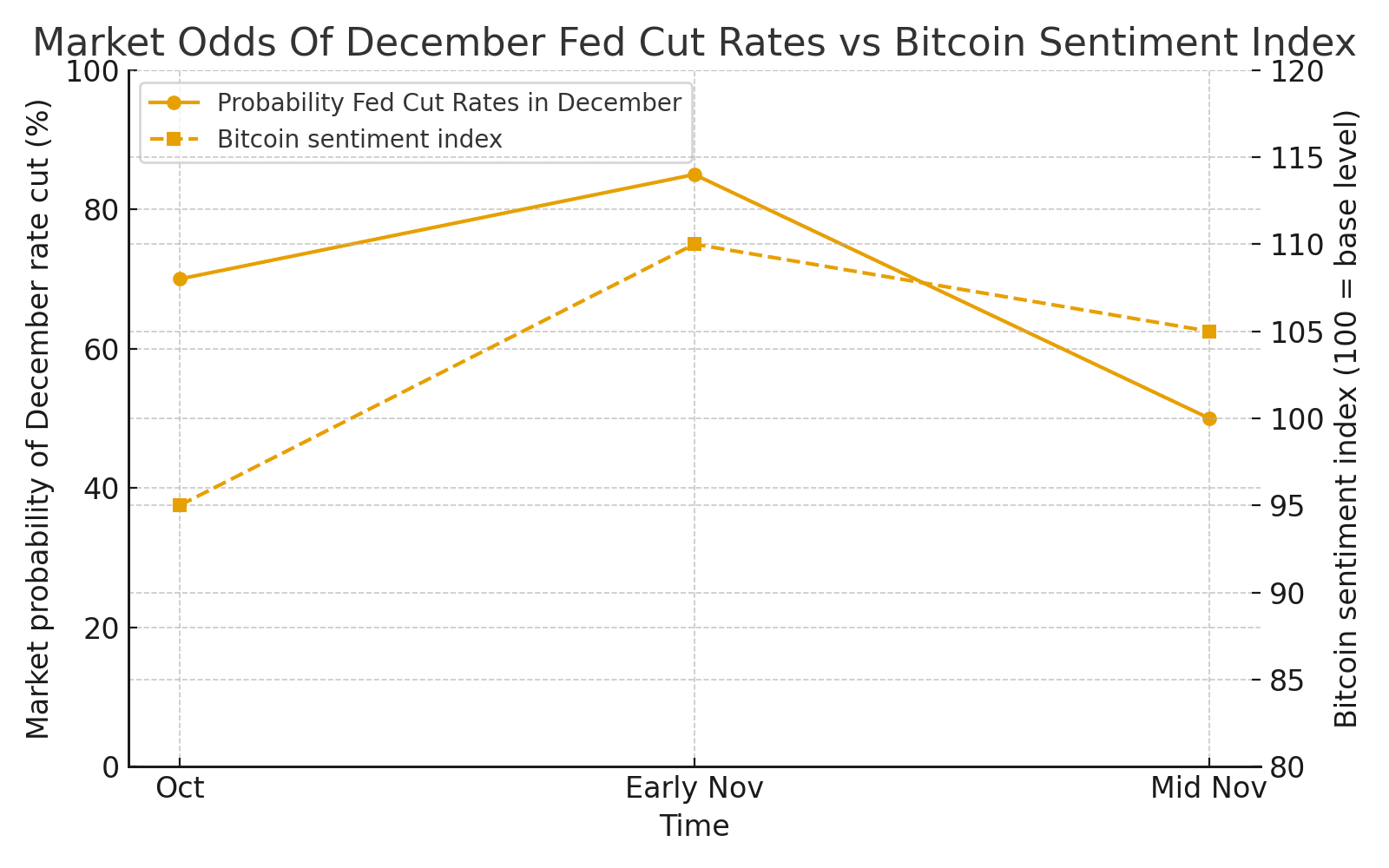
Crypto investors who track the Fed closely don’t just scan for the words Fed Cut Rates in headlines. They watch a range of indicators that help answer the real question: will the Fed cut again, and if so, when?
On the macro side, they focus on:
Inflation reports, especially core inflation that strips out food and energy
Monthly jobs numbers, wage growth, and unemployment claims to see if the labor market is cooling
Bond market signals, like the shape of the yield curve and real yields on inflation-linked bonds
Futures pricing, which shows implied probabilities for rate moves at upcoming Fed meetings
On the crypto side, they monitor:
Bitcoin dominance relative to the rest of the market
Total crypto market capitalization
Stablecoin inflows and outflows, which hint at risk-on or risk-off positioning
Spot versus derivatives trading volumes
When belief in a Fed Cut Rates outcome grows, capital often moves out of stablecoins and into higher-risk tokens.
Funding rates in perpetual futures can rise, and open interest can climb. These metrics can act like early warning lights, showing whether a macro narrative is actually turning into fresh money entering the market.
Long term perspective for digital assets
Short-term reactions to any Fed cut rate decision will always grab headlines. But serious investors keep their eyes on the bigger story. Over the long term, adoption trends, regulation, and technology matter more than one Fed meeting.
Spot exchange-traded products, clearer custody rules, and deeper links between traditional finance and blockchain infrastructure all point to a maturing digital asset ecosystem.
Because of that, many portfolio managers treat each macro shock as a “stress test” of their conviction rather than a final verdict. If the Fed cuts rates and crypto markets rally, disciplined investors still go back and check valuations, network activity, and on-chain data. If the Fed holds steady and prices dip, they look for opportunities where the fundamentals and long-term themes are still solid.
Conclusion
The upcoming policy decision won’t answer every question about the economy or the future of digital assets. Still, the way markets react to any signal that the Fed cuts rates again will shape sentiment heading into the new year.
For active traders and patient long-term holders alike, the key is understanding how interest rates interact with liquidity, risk appetite, and real-world adoption. With that context, crypto investors can move past simple slogans like “Fed Cut Rates” and build strategies that respect both macro trends and the unique drivers of blockchain-based assets.
Frequently Asked Questions
How could a Fed Cut Rates decision affect day-to-day crypto trading?
A Fed Cut Rates move can lower funding costs on exchanges, ease pressure on leveraged traders, and improve risk appetite in both spot and derivatives markets. That often translates into higher trading volumes and more aggressive positioning.
What happens if the Fed cuts rates expectation is wrong?
If traders load up on positions based on the idea that the Fed cuts rates, and the central bank leaves policy unchanged instead, the market can reprice quickly. That adjustment can trigger sharp volatility, liquidations, and forced unwinding of leveraged trades.
Glossary of key terms
Fed Cut Rates
A phrase used to describe a policy move where the U.S. central bank lowers its target range for short-term interest rates. This shift often changes how investors view risk assets, including crypto.
Federal funds rate
The main policy rate set by the Fed. It guides overnight lending between banks and influences many other borrowing costs across the economy.
Real yield
The interest rate on a bond after adjusting for inflation. Investors use it to decide whether holding cash, bonds, or riskier assets makes more sense.
Liquidity
How easily traders can buy or sell an asset without causing a big price move. In crypto, strong liquidity often means tighter spreads, smoother price action, and a more stable market.