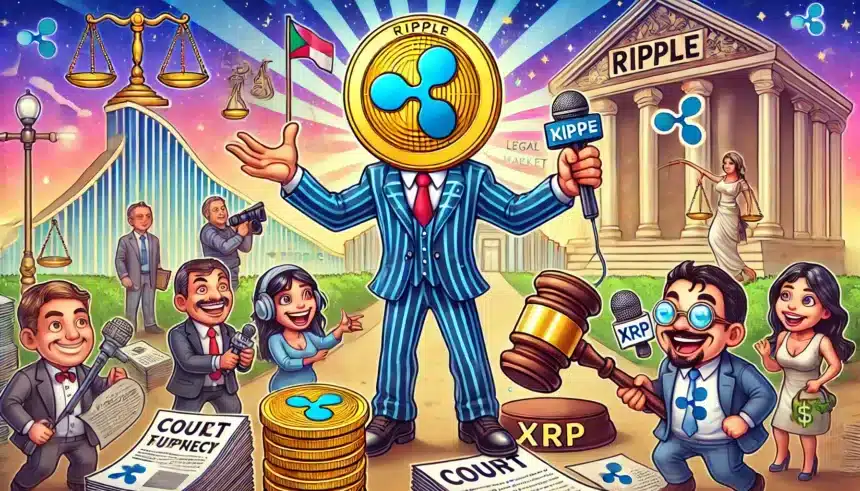

The crypto market is watching a major split unfold around XRP. On one side, institutional investors and Wall Street firms are quietly increasing exposure through spot ETFs and Ripple-linked infrastructure. On the other, retail futures traders continue betting against the token despite rising prices and stronger network activity. This unusual setup has turned XRP Wall Street accumulation into one of the hottest narratives in digital assets heading into 2026.
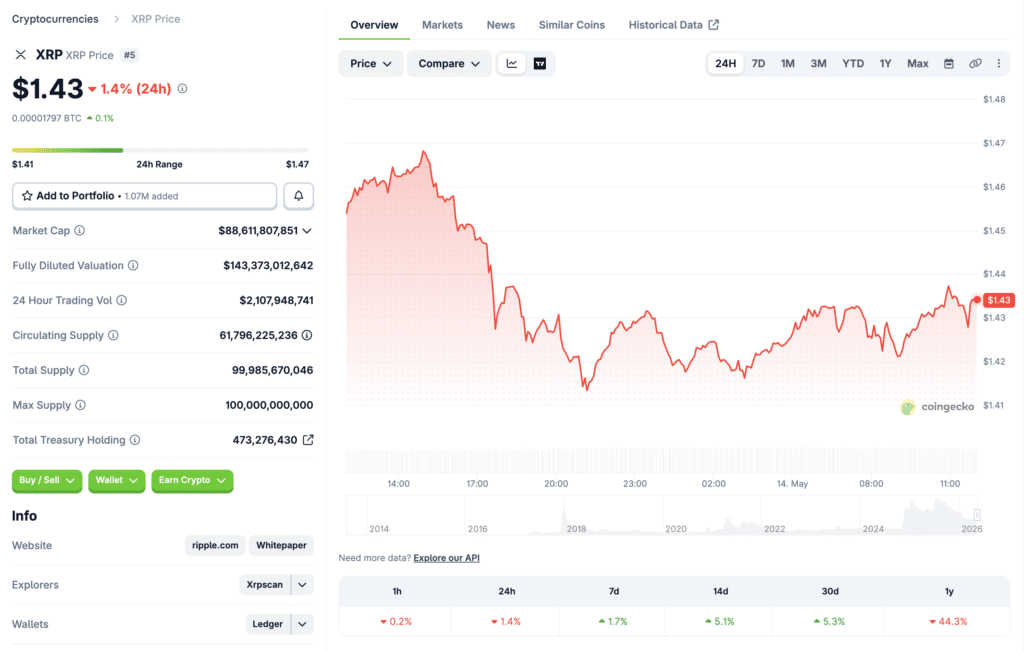
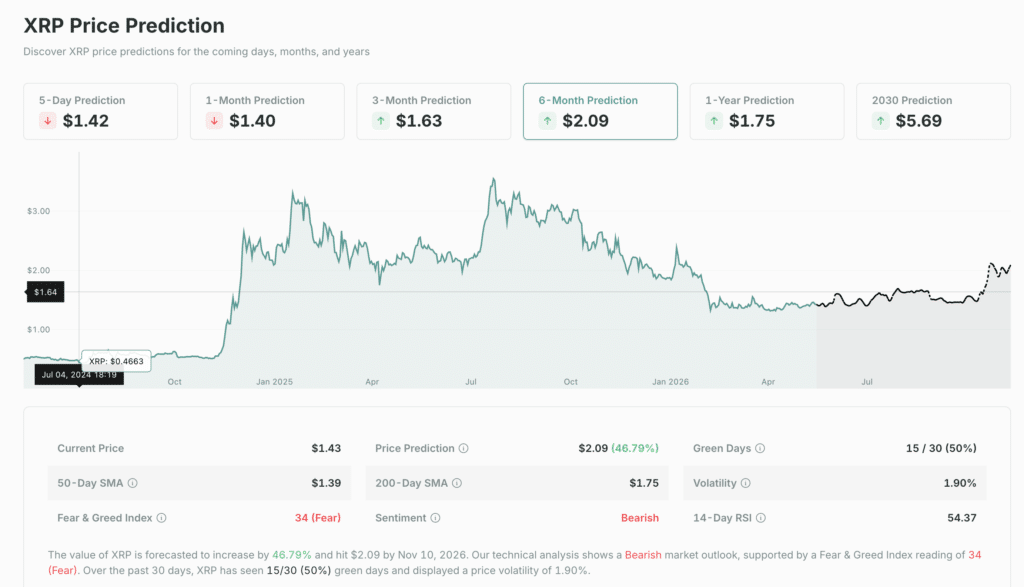
The live XRP price today sits at $1.43 with a 24-hour trading volume above $2.33 billion. XRP remains the fifth-largest cryptocurrency by market capitalization, holding a live market cap of more than $88.4 billion. While XRP slipped 1.66% over the last 24 hours, broader momentum still points toward growing institutional confidence in the asset.
XRP Wall Street Accumulation Gains Momentum Through ETF Demand
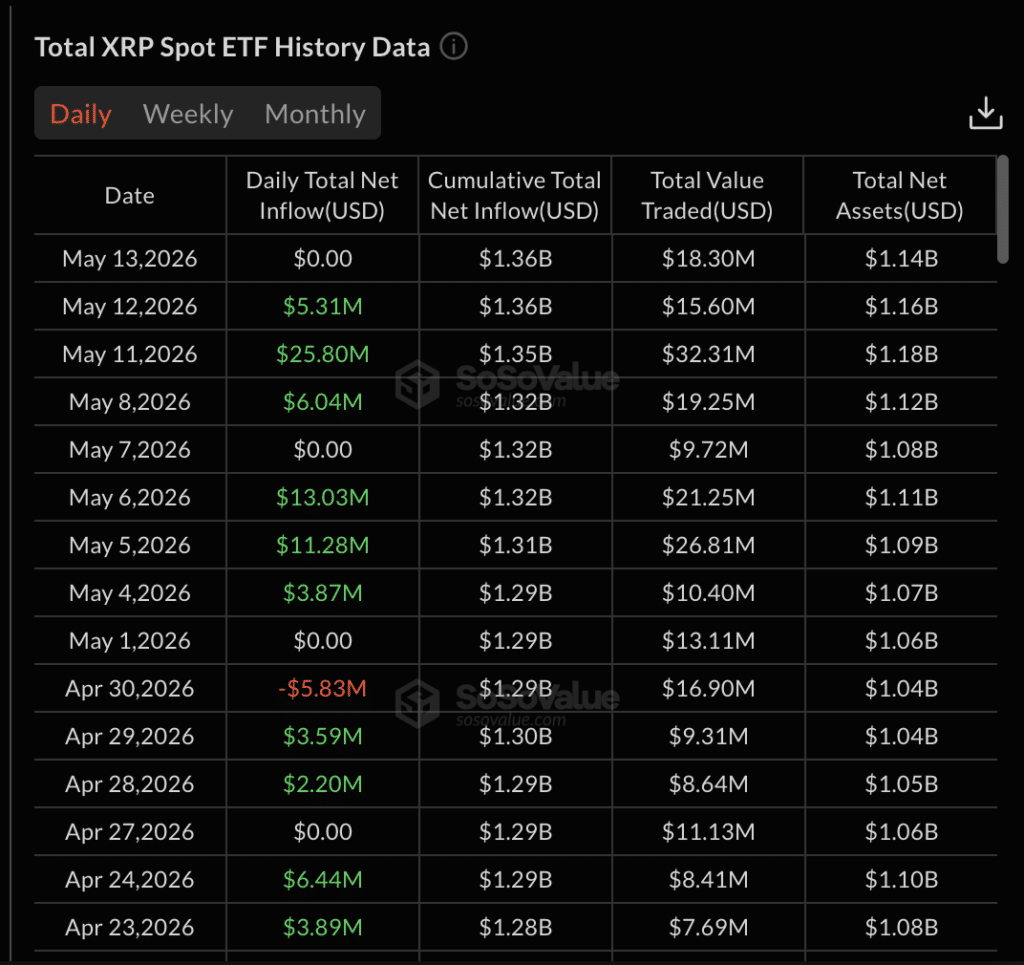
The biggest catalyst behind XRP Wall Street accumulation is the explosion of spot ETF inflows. According to recent market data, spot XRP ETFs recorded $25.8 million in daily inflows on May 11, marking the strongest intake since January. That pushed total inflows beyond $1.35 billion since launch, a number that grabbed serious attention across financial markets.
This trend matters because ETFs offer traditional investors a clean and regulated way to gain XRP exposure without touching offshore crypto exchanges. Financial advisers, hedge funds, and asset managers now have easier access to XRP through standard brokerage platforms. That shift is fueling XRP Wall Street accumulation and XRP institutional buying at a pace rarely seen before in the asset’s history.
XRP Binance Traders Shorting Creates Market Tension
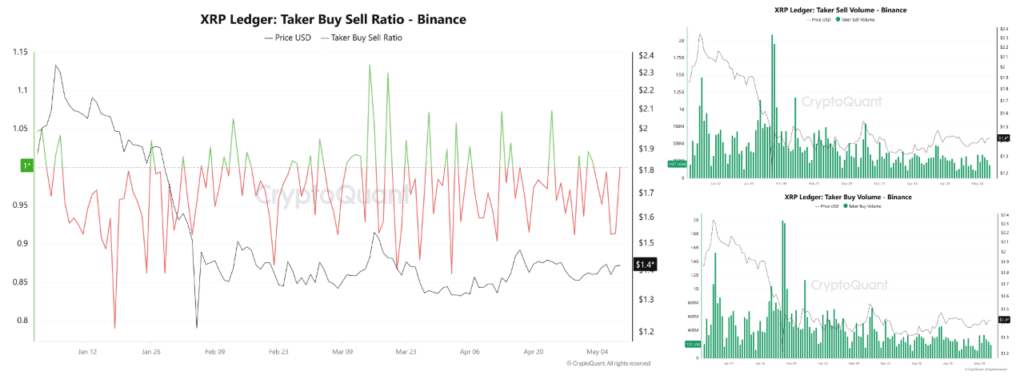
Even with bullish ETF momentum, XRP Wall Street accumulation continues to face pressure from derivatives markets. XRP Binance traders shorting activity has been rising as futures traders stay bearish while spot demand strengthens. Binance cumulative volume delta dropped near negative $434 million while open interest increased, adding weight to the ongoing XRP Wall Street accumulation trend shaping 2026 sentiment.
This creates a split market where XRP Wall Street accumulation pushes price higher, but XRP Binance traders shorting keeps sentiment cautious. Despite XRP gaining around 27%, funding rates remain negative, showing persistent bearish positioning against XRP Wall Street accumulation.
Still, if XRP Wall Street accumulation continues rising, crowded XRP Binance traders shorting positions could trigger a short squeeze.
Ripple Expands Institutional Infrastructure for Wall Street Clients
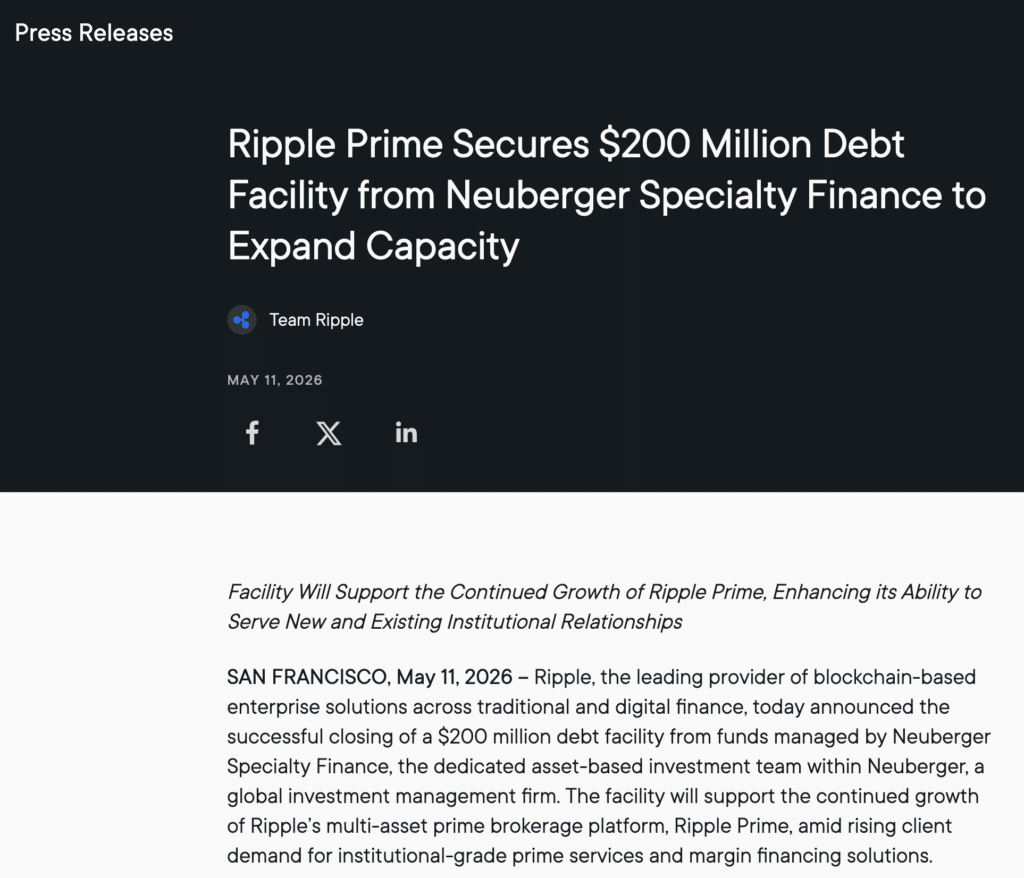
Another major reason behind XRP Wall Street accumulation involves Ripple’s aggressive institutional expansion strategy. Ripple recently secured a $200 million asset-backed debt facility from Neuberger Specialty Finance to strengthen Ripple Prime operations and increase institutional lending capacity.
This move signals a major evolution for Ripple’s financial ecosystem. Large firms entering crypto markets need liquidity solutions, financing access, and trusted settlement systems before deploying large amounts of capital. Ripple appears focused on building exactly that.
The expansion also supports the long-term thesis around XRP institutional adoption boosts bullish sentiment. Ripple Prime revenue reportedly tripled following the Hidden Road acquisition, showing that institutional demand for crypto prime brokerage services is rising quickly across the market.
Why Wall Street Is Buying XRP in 2026
The question dominating crypto conversations right now is simple: Why Wall Street is buying XRP in 2026 while retail traders remain cautious. The answer comes down to infrastructure, regulation, and utility.
Unlike meme-driven cryptocurrencies, XRP now sits at the center of several institutional narratives. Ripple continues integrating tokenized assets, stablecoin infrastructure, cross-border payments, and institutional-grade liquidity products directly into the XRP ecosystem. That gives XRP more real-world utility than many competing altcoins.
Major financial firms also appear increasingly interested in blockchain systems that balance transparency with compliance. Ripple’s upgrades to permissioned trading environments and tokenized asset tools are designed specifically for regulated institutions. That combination is making XRP Wall Street accumulation look less speculative and more strategic.
XRPL Upgrades Strengthen Long-Term XRP Utility
The XRP Ledger is also evolving rapidly. Several new technical upgrades are helping institutions use blockchain infrastructure while maintaining compliance standards. Features like Multi-Purpose Tokens, Permissioned Domains, and Token Escrow functionality are transforming XRPL into a more enterprise-focused ecosystem.
These upgrades support tokenized finance, private settlement systems, and controlled liquidity environments. Ripple XRP news today continues highlighting how traditional financial firms want blockchain efficiency without sacrificing oversight and risk management.
Network activity reflects that momentum. XRP transaction activity reportedly climbed 65% over the last year, reaching nearly 71 million transactions. Analysts believe XRP ETF speculation drives institutional accumulation because investors see growing utility instead of simple hype-driven trading activity.
XRP Price Prediction 2026 Depends on Spot Market Strength
Looking ahead, XRP price prediction 2026 discussions largely depend on whether institutional spot demand can overpower bearish derivatives sentiment. Right now, the market feels divided between long-term investors and short-term speculators.
If ETF inflows remain strong and spot demand improves further, XRP could break above the $1.50 resistance zone and potentially target the $1.60 range. In that case, XRP Wall Street accumulation may force bearish traders into liquidation territory, triggering aggressive upside volatility.
However, risks still remain. If buying pressure slows while leverage keeps rising, XRP could experience sharp downside swings. Futures-driven rallies without healthy spot demand often become unstable. That’s why Ripple XRP market analysis and Binance trader sentiment remain critical indicators for the next major move.
Institutional Investors Accumulate XRP While Retail Traders Short It
The current setup around XRP feels like a direct clash between traditional finance and crypto-native skepticism. Institutional investors accumulate XRP while retail traders short it, creating one of the most fascinating market structures in crypto today.
Historically, retail traders dominated XRP price action through leverage-heavy speculation on offshore exchanges. That dynamic now appears to be changing. ETFs, institutional lending facilities, and blockchain utility are slowly shifting XRP into a more mature financial asset category.
This transition may also explain why Binance traders are bearish on XRP despite improving fundamentals. Many retail traders still associate XRP with past volatility and legal uncertainty, while institutions increasingly view the asset through a broader infrastructure lens.
Conclusion
XRP Wall Street accumulation is becoming one of the strongest institutional narratives in crypto heading into 2026. Spot ETF inflows, Ripple’s expanding credit infrastructure, and rising XRPL utility are reshaping how investors view the asset. Meanwhile, bearish futures traders continue fighting the rally, creating conditions that could eventually spark a powerful XRP short squeeze.
The next few months will likely determine whether XRP fully transitions from a speculative trading token into a mainstream institutional blockchain asset. If spot demand keeps rising and Ripple continues strengthening its ecosystem, XRP breakout 2026 amid growing Wall Street demand may become more than just another bullish headline.
Investors, analysts, and crypto enthusiasts should continue monitoring ETF inflows, derivatives funding rates, and XRPL adoption metrics closely as market conditions evolve.
Appendix: Glossary of Key Terms
XRP Wall Street accumulation: Growing institutional investment activity involving XRP through ETFs and regulated financial products.
Spot ETF: An exchange-traded fund that directly holds the underlying cryptocurrency asset.
Open Interest: The total number of active futures or derivatives contracts in the market.
Funding Rate: A recurring payment between long and short traders in perpetual futures markets.
XRPL: The XRP Ledger, a blockchain network developed for payments, tokenization, and financial applications.
Ripple Prime: Ripple’s institutional brokerage and financing platform for professional crypto market participants.
Frequently Asked Questions About XRP Wall Street Accumulation
Why is XRP Wall Street accumulation increasing in 2026?
Institutional investors are gaining exposure through spot ETFs, Ripple Prime infrastructure, and growing blockchain utility tied to the XRP Ledger ecosystem.
Why are Binance traders still bearish on XRP?
Many derivatives traders expect resistance near key price levels and remain cautious despite improving institutional adoption and ETF inflows.
Could XRP experience a short squeeze in 2026?
Yes. If spot buying continues increasing while bearish futures positioning remains crowded, XRP could see rapid upward price movement from forced liquidations.
What is driving XRP institutional buying?
ETF accessibility, Ripple’s financial infrastructure expansion, tokenized asset growth, and cross-border payment utility are all fueling institutional interest.
What is the XRP price prediction for 2026?
Some analysts believe XRP could target the $1.50 to $1.60 range if institutional demand and spot accumulation continue strengthening.
References
Disclaimer:
This article is for informational purposes only and does not constitute financial advice. Cryptocurrency investments are highly volatile and involve substantial risk. Always conduct independent research before making investment decisions.